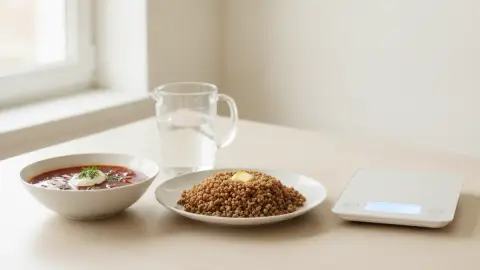
How many calories are in a bowl of soup, porridge or dumplings
A 300 g bowl of borscht is about 195 kcal, and a 250 g plate of pelmeni about 620 kcal, using reference values per 100 g.
The practical half: where the numbers come from, how accurate they are, and what they can and cannot tell you.
A 300 g bowl of borscht is about 195 kcal, and a 250 g plate of pelmeni about 620 kcal, using reference values per 100 g.

Do not automatically record a tablespoon as 15 g of food.

Use the units in the nutrition table when counting milk, kefir and yogurt: grams for values per 100 g, millilitres for values per 100 ml.
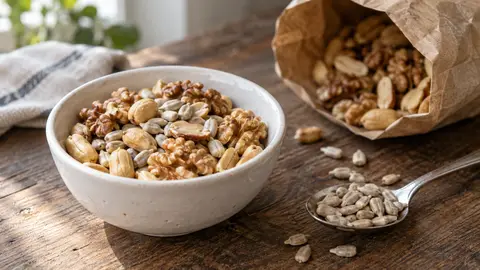
Calculate the calories in a handful of nuts from its weight and the values on that particular pack.

A 300 ml raf has no single calorie value: the café recipe determines it.

A 90 g chicken-flavor Doshirak tray contains 414 kcal according to the manufacturer.

The Chicken Teriyaki roll is 410 kcal, the same salad 207, the 15 cm sandwich 382.

Double Cheeseburger is 441 kcal, Grand 514, Big Special 756, Double Big Special 1,042.

The alcohol calorie calculator shows two numbers: the energy in what you drank and the grams of pure ethanol.

The calculator converts the weight of raw food into cooked weight and back, and counts calories from the raw food: cooking changes the weight, not the calories.

The calorie calculator works out basal metabolism with the Mifflin–St Jeor equation, multiplies it by an activity factor from 1.
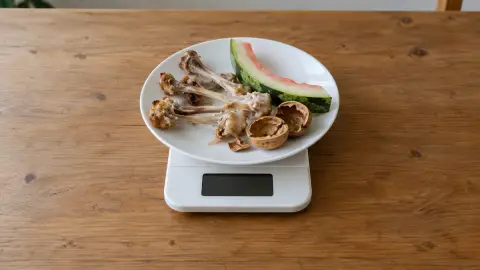
Log the weight of what you ate, not what was on the plate.
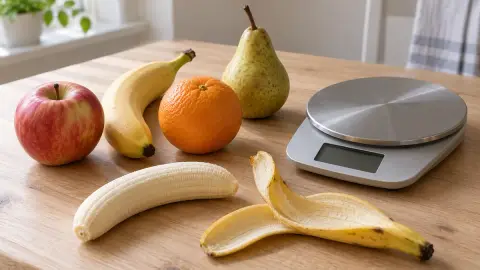
A medium banana without the peel (118 g) has about 105 calories, a medium apple (182 g) about 95, and an orange without the peel (131 g) about 62.
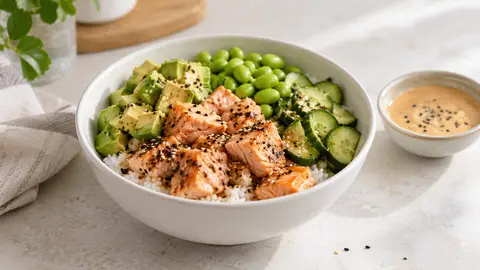
Count poke by adding the ingredients in the whole bowl: the base, fish or meat, vegetables, toppings and sauce.
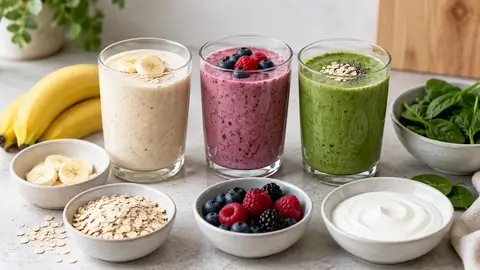
Count a smoothie from its ingredients and the portion you drink.
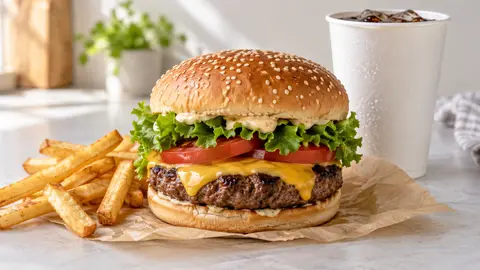
Use the nutrition card for the exact Big Special burger you select, then count the full order separately: fries, drink, sauce and extras.
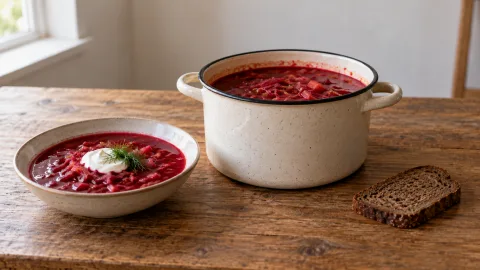
FoodGPT’s reference card lists borscht at 65 kcal per 100 g, so a 300 g bowl contains about 195 kcal.

The joint position stand of ACSM, the Academy of Nutrition and Dietetics, and Dietitians of Canada recommends 30–60 g of carbohydrates per hour for exercise lasting 1 to 2.

The calorie content of a fast food order is determined less by the chosen dish and more by portion size, drink, and sauces: the same dish may have two values in the chain’s nutritional table that differ by nearly twofold.
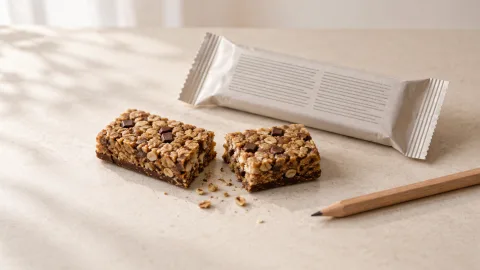
Net carbs are total carbohydrates listed on the label minus fiber and, for some manufacturers, sugar alcohols.

A large egg without its shell weighs about 50 g and has 72 kcal.
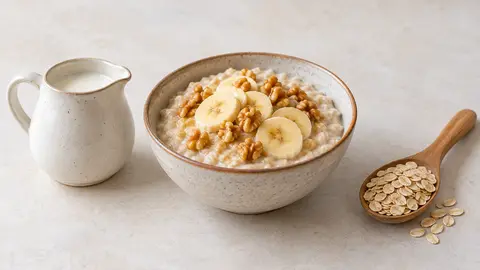
A bowl of oatmeal made with water from 50 g of oats is about 190 kcal, and with 3.

A slice of a 35 cm pizza weighs about 110 g and gives roughly 285–315 kcal, and a whole pizza gives 2,270–2,520 kcal.

The FoodGPT reference card lists syrniki at 218 kcal per 100 g, so a 50 g syrnik is about 110 kcal.
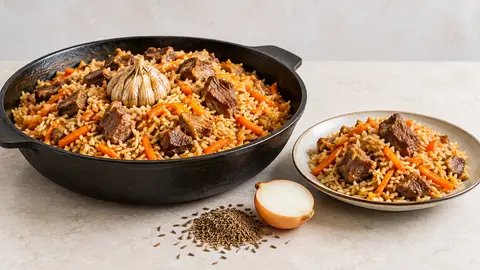
The FoodGPT reference card lists plov at 188 kcal per 100 g, so a 300 g portion is about 565 kcal.
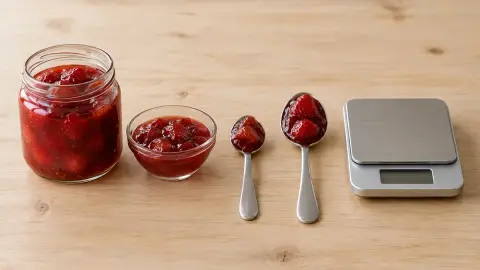
The FoodGPT reference card lists varenye, the Russian whole-fruit preserve, at 271 kcal and 65 g of sugar per 100 g.
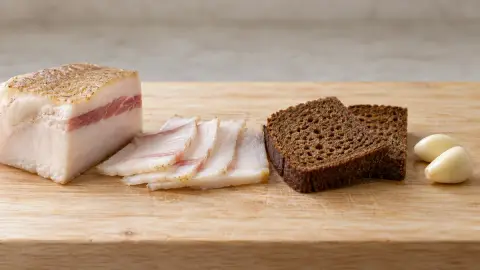
Salo has about 800 kcal per 100 g: the FoodGPT reference card for salted salo lists 816 kcal, and the USDA record for raw pork back fat lists 812.

The FoodGPT reference card lists kholodets at 110 kcal per 100 g, so a 150 g slice has about 165 kcal.

A piece of a roll or nigiri weighs 20–35 g.

The FoodGPT reference puts a 100 g fried pirozhok (a Russian hand pie) at about 260 kcal, and a baked one at roughly a third less.

The FoodGPT reference card lists blini made with milk at 232 kcal per 100 g, so a 50 g blin has about 116 kcal.

There is no single gram weight for a scoop of protein powder.
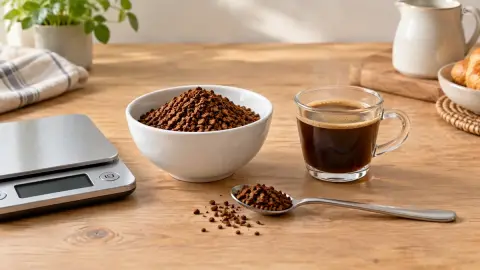
NESCAFÉ lists 1.
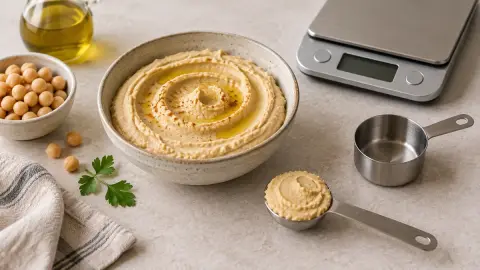
A tablespoon of plain hummus weighs 15 g in the USDA reference entry.

A tablespoon of grated Parmesan weighs 5 g in the USDA reference entry.

A USDA table lists one cup of fresh blueberries at 148 g and 85 kcal.
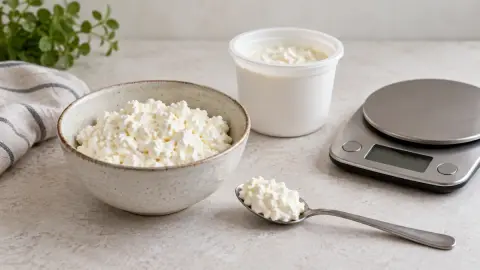
There is no dependable single weight for a tablespoon of cottage cheese curds.
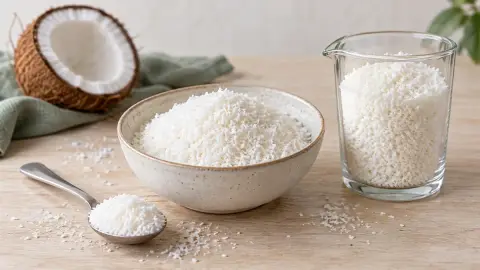
King Arthur Baking lists 85 g for one cup of fine, unsweetened desiccated coconut.

A level teaspoon of baking powder weighs about 4 g in King Arthur Baking’s chart.

Bob’s Red Mill labels one tablespoon of potato starch as 12 g and 40 kcal.
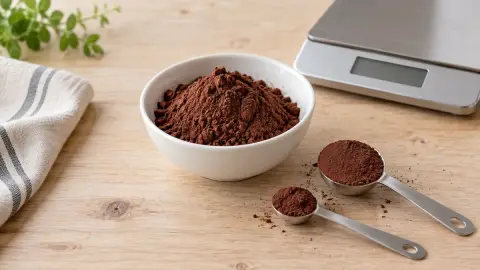
USDA lists 5.
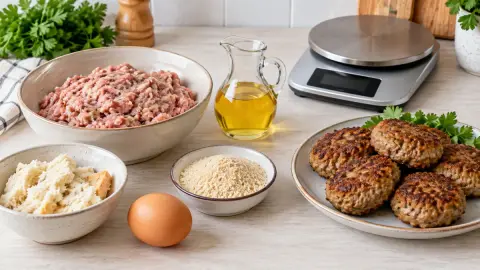
There is no single calorie value for a homemade cutlet.

A soup name does not have one calorie count.

Mashed potatoes do not have one calorie value.
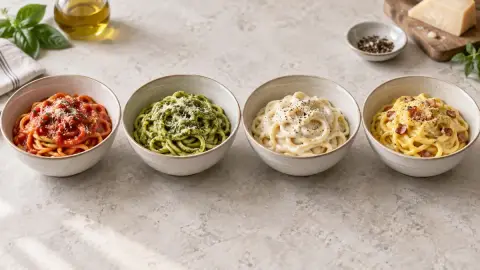
Two plates containing the same amount of pasta can have different calorie totals: tomatoes contribute mostly water, while oil, cream, cheese, and fatty pork provide more energy per gram.
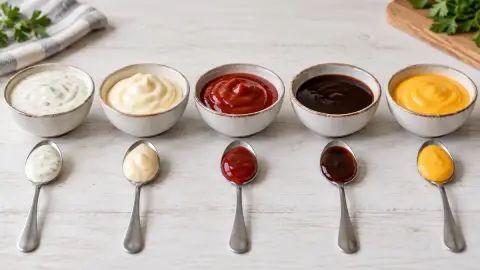
A tablespoon of sauce can add 20 kcal or 90 kcal to a meal.

An air fryer saves exactly the calories in the oil you did not add.
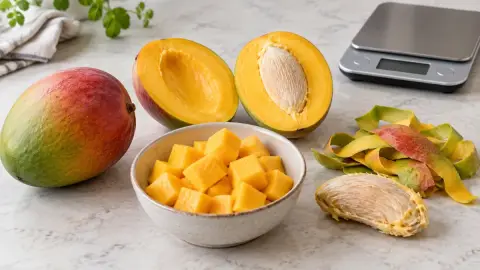
USDA lists one mango without refuse as 336 g and a cup of pieces as 165 g.

Log rice paper by the dry sheet.

Mushrooms contain little energy on their own, which is why the larger tracking error often comes from the method rather than the mushrooms.

One meal is rarely a single item.

A photo does not turn a home-cooked meal into an exact recipe.
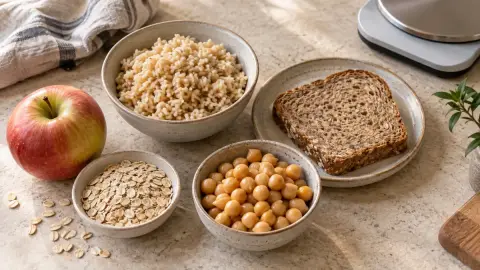
For an illustrative 2,000-calorie diet, the European reference range of 45–60% of energy works out to about 225–300 g of carbohydrates per day.

Proffee is not a separate product or a standard recipe, but coffee with a protein source.

It is easy to log a cinema snack as “popcorn,” but that says almost nothing about the serving.

A shared order cannot fairly be divided by the number of people: one person had two pizza slices and lemonade, another had rolls and fries, and a third tasted a little of everything.

At a picnic, calories are usually lost not in the barbecue itself but around it: a piece of lavash, sauce from a shared bowl, a drink, and a few more pieces by the grill.

When you are visiting, you do not need to ask your hosts how many grams of oil they used or weigh every meatball.

Subway publishes nutrition information for its full menu in a separate document.

Thai food has a reputation for being light, and that is half true: vegetables, fish, and rice form its base.

Georgian menus are deceptive: half the items look like salads and appetizers but are closer to a main course in calories because of nuts and oil.

Turkish menus are difficult not because of the language, but because of their structure: the same meat under four names differs by cooking method, and the calorie gap between them is greater than the gap between meat and fish.

An unfamiliar menu raises three different questions that are usually confused: what is this dish, is it safe for me, and how many calories does it contain? Translation answers only the first, and not always.

The first thing a nutritionist or dietitian asks for at the start of working together is a food diary for several days.
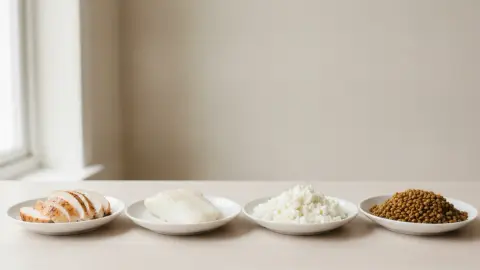
A food being "high in protein" and a food "providing a lot of protein per calorie" are not the same thing.

It is not discipline that breaks down during a trip, but the very possibility of counting: there are no scales, no familiar dishes, and no control over where and when you eat.

After a week, your diary contains seven numbers, and the first instinct is to compare each one to a target.
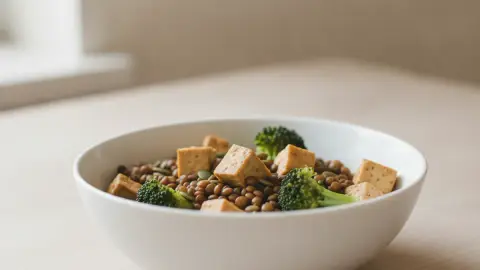
Calories in a plant-based diet are calculated exactly the same way as in any other.
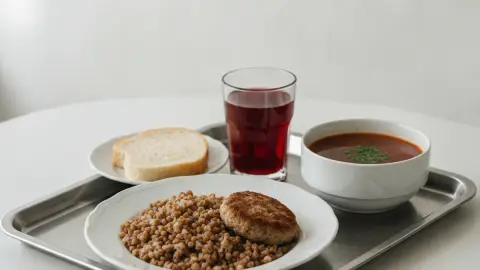
None of the tricks that work at home apply in a cafeteria: there are no scales, the ingredients are unknown, and portion size is decided by someone with a ladle.

A recipe gives you the calorie content of the entire pot, but you only eat one bowl.
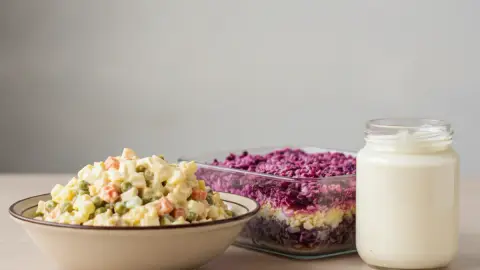
Olivier salad does not have one correct number: one cook's version may have twice as many calories as another's, despite using the same ingredients.

Arguing about which is higher in calories—shawarma or a burger—is pointless: the variation within each name is greater than the difference between them.
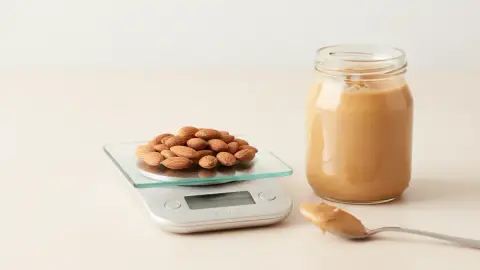
No one actually measured the number on the package: it was calculated by multiplying proteins, fats, and carbohydrates by factors over a century old.

The cooking method adds more calories to a dish than any choice between "healthy" and "unhealthy" foods.
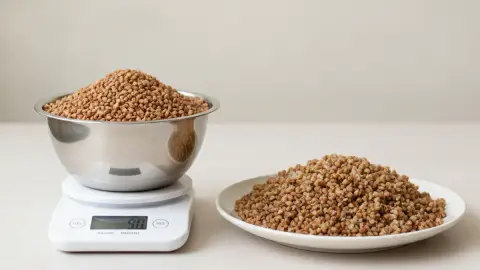
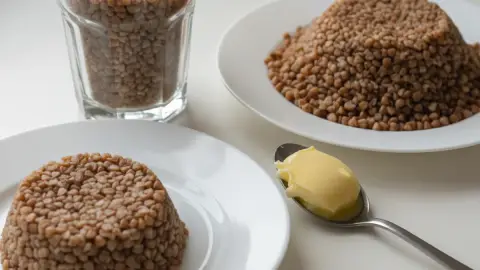
"100 g of buckwheat" can mean 346 kcal or 92, depending on the state of the grain.

Proportions like "30/30/40" look like an optimal formula someone has discovered.
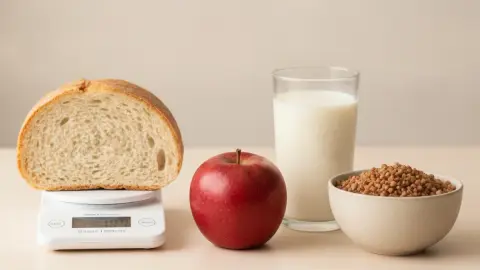
A bread unit is a measure of carbohydrates designed to convert food into an insulin dose.

At a buffet, calorie counting can only be approximate, and that is normal.

In a coffee shop, calories are often hidden in the cup rather than in the food next to it.
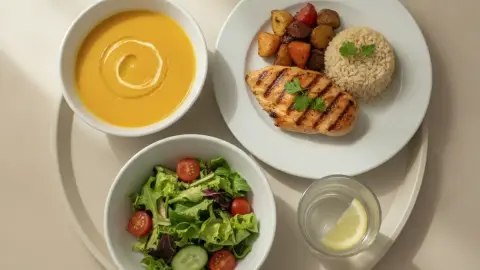
A business lunch is convenient for the very reason it is inconvenient for tracking: the composition is set, the choice is limited to two or three options, and everything is served at once.

Lunch at a cafe is usually where a food diary falls apart.

Menus often list only the name and price.

The app has shown a deficit for four weeks, but the scale hasn't moved.

The first week of tracking rarely ends with numbers you can trust.
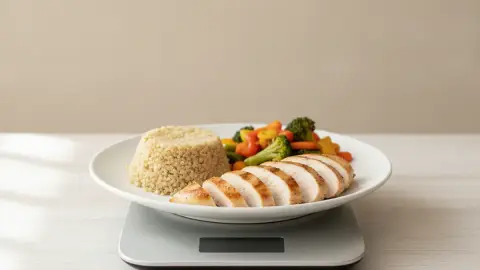
A calorie counter answers one question, a BJU counter answers four.

Two calculators using the same height, weight, age, and gender can provide numbers that differ by two or three hundred kilocalories.

A calorie counter does not measure calories.
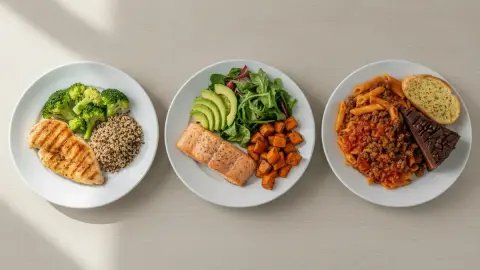
The daily calorie allowance is an abstraction until you see it in grams.

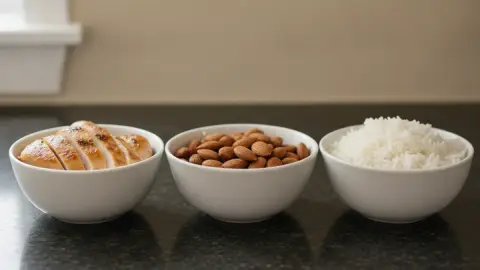
Boiled chicken breast has about 165 kcal and 31 g of protein per 100 g, while turkey breast has about 145 kcal and 30 g of protein.

One kilocalorie equals 4.
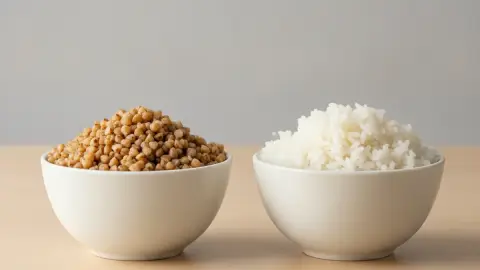
In their cooked form, both grains provide about a hundred kilocalories per 100 grams: buckwheat is approximately 110, white rice is approximately 120.

The rule is simple and therefore persistent: there are approximately 7700 kilocalories in a kilogram of fat, which means a deficit of 500 kcal per day results in half a kilogram per week and twenty-six kilograms per year.

There are two opposing figures regarding protein: the official recommendation of about 0.

A home-cooked meal can be calculated by its ingredients, and packaged food can be checked on the label.

The same buckwheat in three different apps gives three different calorie counts, and the package shows a fourth.
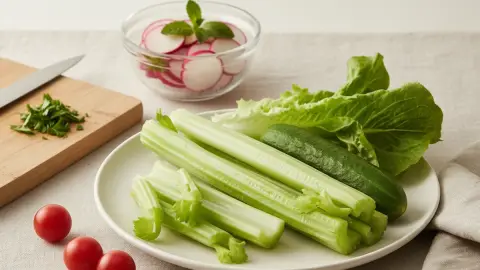
Celery is the food people name when they want an example of negative calories: eat it and you end the day lower than you started, because digesting it supposedly costs more than it delivers.
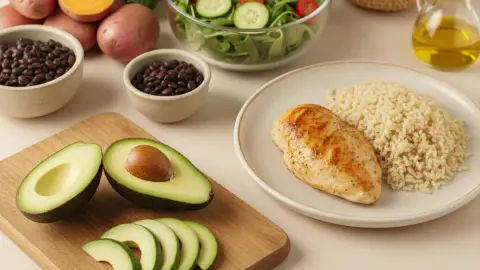
Processed foods are counted by the label, and restaurant meals by a reference guide.
Portion weight is the most inaccurate variable in any calculation, including analysis by photo.
KBZHU represents four numbers that describe food: caloric content and the three macronutrients that make it up.

There is no universal norm: it depends on weight, height, age, sex, and activity level.
From reading to doing. All of it starts in one place — knowing what is on the plate. Photograph it and the calories and macros appear on their own.
Other sections: Nutrition · Weight loss · Health · Technology · Ingredients and additives · Allergies · Shopping · Biohacking · Recipes · All articles
This article is for general information. It is not medical advice, a diagnosis, or a prescription for treatment or a diet, and it does not replace a consultation with your doctor. If you have a health condition, are pregnant, take medication, or follow a diet prescribed to you, decisions about food belong with your doctor.
Figures from regulations, guidelines and studies are given as they stood when this article was prepared and may since have changed; check them against the primary sources. This article is not advertising, an offer, or individual advice, and neither the author nor the site owner is responsible for decisions taken on the basis of it.