How many calories are in pizza: a slice, a whole pizza, thin and thick crust
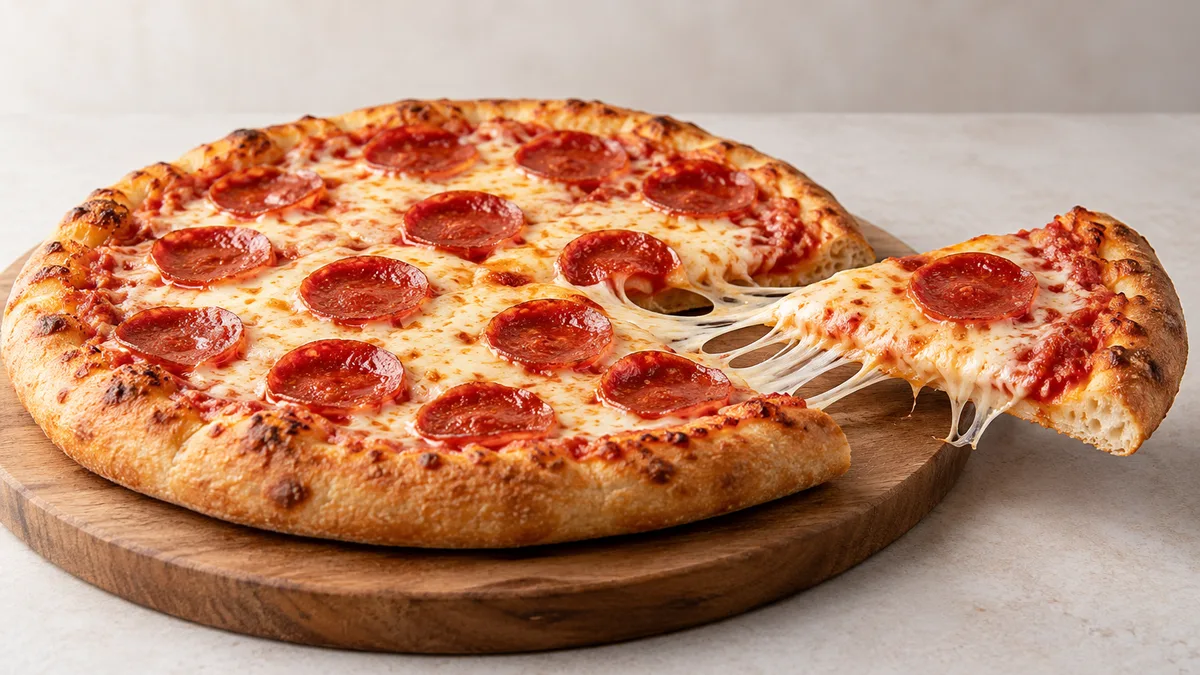
A slice of a 35 cm pizza weighs about 110 g and gives roughly 285–315 kcal, and a whole pizza gives 2,270–2,520 kcal. That is what the USDA records for pizza from pizza chains show. Thin crust has more calories per 100 g than regular crust, but the slice is lighter, so there are fewer per slice: 261 kcal against 313. The most accurate way is to count by grams, and the menu usually gives the pizza's weight.
When the reference figure is enough
The pizza card in the calorie table lists 260 kcal per 100 g. It is a guide for when you know nothing about the pizza except that it has cheese and sausage on it.
If you know the weight and the type of pizza, you can count more accurately. Two figures are needed: calories per 100 g and the weight of a slice.
Cheese, pepperoni, meat: calories per slice and per pizza
The values below come from the fast food section of USDA FoodData Central. They are for 14-inch pizzas, about 35 cm, from pizza chains. The weights of a slice and a whole pizza are given in the same records.
| Pizza | FDC record | Kcal per 100 g | Slice | Whole pizza |
|---|---|---|---|---|
| Cheese, regular crust | 173292 | 266 | 107 g = 285 kcal | 853 g = 2,269 kcal |
| Pepperoni, regular crust | 173295 | 282 | 111 g = 313 kcal | 895 g = 2,524 kcal |
| Pepperoni, thin crust | 170762 | 331 | 79 g = 261 kcal | 597 g = 1,976 kcal |
| Pepperoni, thick crust | 173296 | 287 | 118 g = 339 kcal | 946 g = 2,715 kcal |
| Meat and vegetable, regular crust | 172055 | 244 | 136 g = 332 kcal | 1,168 g = 2,850 kcal |
Each of these pizzas has about eight slices. The meat and vegetable pizza is the lightest per 100 g but the highest in calories as a whole: it weighs more than the others, 1,168 g.
Why thin crust has more calories per 100 g
Thin-crust pepperoni pizza has 331 kcal per 100 g against 282 for regular crust. It is a matter of proportions: there is less dough, and the share of cheese and sausage is higher. The thin-crust record has 17.6 g of fat per 100 g, the regular one 11.9.
But a whole thin-crust pizza weighs 597 g instead of 895, and it holds 1,976 kcal instead of 2,524. So compare slice with slice or pizza with pizza, not 100 g with 100 g.
Thick crust, by contrast, barely changes the calories per 100 g, 287 against 282, but the slice is heavier. None of these records is a pizza with a cheese-stuffed crust: that one is counted by the weight on the menu.
How to count a pizza from delivery or a pizzeria
- Find the pizza's weight. The menu usually gives it next to the diameter. If calories per 100 g are listed too, use them.
- Divide the weight by the number of slices. An 800 g pizza cut into eight is slices of 100 g.
- Multiply the weight you ate by the calories and divide by 100. Two 100 g slices at 260 kcal per 100 g are 520 kcal.
- Count dips separately. The sauce for the crusts is not included in the pizza.
If the menu gives no calories, take the closest row from the table above. How to read dish cards in delivery apps and where they go wrong is covered in the article on calories in delivery apps. When the pizza is shared, the article on counting a shared order will help.
Homemade pizza: an example
Take a pizza with 250 g of flour, 15 g of olive oil in the dough, 100 g of tomato sauce and 200 g of mozzarella. The values come from FoodData Central: flour (FDC 168894), olive oil (FDC 171413), tomato sauce (FDC 170054) and whole-milk mozzarella (FDC 170845).
- flour: 250 × 364 ÷ 100 = 910 kcal;
- oil: 15 × 884 ÷ 100 = 133 kcal;
- sauce: 100 × 24 ÷ 100 = 24 kcal;
- mozzarella: 200 × 299 ÷ 100 = 598 kcal.
The whole pizza holds 1,665 kcal, about 208 in each of eight slices. Water and yeast add almost no calories. Sausage, ham or mushrooms are counted the same way: weight times the calories on the pack.
Here the dough gives the most calories and the cheese comes second. Using 150 g of mozzarella instead of 200 makes the pizza 150 kcal lighter.
How much salt is in pizza
The regular-crust pepperoni pizza record (FDC 173295) has 685 mg of sodium per 100 g. That is about 1.7 g of salt per 100 g, and about 3.8 g of salt in two 111 g slices. Two slices of cheese pizza (FDC 173292) have about 3.2 g.
The WHO recommends no more than 5 g of salt a day for adults. Two slices of pepperoni pizza are more than three quarters of that. Where else salt turns up unnoticed is covered in the article on salt in ready-made food.
Frequently asked questions
- How many calories are in one slice of pizza?
- A slice of a pizza about 35 cm across weighs about 110 g. By the USDA records, a slice of regular-crust cheese pizza is 285 kcal, pepperoni is 313 kcal, and thin-crust pepperoni is 261 kcal.
- How many calories are in a whole pizza?
- A 35 cm pizza from a pizza chain ranges, by USDA data, from 1,976 kcal (thin-crust pepperoni) to 2,850 kcal (meat and vegetable). A regular-crust cheese pizza is 2,269 kcal.
- How many calories are in 100 grams of pizza?
- The FoodGPT reference card lists 260 kcal. By the USDA records, from 244 kcal for meat and vegetable pizza to 331 kcal for thin-crust pepperoni.
- Is thin-crust pizza lower in calories?
- Per slice, yes: 261 kcal against 313 for regular-crust pepperoni. Per 100 g, no: 331 kcal against 282, because there is less dough and the share of cheese and sausage is higher.
- How many calories are in homemade pizza?
- In the article's example with 250 g of flour, 15 g of oil, 100 g of sauce and 200 g of mozzarella, 1,665 kcal per pizza, about 208 kcal in each of eight slices. Any extra toppings are counted by weight.
Read next
- Nutritional values in delivery apps: where the numbers in the dish card come from — In the dish card, below the photo, there are four numbers, and they look like a measurement.
- How to count calories in a shared order — A shared order cannot fairly be divided by the number of people: one person had two pizza slices and lemonade, another had rolls and fries, and a third tasted a little of everything.
- Salt in processed food: where it is most abundant and why the salt shaker is not the culprit — The WHO recommendation is less than five grams of salt per day, but the actual intake is about twice that.
- How to determine portion size without a scale — Portion weight is the most inaccurate variable in any calculation, including analysis by photo.
This article is for general information. It is not medical advice, a diagnosis, or a prescription for treatment or a diet, and it does not replace a consultation with your doctor. If you have a health condition, are pregnant, take medication, or follow a diet prescribed to you, decisions about food belong with your doctor.
Figures from regulations, guidelines and studies are given as they stood when this article was prepared and may since have changed; check them against the primary sources. This article is not advertising, an offer, or individual advice, and neither the author nor the site owner is responsible for decisions taken on the basis of it.