Allergens in restaurants and delivery: how to ask for a helpful response
Packaging includes mandatory ingredient lists and warnings about traces.
The fourteen allergens that must appear on a label, the difference between an allergy and an intolerance, and what "may contain traces" actually means.
Packaging includes mandatory ingredient lists and warnings about traces.
Both conditions are described with the same words: "this makes me feel bad.
The most common mistake with this allergy is looking for the word "milk" in the ingredients list.
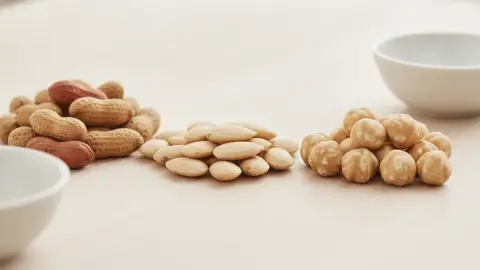
In the list of mandatory allergens, peanuts and tree nuts are listed as two separate items, and this is not just a formality: peanuts are legumes, not nuts, and an allergy to them does not mean an allergy to hazelnuts or almonds.
In the list of mandatory allergens, fish, crustaceans, and mollusks are listed as three separate items, and this is not just bureaucracy: their proteins are different, and a reaction to shrimp does not mean a reaction to cod.
Eggs are one of the most common food allergies in children, and for most, it resolves with age.
The symptoms are almost identical: bloating, pain, and fatigue after eating bread or pasta.
Manufacturers are required to disclose certain allergens at all times—even when their proportion is negligible and even when they entered the product as part of another ingredient.
A person with a birch pollen allergy bites into an apple and feels itching and tingling in their mouth.
The label "may contain traces of nuts" is found on half the shelves, including products where nuts have no business being.
From reading to doing. All of it starts in one place — knowing what is on the plate. Photograph it and the calories and macros appear on their own.
Other sections: Nutrition · Weight loss · Calorie counting · Health · Technology · Ingredients and additives · Shopping · Recipes · All articles
This article is for general information. It is not medical advice, a diagnosis, or a prescription for treatment or a diet, and it does not replace a consultation with your doctor. If you have a health condition, are pregnant, take medication, or follow a diet prescribed to you, decisions about food belong with your doctor.
Figures from regulations, guidelines and studies are given as they stood when this article was prepared and may since have changed; check them against the primary sources. This article is not advertising, an offer, or individual advice, and neither the author nor the site owner is responsible for decisions taken on the basis of it.