Fish, crustaceans, and mollusks: three separate lines in the allergen list
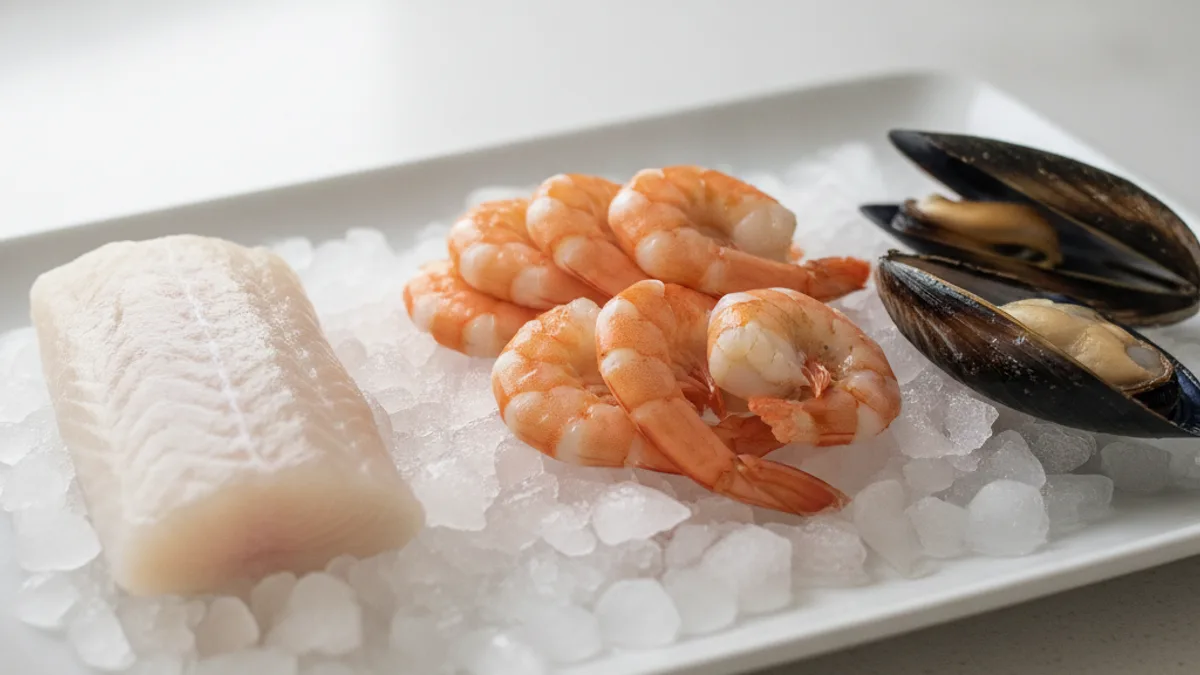
In the list of mandatory allergens, fish, crustaceans, and mollusks are listed as three separate items, and this is not just bureaucracy: their proteins are different, and a reaction to shrimp does not mean a reaction to cod. There is also a condition that looks like a fish allergy but is not, and it is useful to know how to distinguish it.
Three groups, not one
Fish. The main allergen is parvalbumin, a muscle protein. It is heat-stable, so boiling and frying do not eliminate the reaction.
Crustaceans. Shrimp, crabs, crayfish, lobsters. The main allergen is tropomyosin.
Mollusks. Mussels, oysters, scallops, squid, octopus, snails. Also tropomyosin, but a specific type.
The tropomyosin in crustaceans and mollusks is similar, so a reaction to both groups at once is common — this is a mechanism of cross-reactivity, discussed in the article on cross-reactivity. However, there is almost no overlap with fish: the proteins are fundamentally different.
Practical conclusion: the boundaries of exclusion are determined by medical examination, not by the word "seafood" on the packaging. About the list itself — the article on mandatory allergens.
What is confused with allergy: histamine reaction
In fish of the Scombridae family — tuna, mackerel, sardine, herring — if storage temperatures are violated, bacteria convert muscle histidine into histamine. Histamine is thermostable: subsequent boiling or frying does not destroy it.
The symptoms almost coincide with allergic ones: redness, itching, headache, drop in blood pressure, and sometimes digestive upset. There are differences, and they are practically important:
- the reaction occurs in people who have previously eaten this fish without problems;
- often several people who ate the same dish get sick;
- the fish may have a metallic or peppery taste;
- upon repeated consumption of fresh fish of the same species, there is no reaction.
This is not an allergy, but the result of product spoilage — and a reason to talk about storage, not about excluding fish from the diet. About what determines the shelf life of perishables — the article on shelf life.
Where seafood hides
| Product | What might be inside |
|---|---|
| Worcestershire sauce | Anchovies |
| Caesar dressing | Anchovies |
| Fish sauce in Asian cuisine | Fermented fish |
| Crab sticks | Surimi fish mince, usually no crab |
| Bouillon cubes and seasonings | Fish or shrimp extract |
| Kimchi and some pastes | Shrimp paste, fish sauce |
| Fined wine and beer | Fish gelatin as a fining agent |
| Omega-3 supplements | Fish oil |
The line about crab sticks is the most deceptive in both directions: for a person with a crustacean allergy, they are usually safe, but for a person with a fish allergy, they are not, despite the name.
About smell and steam
With a fish and seafood allergy, a reaction can occur not only from eating, but also from inhaling steam during boiling or frying: proteins enter the aerosol. This is a documented phenomenon, and it explains cases of reaction in a person who did not eat anything themselves.
Practically, this means being cautious at fish markets, in processing plants, and in kitchens where fish is prepared. About cross-contamination in catering — the article on allergens in restaurants.
What to do
- Clarify exactly what the reaction is to. "Seafood" is not a diagnosis; fish, crustaceans, and mollusks are excluded separately.
- Read the ingredients of sauces and seasonings. That is where fish is often found unexpectedly.
- Distinguish between spoilage and allergy. A reaction to fish you have eaten safely before, especially when others are affected, is a reason to consider histamine.
- Carry medications prescribed by your doctor if you have had severe reactions.
And most importantly: if you experience difficulty breathing, swelling of the face or throat, hoarseness, spreading rash, or sudden weakness, emergency care is needed. Reactions to fish and seafood can be severe, and the proteins in them are thermostable — the fact that it went without consequences once does not guarantee the same the second time.
Frequently asked questions
- If I am allergic to shrimp, does that mean I am allergic to fish?
- No. The main allergen in crustaceans is tropomyosin, while in fish it is parvalbumin, and there is almost no cross-reactivity between them. However, reactions to both crustaceans and mollusks occur frequently because their tropomyosins are similar.
- What is a histamine reaction to fish?
- If fish is stored improperly, bacteria convert the histidine in the fish muscle into histamine, which is not destroyed by cooking. The symptoms resemble an allergic reaction, but this is a result of food spoilage: the reaction occurs in people who have previously eaten the same fish without issues, and it often affects several people at once.
- Is there fish in crab sticks?
- Yes, they are made from surimi fish mince, and they usually do not contain crab. Therefore, if you have a crustacean allergy, they are often safe, but if you have a fish allergy, they are not, despite the name.
- In which products is fish found hidden?
- Worcestershire sauce and Caesar dressing contain anchovies; Asian dishes often contain fish sauce and shrimp paste; bouillon cubes may contain fish extract; and clarified wine and beer may contain fish gelatin.
- Can there be a reaction to the smell of cooking fish?
- Yes, if you are allergic to fish and seafood, proteins can become aerosolized during boiling or frying, and inhaling the vapors can trigger a reaction. This explains cases of reactions in people who have not eaten anything themselves.
Read next
- Cross-reactivity: why birch pollen makes your mouth itch when you eat an apple — A person with a birch pollen allergy bites into an apple and feels itching and tingling in their mouth.
- Allergens that must be on the label — Manufacturers are required to disclose certain allergens at all times—even when their proportion is negligible and even when they entered the product as part of another ingredient.
- Allergens in restaurants and delivery: how to ask for a helpful response — Packaging includes mandatory ingredient lists and warnings about traces.
- Sulfites: where the E220–E228 allergen hides — Sulfites are the only item on the list of mandatory allergens that are not always declared, but only starting from a certain amount.
This article is for general information. It is not medical advice, a diagnosis, or a prescription for treatment or a diet, and it does not replace a consultation with your doctor. If you have a health condition, are pregnant, take medication, or follow a diet prescribed to you, decisions about food belong with your doctor.
Figures from regulations, guidelines and studies are given as they stood when this article was prepared and may since have changed; check them against the primary sources. This article is not advertising, an offer, or individual advice, and neither the author nor the site owner is responsible for decisions taken on the basis of it.