Sulfites: where the E220–E228 allergen hides
Sulfites are the only item on the list of mandatory allergens that are not always declared, but only starting from a certain amount. Below this threshold, they legally remain unnamed.
What they are
Sulfur dioxide and its salts are preservatives and antioxidants that prevent products from darkening, oxidizing, and fermenting. In the coding system, this group ranges from E220 to E228: sulfur dioxide (E220) itself, as well as sulfites, bisulfites, and metabisulfites of sodium, potassium, and calcium.
They have been used for a very long time—sulfur fumigation for wine storage has been known since antiquity—and there is currently no substitute for them in a number of production processes. In wine, sulfites are also formed naturally during fermentation, so "sulfite-free wine" does not exist in the strict sense; there is only wine without added sulfites.
The ten-milligram rule
According to the technical regulation TR TS 022/2011, sulfur dioxide and sulfites must be indicated on the label if their total content exceeds 10 mg per kilogram or 10 mg per liter, calculated as sulfur dioxide.
This distinguishes them from other allergens on the list: milk, nuts, eggs, and others must be declared regardless of the amount, whereas sulfites are only declared above this threshold. A similar rule applies in European regulations.
The practical takeaway: the absence of sulfites in the ingredients list means "less than 10 mg/kg," not "none at all." For most people, the difference is insignificant, but for someone with pronounced sensitivity, it is not.
Where they are most common
| Product | Why sulfites are used |
|---|---|
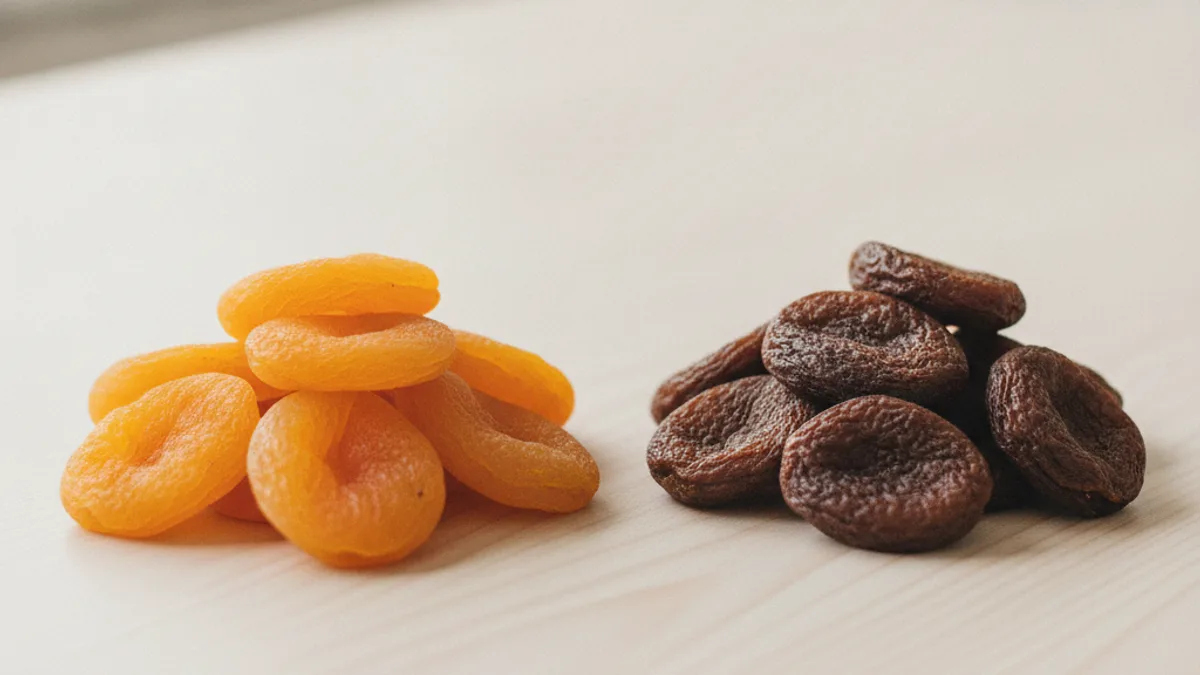
| Light-colored dried fruits — dried apricots, raisins, apples | Preserve color; dark dried apricots are the same but untreated |
| Wine and other fermented products | Stop fermentation, protect against oxidation |
| Shrimp and crustaceans | Prevent the shell from darkening after catch |
| Potato semi-finished products | Prevent the cut surface from darkening |
| Clarified juices and concentrates | Preservation of the semi-finished product |
| Vinegar, mustard, some marinades | Preservation |
Dried apricots are a telling example. Bright orange ones are treated with sulfur dioxide, while brown ones are not; this is a difference in technology, not quality, and it is visible to the naked eye without a label.
Who reacts to them
Reactions to sulfites occur primarily in people with asthma and manifest mainly as bronchospasm rather than a rash or swelling. Strictly speaking, this is not a classic allergy: the mechanism is different, and skin tests are not very informative here.
Prevalence estimates vary, and this should be kept in mind when reading any figures. Reviews cite a range of 3 to 10% among people with asthma, with one of the most cited estimates being about 4%. Rates are higher in patients on steroid therapy and in children with asthma. Among people without asthma, sensitivity is estimated at approximately 1%.
For everyone else, sulfites are a standard preservative. The Joint FAO/WHO Expert Committee on Food Additives has established an acceptable daily intake of 0–0.7 mg per kilogram of body weight, calculated as sulfur dioxide — JECFA database entry; this is about 50 mg per day for a person weighing 70 kg.
What it looks like
The reaction usually occurs quickly—from a few minutes to half an hour—and includes:
- difficulty breathing, wheezing, coughing;
- chest tightness;
- less commonly, hives, nausea, abdominal pain.
If breathing difficulty increases, this is an emergency situation, and the cause should be addressed only after assistance has been provided. A doctor determines the diagnosis, action plan during a reaction, and prescriptions: self-diagnosing by "eliminating and observing" is a poor strategy for asthma, as it has many triggers and sulfites are not the most common one.
How to read the label
You need to look for more than just codes. The regulation allows the additive to be named with a word, so the ingredients list may contain:
- sulfur dioxide, sulfurous anhydride;
- sodium sulfite, sodium bisulfite, sodium metabisulfite;
- potassium sulfite, potassium metabisulfite;
- preservative E220 — E228.
General rules for reading an ingredients list are covered separately: how to read the ingredients on a label and how manufacturers hide additives. For the entire group of preservatives, see here.
What to do if a reaction is confirmed
It is difficult to completely remove sulfites from the diet due to the 10 mg/kg threshold: some products contain them without declaring them. A working strategy is not to seek zero, but to reduce intake where the content is known to be high:
- dark dried fruits instead of bright ones;
- fresh potatoes instead of semi-finished products;
- fresh-frozen shrimp instead of chilled ones from the counter;
- not-from-concentrate juices instead of those reconstituted from concentrate;
- in catering—ask about wine and potato preparations, as there is no label there at all.
There is a separate article on how to ask about this in a restaurant to get a useful answer: allergens in restaurants and delivery.
Frequently asked questions
- Why are sulfites not always listed in the ingredients?
- According to the technical regulation TR CU 022/2011, they must be declared if the total content exceeds 10 mg/kg or 10 mg/L calculated as sulfur dioxide. Below this threshold, they are not required to be listed.
- Which foods contain the most sulfites?
- Light-colored dried fruits, wine, shrimp, potato convenience foods, clarified juices from concentrate, and some marinades. Bright orange dried apricots are treated with sulfur dioxide, while brown ones are not.
- How does a reaction to sulfites manifest?
- Most often as bronchospasm in people with asthma: difficulty breathing, wheezing, coughing, and chest tightness, usually within half an hour. Skin reactions are less common.
Read next
- Allergens that must be on the label — Manufacturers are required to disclose certain allergens at all times—even when their proportion is negligible and even when they entered the product as part of another ingredient.
- Preservatives: why they are needed and what questions arise about them — The word "preservative" on an ingredient label is often seen as a negative, and products "without preservatives" sell better.
- Allergens in restaurants and delivery: how to ask for a helpful response — Packaging includes mandatory ingredient lists and warnings about traces.
This article is for general information. It is not medical advice, a diagnosis, or a prescription for treatment or a diet, and it does not replace a consultation with your doctor. If you have a health condition, are pregnant, take medication, or follow a diet prescribed to you, decisions about food belong with your doctor.
Figures from regulations, guidelines and studies are given as they stood when this article was prepared and may since have changed; check them against the primary sources. This article is not advertising, an offer, or individual advice, and neither the author nor the site owner is responsible for decisions taken on the basis of it.