Preservatives: why they are needed and what questions arise about them
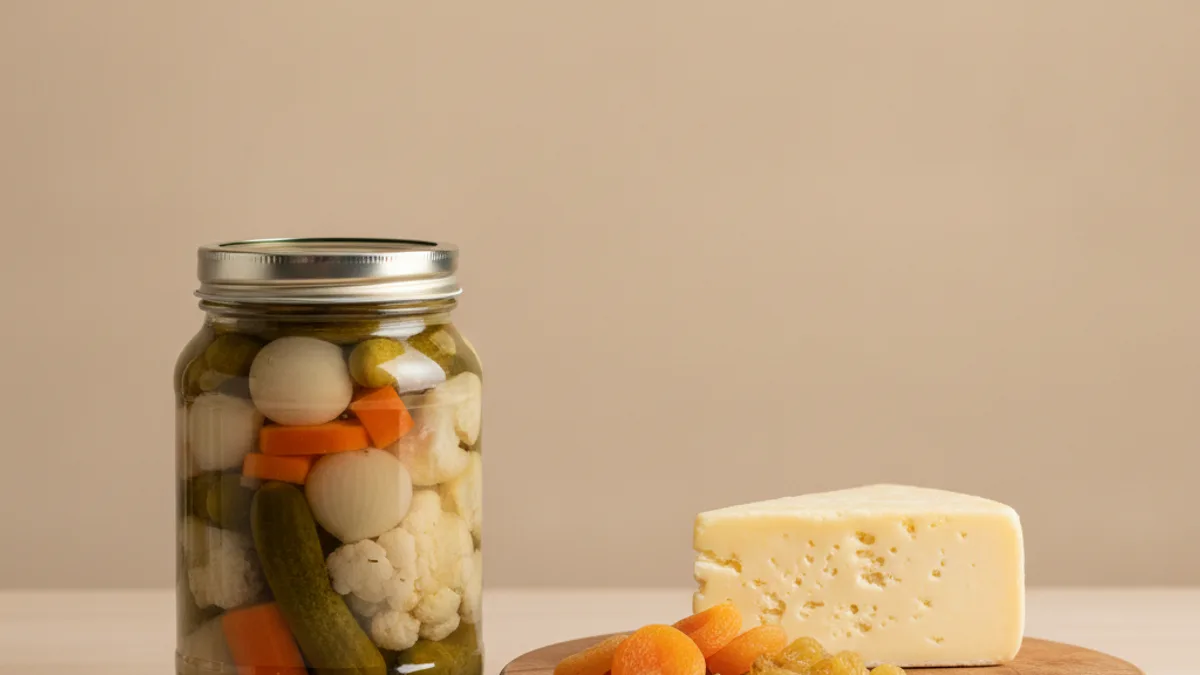
The word "preservative" on an ingredient label is often seen as a negative, and products "without preservatives" sell better. However, the purpose of a preservative is to prevent the growth of things that are truly dangerous: botulinum toxin, salmonella, and mold with its mycotoxins. The discussion becomes meaningful if we compare them not to an ideal, but to what happens without them.
What they do
Food spoilage is the work of microorganisms and oxygen. Preservatives act on the former: they reduce water availability, shift acidity, and damage the cell membranes of bacteria and mold. Other substances work against oxidation — read about them in our article on antioxidants.
Methods of preservation without additives exist and are older than the additives themselves: salt, sugar, smoking, drying, acid, sterilization, and cold. Some of these are no less harmful: salted fish and smoked meats solve the same problem using high amounts of salt and combustion products. For more on salt in ready-to-eat foods, see our article on salt.
The most common ones and what is known about them
| Code | Name | Where it is found |
|---|---|---|
| E200, E202 | Sorbic acid, potassium sorbate | Bread, cheese, beverages, sauces |
| E210–E213 | Benzoic acid and benzoates | Carbonated drinks, sauces, marinades |
| E220–E228 | Sulfur dioxide, sulfites | Dried fruits, wine, potato convenience foods |
| E249–E252 | Nitrites and nitrates | Meat products |
| E260 | Acetic acid | Marinades, sauces |
| E270 | Lactic acid | Dairy products, canned vegetables |
Regarding sorbic acid and potassium sorbate, EFSA issued a separate opinion following a re-evaluation. Regarding nitrites, there is a re-evaluation of E249 and E250, which establishes the acceptable daily intake and analyzes exposure; more details can be found in our article on nitrites.
Sulfites stand apart: they are included in the list of mandatory allergens to disclose because they cause bronchospasm in people with asthma. Read more about this in our article on mandatory allergens.
Why "preservative-free" can be misleading
Three typical cases.
The preservative is replaced by an ingredient. Vinegar, lemon juice, lactic acid bacteria cultures, and rosemary extract work in the same way, but they are not labeled with a code and are not counted as additives. This technique is analyzed in our article on how additives are hidden.
The preservative is not needed due to technology. In a dry, frozen, or hermetically sterilized product, a preservative has nothing to do: there is little water or no microbes. The label is accurate but provides no extra information.
The preservative is replaced by salt or sugar. Jam and salted fish do not need additives because the concentration of sugar and salt itself prevents microbes from growing. This is not always a win for your diet.
What is really worth keeping in mind
Acceptable daily intake is calculated for everything at once. One product almost never approaches this limit, but a diet consisting entirely of ready-to-eat foods might. This is why assessments by expert bodies refer to consumption from all sources, not just a single package.
Individual reactions occur. Reactions to benzoates and sulfites have been described in sensitive individuals, most often asthmatics. This is a reason for a specific person to read the ingredients list, not an argument against the entire group of substances.
The absence of a preservative changes how a product is handled. Such a product has a shorter shelf life and is more sensitive to temperature. Home canning without sterilization is a classic source of botulism, and this is exactly the risk that industrial preservatives mitigate.
How to read this on packaging
- Look at the function, not the code. "Preservative" before the name tells you why the substance was added.
- Check the expiration date. A long shelf life in the absence of preservatives means another method was used—sterilization, drying, freezing, or high amounts of salt and sugar.
- Don't look for a culprit in a single line. The length of the ingredient list and the degree of processing tell you more—see our article on ultra-processed food.
- Check the reference guide. The assessment of each code according to EU regulations and lists is collected in our E-additive guide.
Frequently asked questions
- Are preservatives in food dangerous?
- In permitted amounts, expert bodies have not identified any concerns: sorbates, benzoates, and nitrites have undergone re-evaluations to establish an acceptable daily intake. A separate issue is individual reactions to sulfites and benzoates in sensitive people.
- Is it true that a product without preservatives is safer?
- Not necessarily. Without them, a product has a shorter shelf life and requires stricter temperature control. The purpose of a preservative is to prevent the growth of truly dangerous agents: mold with mycotoxins, Salmonella, and the pathogen that causes botulism.
- How can a product be "preservative-free" and have a long shelf life?
- Either the preservative has been replaced by an ingredient without a code—such as vinegar, lemon juice, bacterial cultures, or rosemary extract—or another method is being used, such as sterilization, drying, freezing, or high concentrations of salt or sugar.
- Which preservatives are the most common?
- Sorbic acid and potassium sorbate (E200, E202) in bread, cheese, and sauces; benzoates (E210–E213) in beverages and marinades; sulfites (E220–E228) in dried fruits and wine; nitrites (E249–E250) in meat products.
- Why are sulfites singled out?
- They are included on the list of allergens that must be disclosed because they can trigger bronchospasm in people with asthma. For them, disclosure is tied to a content threshold rather than being mandatory in all cases.
Read next
- Nitrites in sausage: why they are there and what is known about them — Sodium nitrite is an additive with the worst reputation and one of the most clear-cut functions.
- Sorbate and benzoate: the two most common preservatives — Potassium sorbate and sodium benzoate account for the majority of industrial preservation: the former works against mold and yeast, while the latter works in acidic environments against a wide range of microorganisms.
- How manufacturers hide additives in the ingredient list — A short ingredient list sells better than a long one, and manufacturers know it.
- Sulfites: where the E220–E228 allergen hides — Sulfites are the only item on the list of mandatory allergens that are not always declared, but only starting from a certain amount.
This article is for general information. It is not medical advice, a diagnosis, or a prescription for treatment or a diet, and it does not replace a consultation with your doctor. If you have a health condition, are pregnant, take medication, or follow a diet prescribed to you, decisions about food belong with your doctor.
Figures from regulations, guidelines and studies are given as they stood when this article was prepared and may since have changed; check them against the primary sources. This article is not advertising, an offer, or individual advice, and neither the author nor the site owner is responsible for decisions taken on the basis of it.