Nitrites in sausage: why they are there and what is known about them
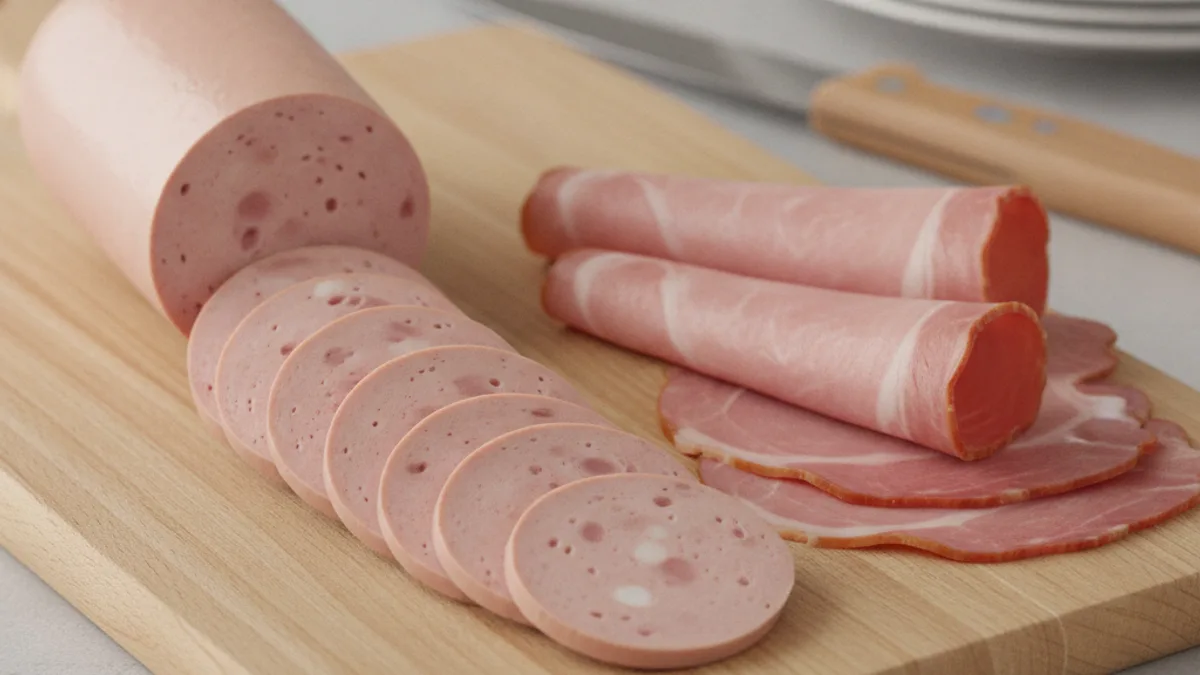
Sodium nitrite is an additive with the worst reputation and one of the most clear-cut functions. It solves a problem that was poorly addressed before: it prevents the growth of the pathogen that causes botulism in meat products stored for weeks without sterilization. The concerns regarding it are also real, and it is best to examine them individually.
What it does
Three things at once, and the first is the most important.
Prevents botulism. The pathogen thrives in oxygen-free environments and produces a toxin that has neither smell nor taste. A meat product in a casing is exactly that kind of environment. Nitrite prevents the spores from germinating.
Provides color. By reacting with meat myoglobin, it forms a compound that remains pink after heating. Without nitrite, cooked sausage would have the gray-brown color of boiled meat.
Shapes the flavor. The characteristic taste of ham and cooked sausage is largely its work, not that of spices.
This creates a dilemma: you cannot simply remove nitrite and keep everything else. The product would change significantly in terms of safety, color, and taste.
What is known about the risk
Nitrite itself is not the problem. The issue is what it turns into: in acidic environments and at high temperatures, it can participate in the formation of nitrosamines, some of which are classified as carcinogenic.
EFSA re-evaluated potassium nitrite (E249) and sodium nitrite (E250). Three conclusions are worth noting.
First: the acceptable daily intake was set at 0.07 mg of nitrite ion per kilogram of body weight.
Second, and it is important to state this in full: exposure from the use of nitrite as an additive did not exceed this level for the general population, with a slight exceedance in children in the upper percentiles. However, when considering all dietary sources of nitrite, the picture is different: the acceptable intake was exceeded in infants, toddlers, and older children even at average intake levels, and at high intake levels, it was exceeded in all age groups. The first half of this conclusion is cited more often than the second, and in isolation, it is more reassuring than the source allows.
Third: epidemiological studies contain data linking dietary nitrite to stomach cancer, and the combination of nitrite and nitrate from processed meat to colorectal cancer.
Nitrates E251 and E252 were evaluated separately: exposure from the additive accounted for less than 5% of total nitrate exposure, as its main source is vegetables.
Processed meat as a category
Apart from the additive, there is an assessment of the product category itself. In 2015, IARC classified processed meat as Group 1 — carcinogenic to humans, primarily regarding colorectal cancer, and red meat as Group 2A.
It is important not to confuse two statements here. Group 1 refers to the strength of evidence that a link exists, not the magnitude of the risk. An explanation provided separately by the IARC notes that being in the same group as smoking does not mean the danger is identical.
The practical conclusion from these two facts is about frequency and quantity, not a ban. This is exactly how the discussion about ultra-processed food works in general.
Why "nitrite-free" is often misleading
A product with such a label is usually made with celery or beet powder, or sea salt of a specific origin. These naturally contain nitrate, which is converted into the same nitrite by bacterial cultures.
Chemically, the result is the same. The difference is that the substance arrived as an ingredient, not as an additive, so there is no code in the ingredient list. This technique is analyzed in the article about how additives are hidden.
An additional nuance: the amount of nitrite from a plant source is less controlled than the dosed addition of a pure substance. This is not an argument for or against, but a reason not to consider the label an automatic improvement.
What to do in practice
- Look at frequency, not the composition of a single pack. Daily sausage and sausage on weekends are different stories.
- Do not fry until charred. The formation of nitrosamines increases at high temperatures — fried bacon is the worst-case scenario here.
- Check the meat content. It is indicated as a percentage in the ingredients and tells you more about the product than the presence of a code. More on this in the article about sausage composition.
- Do not apply this logic to home canning. Where industry uses nitrite, home airtight canning remains a source of botulism — see the article on shelf life.
Frequently asked questions
- Why are nitrites added to sausage?
- First of all, to suppress the botulism pathogen in a product that is stored for weeks without sterilization. Additionally, nitrite provides a pink color after heating and forms the characteristic taste of ham and cooked sausage.
- Are nitrites dangerous?
- Nitrite itself is not the problem, but its conversion into nitrosamines at high temperatures and in an acidic environment. EFSA has established an acceptable daily intake of 0.07 mg of nitrite ion per kilogram of body weight; exposure from its use as an additive for the general population did not exceed this.
- What does it mean that processed meat is classified as Group 1?
- That the evidence of a link to colorectal cancer is considered convincing. The group reflects the strength of the evidence, not the magnitude of the risk: IARC specifically clarifies that being in the same group as smoking does not mean the danger is the same.
- Is there such a thing as sausage without nitrites?
- Products with this label are usually made with celery or beet powder, where naturally occurring nitrate is converted into the same nitrite. Chemically, the result is the same, but there is no code in the ingredients list because the substance was introduced as an ingredient.
- How to reduce the risk without giving up meat products?
- Focus on frequency rather than the composition of an individual package, avoid frying until a dark crust forms—as nitrosamine formation increases at high temperatures—and choose products with a higher meat content.
Read next
- Preservatives: why they are needed and what questions arise about them — The word "preservative" on an ingredient label is often seen as a negative, and products "without preservatives" sell better.
- How the composition of sausage has changed and what to look for in it now — Sausage is the most convenient product for analyzing how recipes change: the changes are documented by percentages right on the packaging.
- Ultra-processed food: what lies behind the NOVA classification — There is a lot of writing about ultra-processed food right now as if the matter is settled: there is bad industrial food and good homemade food.
- Nitrates in vegetables: how much and what to do about it — Nitrates are always present in vegetables: they are a form of nitrogen from which the plant builds protein.
This article is for general information. It is not medical advice, a diagnosis, or a prescription for treatment or a diet, and it does not replace a consultation with your doctor. If you have a health condition, are pregnant, take medication, or follow a diet prescribed to you, decisions about food belong with your doctor.
Figures from regulations, guidelines and studies are given as they stood when this article was prepared and may since have changed; check them against the primary sources. This article is not advertising, an offer, or individual advice, and neither the author nor the site owner is responsible for decisions taken on the basis of it.