Nitrates in vegetables: how much and what to do about it
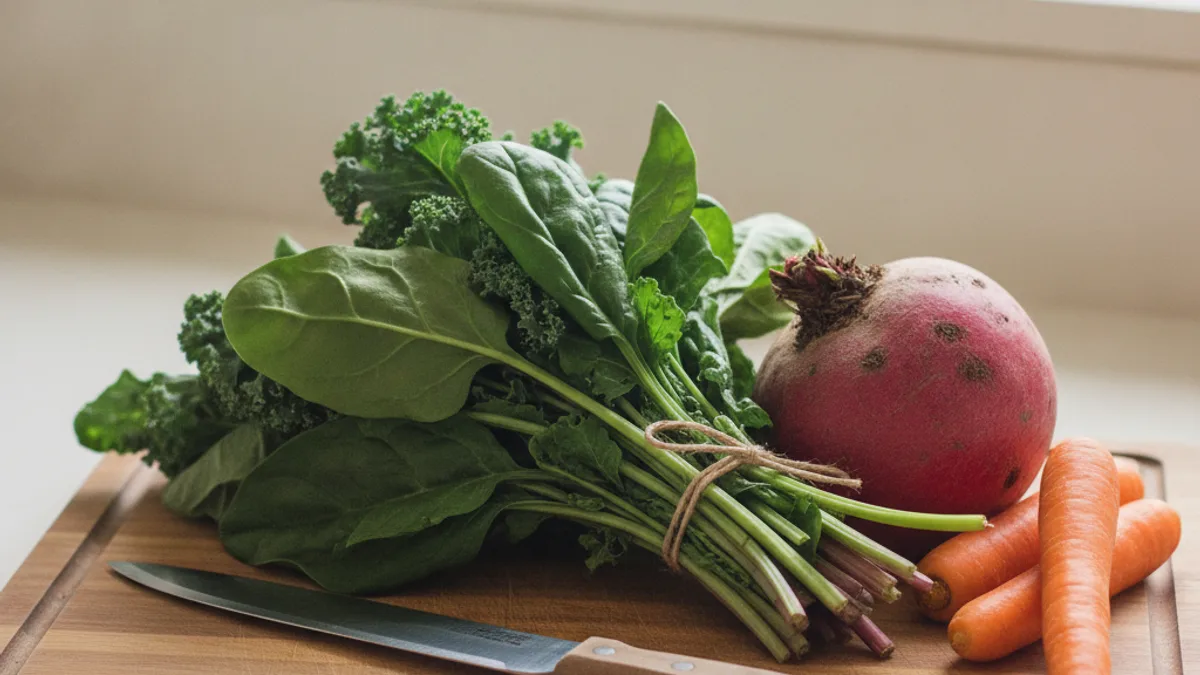
Nitrates are always present in vegetables: they are a form of nitrogen from which the plant builds protein. The question is not about their presence, but about their quantity — and here the figures are known, unlike the scare stories about “nitrate watermelons”.
Where they come from
Plants absorb nitrogen from the soil in the form of nitrate and convert it into amino acids. Some nitrate is not processed in time and remains in the tissues—mostly in the parts through which transport occurs: stems, petioles, the core, and near the root.
The amount depends on the plant species, light exposure, variety, and the amount of nitrogen fertilizer applied. Greenhouse vegetables in early spring contain more nitrates than summer field-grown ones—not because of dishonest producers, but due to a lack of light: without it, nitrate is processed more slowly.
What the numbers mean
The acceptable daily intake (ADI) for the nitrate ion is 3.7 mg per kilogram of body weight. This value was established by the Scientific Committee on Food, confirmed by the Joint FAO/WHO Expert Committee on Food Additives, and remained unchanged after the 2017 EFSA review. For a person weighing 60 kg, this is about 220 mg per day; for 80 kg, it is about 300 mg.
The main question is whether this amount is exceeded by a normal diet. The EFSA Panel on Contaminants evaluated this separately and concluded that nitrate intake from vegetables is unlikely to pose a significant health risk, and the recognized benefits of vegetable consumption outweigh it. According to the same assessment, a person eating about 400 g of vegetables and fruits per day does not exceed the acceptable intake.
Where nitrates are most concentrated
| Vegetable | Level |
|---|---|
| Arugula, spinach, lettuce, dill, parsley | Highest — these are leaves, and they accumulate them |
| Beets, radishes, winter radish | High |
| Early cabbage, zucchini, turnips | Medium |
| Carrots, potatoes, onions | Below average |
| Tomatoes, cucumbers, peppers, eggplants | Low — fruit vegetables accumulate little |
| Fruits and berries | Low |
A useful takeaway: greens and lettuce provide more nitrates than everything else combined—and they remain a product that is worth eating. Removing them from your diet because of nitrates means trading proven benefits for the elimination of a risk that was not confirmed in this assessment.
How nitrate is actually dangerous
On its own, it is low in toxicity. What matters is what it turns into.
Nitrite. Some nitrate is reduced to nitrite—by bacteria in the mouth and in the product during improper storage. Nitrite binds to hemoglobin, and in infants during their first months, this leads to methemoglobinemia. This is why vegetable purees and broths are not given to children under a certain age without medical advice, and beet juice is subject to a separate restriction.
Nitrosamines. These are formed from nitrite and amines, mainly in meat products and at high temperatures. In vegetables, this is prevented by vitamin C, which is already present in them. Regarding the same chemistry in sausages, see nitrites in meat products.
What actually reduces the amount
- Trim the stems and petioles of greens, the core of cabbage, and the top and tail of carrots and beets. The concentration is highest there.
- Peel the skin of root vegetables and zucchini.
- Boil in a large volume of water and drain the water: nitrates are soluble and leach into the broth. For this same reason, vegetable broth is not the most harmless base for a child's soup.
- Soak chopped root vegetables for 15–20 minutes.
- Do not store ready-made vegetable dishes while warm. In cooling puree or broth, bacteria convert nitrate into nitrite; cooling must be done quickly—more on this in the guide on how to store food at home.
Washing does little: nitrates are inside the tissues, not on the surface. Washing is necessary for other reasons—to remove dirt and microbes.
About household nitrate testers
Devices sold as "nitrate testers" do not measure nitrate concentration; they measure the electrical conductivity of the juice and recalculate it using a table programmed for a specific vegetable. Conductivity is affected by salts, sugars, variety, and ripeness, so the margin of error is large, and such devices are not calibrated. As a separate category of gadgets, they are analyzed in the article on pocket food scanners.
In short
Nitrates are not a reason to give up vegetables or to look for "farm-fresh" produce. Real measures boil down to three actions: trim stems and peels, drain the cooking water, and do not keep ready-made vegetable dishes warm. Everything else—about watermelons injected with syringes and market devices—does not solve a problem that is not actually pressing.
Frequently asked questions
- How many nitrates are allowed per day?
- The acceptable daily intake of nitrate ion is 3.7 mg per kilogram of body weight, which is about 220 mg for a 60 kg person. According to EFSA's assessment, a diet with 400 g of fruits and vegetables per day does not exceed this amount.
- Which vegetables contain the most nitrates?
- In leafy greens: arugula, spinach, lettuce, dill, and parsley. Beets and radishes follow. The least amount is found in fruiting vegetables: tomatoes, cucumbers, peppers, and also in fruits.
- Does washing help remove nitrates?
- Almost not: nitrates are inside the tissues, not on the surface. Peeling, cutting off stems and petioles, soaking, and boiling with water drained off reduce their amount.
Read next
- Nitrites in sausage: why they are there and what is known about them — Sodium nitrite is an additive with the worst reputation and one of the most clear-cut functions.
- How to store food at home — The expiration date on the package refers to an unopened pack under the specified conditions.
- Frozen foods: when they are just as good as fresh — Freezing is often seen as a compromise: fresh is better, and frozen is only for when there is no choice.
This article is for general information. It is not medical advice, a diagnosis, or a prescription for treatment or a diet, and it does not replace a consultation with your doctor. If you have a health condition, are pregnant, take medication, or follow a diet prescribed to you, decisions about food belong with your doctor.
Figures from regulations, guidelines and studies are given as they stood when this article was prepared and may since have changed; check them against the primary sources. This article is not advertising, an offer, or individual advice, and neither the author nor the site owner is responsible for decisions taken on the basis of it.