Frozen foods: when they are just as good as fresh
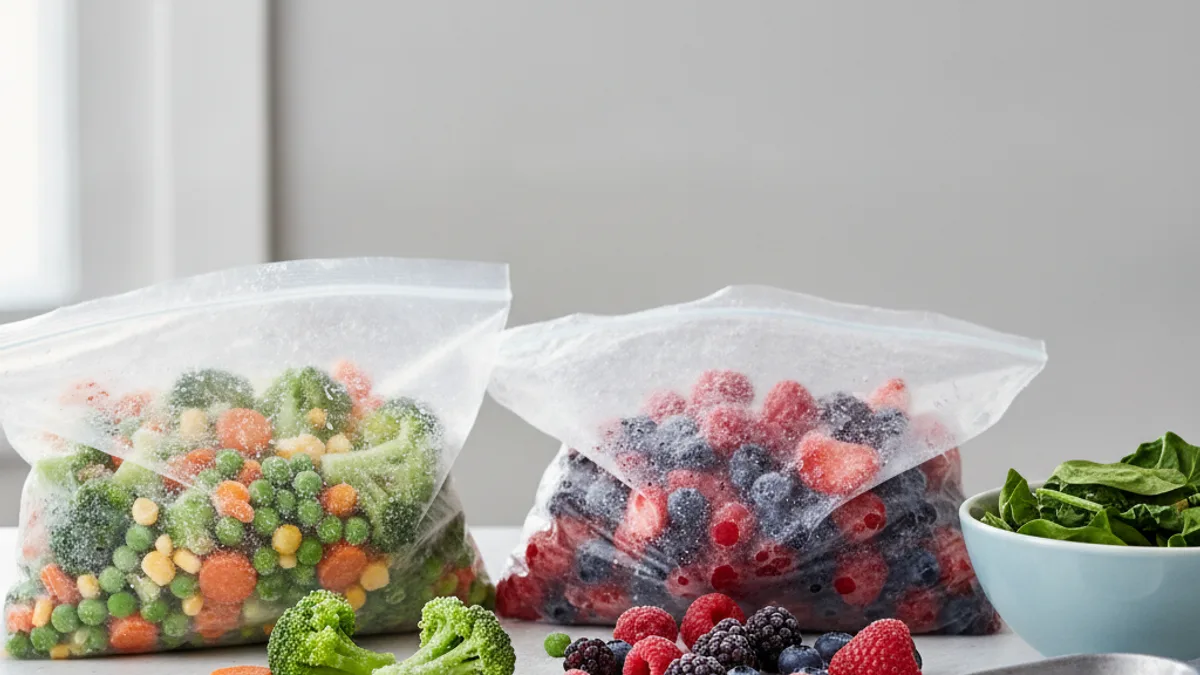
Freezing is often seen as a compromise: fresh is better, and frozen is only for when there is no choice. For some products, the exact opposite is true. A vegetable frozen hours after harvest reaches the plate in better condition than one that spent a week in transit and on a shelf labeled as "fresh".
What freezing does
It stops two things: the growth of microorganisms and the activity of the product's own enzymes. The first ensures safety, the second preserves properties.
The key parameter is speed. During slow freezing, water in cells forms large ice crystals that rupture cell walls: after thawing, the product leaks and becomes mushy. With rapid freezing, crystals are small, there is less damage, and the structure is preserved.
Industrial blast freezing happens at minus thirty degrees Celsius or lower in a short time. A home freezer cannot do this, which is the main reason why it is better not to thaw products bought frozen "just in case" and not to refreeze them.
Where frozen products win
| Product | Why |
|---|---|
| Green peas, corn | Frozen within hours of harvest |
| Berries | Fresh ones out of season travel for a long time and lose more |
| Spinach, broccoli | Quickly lose vitamins when stored fresh |
| Deep-sea fish | Frozen on the vessel; "chilled" is often thawed |
The last line is practically more important than the others. Fish lying on ice labeled "chilled" has often been frozen and thawed for sale—that is, it has gone through an extra cycle. Frozen fish of the same species is more honest in this sense.
Where they lose
- Products with high water content and delicate structure: cucumbers, lettuce, tomatoes. After thawing, they are only suitable for cooking.
- Ready-made meals with sauces. The sauce often separates and is stabilized with additives—the mechanism is in the article on stabilizers and thickeners.
- Products with added water. Glaze on fish and shrimp, injection solution in meat—you are paying for ice as if it were the product.
How to tell if a package has been thawed
This is the main practical skill for this topic, because a break in the cold chain cancels out all the advantages.
- Feel the contents. Vegetables and berries should be loose. A frozen clump means the product has thawed and refrozen.
- Look at the frost inside the package. Abundant snow and ice crust are the same sign.
- Check for deformation. A package that has lost its shape and hardened in that state has been thawed.
- Take from the back of the freezer, not the top: the top layer often goes above the load line and thaws slightly.
About how packaging contributes to preservation—the article on packaging and freshness.
Glaze and how to account for it
A layer of ice on fish and seafood is necessary: it protects the surface from dehydration and oxidation. The question is its proportion—it is indicated on the package, and the net weight should be stated without the glaze.
In practice, this means that comparing two packages by price per kilogram is only possible if you take this line into account. The technique is explained in the article on price per kilogram.
What to do with this in the kitchen
- Do not thaw vegetables. Throw them into boiling water or a pan while frozen—this way they do not turn into mush.
- Thaw fish and meat in the refrigerator, not in water or on the counter: slowly and at a low temperature.
- Do not refreeze. The second cycle of crystals destroys the structure completely, and the thawed product has had time to become a nutrient medium.
- Keep portions ready. Then you don't have to thaw more than you need—a technique from the article on chicken in the oven.
Frequently asked questions
- Are frozen vegetables worse than fresh ones?
- Often the opposite is true. Peas, corn, spinach, and broccoli are frozen within hours of harvest, whereas "fresh" ones out of season travel and sit for weeks, losing more. The speed of freezing is what matters: with rapid freezing, crystals are small and the structure is preserved.
- How to tell if a package has been thawed?
- Feel the contents: vegetables and berries should be loose; a frozen clump indicates thawing. Excessive frost inside the package and a deformed package shape are also signs of this.
- Which is more honest — chilled fish or frozen fish?
- Deep-sea fish is frozen right on the vessel, while "chilled" fish lying on ice has often been thawed for sale, meaning it has gone through an extra cycle. In this case, frozen fish is more honest.
- Why is there a glaze on fish and how should it be accounted for?
- The layer of ice protects the surface from dehydration and oxidation. Its share is indicated on the packaging, and the net weight should be stated without the glaze — otherwise, comparing two packages by price per kilogram is inaccurate.
- Can products be refrozen?
- It is not recommended. A second cycle of crystal formation destroys the structure completely, and during the thawing process, the product has time to become a breeding ground for microorganisms.
Read next
- Packaging and freshness: what vacuum, modified atmosphere, and inflated bags do — Packaging does more than just hold a product—it is part of the shelf life.
- Expiration dates: "best before" and "use by" are not the same — The date on packaging is perceived as a boundary between "safe" and "unsafe," although it means different things for different products.
- Price per kilogram: the only comparable figure on a price tag — There are two numbers on a price tag.
This article is for general information. It is not medical advice, a diagnosis, or a prescription for treatment or a diet, and it does not replace a consultation with your doctor. If you have a health condition, are pregnant, take medication, or follow a diet prescribed to you, decisions about food belong with your doctor.
Figures from regulations, guidelines and studies are given as they stood when this article was prepared and may since have changed; check them against the primary sources. This article is not advertising, an offer, or individual advice, and neither the author nor the site owner is responsible for decisions taken on the basis of it.