Packaging and freshness: what vacuum, modified atmosphere, and inflated bags do
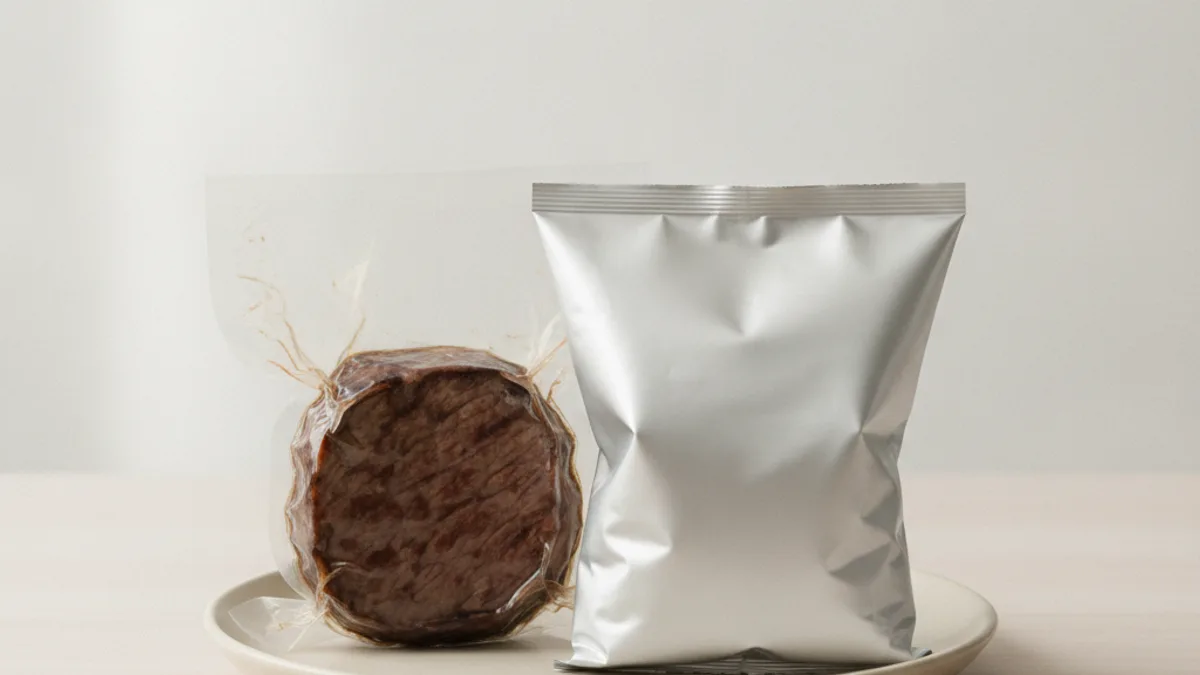
Packaging does more than just hold a product—it is part of the shelf life. Gas instead of air, vacuum, and light-proof film solve specific problems, and whether a product lasts until the date on the label depends on them. At the same time, this explains two things that annoy shoppers: air in a bag of chips and bloated salad packaging.
Modified atmosphere
Inside the bag is not air, but a mixture of gases tailored to the product: usually nitrogen, carbon dioxide, and a little oxygen, and sometimes no oxygen at all.
Each gas serves a purpose:
- Nitrogen is inert and displaces oxygen, slowing down fat oxidation—the mechanism is analyzed in the article about antioxidants;
- Carbon dioxide inhibits the growth of some bacteria and mold;
- Oxygen is left where color is needed: in red meat packaging, it maintains a bright hue.
A practical consequence of this: an opened package loses its protection immediately. The "after opening" shelf life is indicated separately and is usually much shorter—this is covered in the article about shelf life.
Air in a bag of chips
This is not a volume scam, but a feature. The gas cushion performs two tasks: it protects the fragile product from being crushed during transport and displaces oxygen, which would otherwise make the fat rancid within a week. There is nitrogen inside, not air.
When checking, you should look not at the fullness, but at the net weight on the package—and the price per kilogram, which is discussed in the article about price per kilogram. This is exactly how the reduction in actual content, analyzed in the article about shrinkflation, is uncovered.
Vacuum
The air is pumped out, and the film tightly compresses the product. It works against oxidation and some microorganisms, but not all: those that do not need oxygen feel fine in a vacuum. This is why vacuum packaging does not replace a refrigerator, but only complements it.
The sign of a breach is simple: if the film has pulled away from the product and there is volume inside, the seal is broken or gas is being produced inside. Both mean that the product should not be purchased.
When bloating means spoilage
| What is visible | What it means |
|---|---|
| A bag of chips or snacks is inflated | The gas cushion is normal |
| Vacuum packaging has lost its compression | Seal breach or gas production |
| Canned food lid is convex | Gas production inside—discard |
| Milk or juice carton is bloated | Fermentation—discard |
| Salad or meat packaging has bloated | Microflora growth—do not buy |
The difference between the first row and the others is whether the gas was there initially. If the product is fragile and dry, the gas is technological. If it is moist and perishable, the gas was produced by microbes.
Light, moisture, and odor
Light. It accelerates fat oxidation and destroys some vitamins. That is why milk in opaque packaging keeps better than in a clear bottle, and butter in dark glass.
Moisture. Barrier film prevents dry products from becoming damp and moist ones from drying out. By transferring cereal or cookies to a different container without a lid, you negate this work.
Odor. Fat absorbs foreign odors, which is why butter in an open package next to fish becomes butter that tastes like fish.
What to do in practice
- Check for integrity. A puncture, a dent on the seam of a tin can, or loose film are reasons not to buy.
- Do not transfer unnecessarily. Some packaging is part of the preservation process, while a home container is not.
- Check the shelf life after opening. It is indicated separately and is shorter than the main one.
- Do not judge volume by the bag. Net weight and price per kilogram are the only comparable values.
- Put perishables in your cart at the end of your shopping trip. The trip home from the store in summer is the weakest link, and no packaging can compensate for it.
Frequently asked questions
- Why is there air in a bag of chips?
- It is not air, but nitrogen. The gas cushion protects fragile products from being crushed during transport and displaces oxygen, which causes fat to turn rancid quickly.
- What is a modified atmosphere?
- A mixture of gases inside the packaging instead of air: nitrogen displaces oxygen, carbon dioxide inhibits some bacteria and mold, and oxygen is sometimes left in so that red meat retains its color.
- When does a bloated package mean spoilage?
- When there was no gas there to begin with. A puffed-up bag of dry snacks is normal, but a bulging can lid, a bloated milk carton, or a swollen package of salad or meat indicates gas formation inside.
- Does vacuum packaging replace a refrigerator?
- No. Vacuum packaging works against oxidation and some microorganisms, but it does not hinder those that do not require oxygen. Storage conditions on the packaging must be followed in any case.
- Can I transfer products into my own jars?
- You can, but some packaging plays a role in preservation: barrier film retains moisture, and opaque packaging protects against light. Once transferred, you can no longer rely on the original shelf life.
Read next
- Expiration dates: "best before" and "use by" are not the same — The date on packaging is perceived as a boundary between "safe" and "unsafe," although it means different things for different products.
- Shrinkflation: the package got smaller, but the price stayed the same — A liter of milk has turned into 900 milliliters, a dozen eggs into nine, and a chocolate bar has shrunk from 100 grams to 85.
- Frozen foods: when they are just as good as fresh — Freezing is often seen as a compromise: fresh is better, and frozen is only for when there is no choice.
- Microplastics in food: what is known and what is not — Microplastics are discussed in two ways: 'we eat a credit card a week' and 'there is no evidence of harm.
This article is for general information. It is not medical advice, a diagnosis, or a prescription for treatment or a diet, and it does not replace a consultation with your doctor. If you have a health condition, are pregnant, take medication, or follow a diet prescribed to you, decisions about food belong with your doctor.
Figures from regulations, guidelines and studies are given as they stood when this article was prepared and may since have changed; check them against the primary sources. This article is not advertising, an offer, or individual advice, and neither the author nor the site owner is responsible for decisions taken on the basis of it.