How the composition of sausage has changed and what to look for in it now
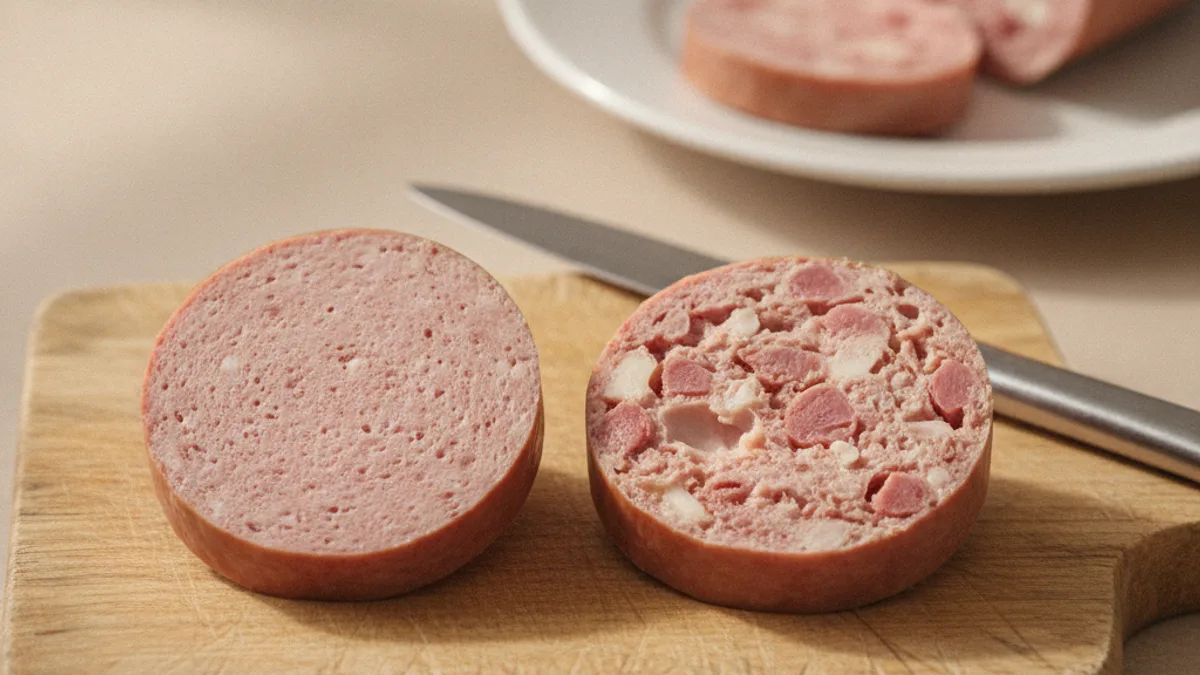
Sausage is the most convenient product for analyzing how recipes change: the changes are documented by percentages right on the packaging. The proportion of meat is indicated in the ingredients list, and it explains the price difference between two externally identical sausages.
What is a category
Meat products are divided into categories based on the mass fraction of muscle tissue in the recipe. Category A has the highest proportion, followed by B, C, and so on in descending order. The designation is indicated on the packaging next to the product name.
This is the first thing you should look at, and it is more informative than any words on the front of the package. "Premium," "Select," or "Homemade" are not categories and do not guarantee anything.
Where the meat goes
When a recipe is cheapened, the proportion of muscle tissue decreases, and the vacated space is filled with something else. Usually, this is:
| What is added | Why |
|---|---|
| Water | The cheapest filler, retained by phosphates |
| Mechanically separated meat | Cheaper than whole cuts, different structure |
| Soy or pea protein | Replaces part of the meat protein |
| Starch, flour | Binds water and reduces costs |
| Milk protein | Binder; also an allergen from the mandatory list |
| Fat, skin | Cheap part of the carcass |
Water is the key item here: for it to be retained in the product, phosphates are needed, which are discussed in the article about phosphates. Milk protein is important separately—it must be disclosed as an allergen, which is discussed in the article about milk protein.
Why nitrite is always present
This is the only component that cannot be removed without changing the product: it suppresses the botulism pathogen, gives a pink color after heating, and forms the characteristic taste. An analysis is in the article about nitrites.
Products labeled "nitrite-free" are usually made with celery or beet powder, where naturally occurring nitrate turns into the same nitrite. Chemically, the result is the same; there is no E-code in the ingredients.
What to check in a minute
- Category. The letter next to the name.
- First ingredient. If it is water, the meat content is low.
- Meat percentage. It is indicated in the ingredients, and it allows for direct comparison between two packages.
- Presence of vegetable protein and starch. Not harmful, but a sign of substitution.
- Price per kilogram, not per sausage—see the article about price per kilogram.
The general order for reading ingredients is in the article about ingredients in ten seconds.
About varieties and names
Names like "Doktorskaya" or "Molochnaya" refer to recipes described by standards. However, such a product can also be produced according to technical specifications (TU)—in that case, the name is similar, but the recipe is unique. An analysis is in the article about GOST and TU.
Practical consequence: comparing "Doktorskaya" from two manufacturers by name is meaningless, but comparing by ingredients is meaningful.
How much to eat
This is a case where the question is not about a specific package, but about frequency. Processed meat as a category has been classified by the IARC as Group 1 regarding colorectal cancer, and the group reflects the strength of the evidence for the link, not the magnitude of the risk.
The practical conclusion from this is about frequency and portion size, not about a ban. A broader framework is in the article about ultra-processed food.
Frequently asked questions
- What do category A or B mean on sausage?
- The mass fraction of muscle tissue in the recipe: category A is the highest, followed by descending order. This is more informative than any words on the front of the package: "Premium" and "Select" are not official categories.
- What is used to replace meat to reduce costs?
- Water retained by phosphates, mechanically separated meat, soy or pea protein, starch and flour, milk protein, fat, and skin. All of this is listed in the ingredients.
- How to quickly compare two sausages?
- Check the category, the first ingredient in the composition, the percentage of meat, and the price per kilogram. If water is listed first, the meat content is low regardless of the name.
- Is there sausage without nitrites?
- Products with such a label are usually made with celery or beet powder, where nitrate turns into the same nitrite. Chemically, the result is the same, but there is no code in the composition because the substance was added as an ingredient.
- Can you compare "Doktorskaya" from different manufacturers?
- By name — no: a product with a similar name may be produced according to internal technical specifications with its own recipe. It makes sense to compare by category and composition.
Read next
- Nitrites in sausage: why they are there and what is known about them — Sodium nitrite is an additive with the worst reputation and one of the most clear-cut functions.
- What to look for in an ingredient list in ten seconds — Reading an entire ingredient list at the shelf is impossible: the print is small, and there is no time.
- GOST and TU: what is actually behind these letters — GOST is often read as a mark of quality, while TU is seen as permission to do whatever one wants.
- Red and processed meat: what "group 1" means — In October 2015, processed meat was placed in the same classification group as tobacco, and the headlines wrote themselves.
This article is for general information. It is not medical advice, a diagnosis, or a prescription for treatment or a diet, and it does not replace a consultation with your doctor. If you have a health condition, are pregnant, take medication, or follow a diet prescribed to you, decisions about food belong with your doctor.
Figures from regulations, guidelines and studies are given as they stood when this article was prepared and may since have changed; check them against the primary sources. This article is not advertising, an offer, or individual advice, and neither the author nor the site owner is responsible for decisions taken on the basis of it.