Peanuts and tree nuts: why they are separated and where they hide
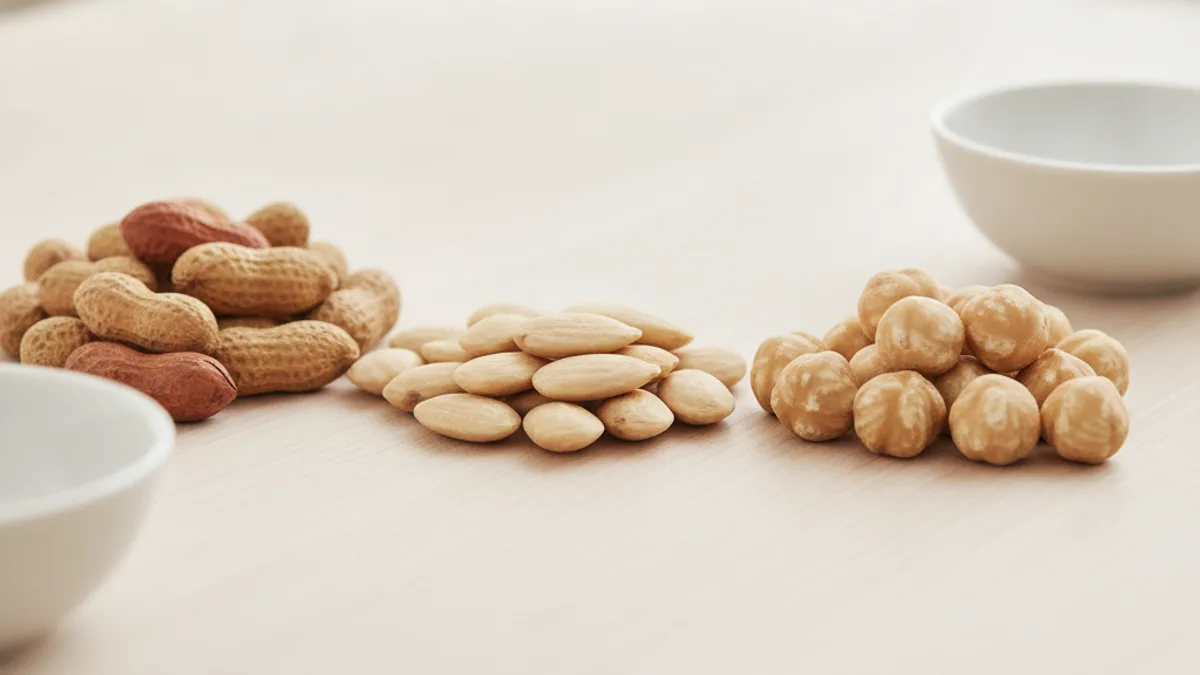
In the list of mandatory allergens, peanuts and tree nuts are listed as two separate items, and this is not just a formality: peanuts are legumes, not nuts, and an allergy to them does not mean an allergy to hazelnuts or almonds. The reverse is also true. This leads to different avoidance strategies.
Why two lines instead of one
The peanut is the fruit of a legume plant, closer to peas and beans than to a walnut. It has its own specific proteins that trigger a reaction, and there is little overlap with the proteins found in tree nuts.
In practical terms, this means: a person with a peanut allergy is not required to avoid almonds, and vice versa. Decisions are made based on the results of medical testing, not by the word "nut" on the packaging.
At the same time, reactions to several types of nuts at once do occur—and here a different mechanism is at play, which is analyzed in our article on cross-reactivity.
What is included in the "tree nut" group
Regulations list them by name: almonds, hazelnuts, walnuts, cashews, pecans, Brazil nuts, pistachios, and macadamia. For more on the general list, see our article on mandatory allergens.
The following are not included in this group, even though they are commonly called nuts: peanuts (a legume, a separate category), nutmeg (a spice), coconut (a drupe), and pine nuts (seeds of a pine tree). Reactions to these can occur, but there is no mandatory disclosure requirement for them under this category.
Where they are found when you least expect them
| Product | What might be inside |
|---|---|
| Asian sauces | Peanut paste as a base |
| Pesto | Pine nuts, often replaced with cashews |
| Plant-based drinks and "cheeses" | Almonds, cashews |
| Confectionery glazes and fillings | Nut paste, praline |
| Muesli, granola, bars | A mix of nuts, often not listed on the front of the package |
| Ice cream and desserts | Shared production lines and common toppings |
| Nut oil in baked goods | May be listed as "vegetable oil" with further specification |
A separate category includes dishes in food service, where nuts may end up in a salad or sauce without warning. How to ask about this is covered in our article on allergens in restaurants.
Regarding refined peanut oil
Highly refined oil contains virtually no protein and therefore usually does not trigger a reaction. Unrefined and cold-pressed oils do contain protein. The degree of refinement is not always indicated on the packaging, which is one of the reasons why such decisions should be made with a doctor rather than based on the ingredient list.
Shared lines and "may contain traces"
Nuts are the most frequent item in "may contain traces" warnings because nut dust is easily carried through a facility, and dedicated production lines are expensive. In cases of severe reactions, such a warning is usually considered a reason to avoid the product; for mild reactions, the issue is decided on an individual basis. More details can be found in the article on allergen traces.
What to keep in mind
- Read the ingredient list every time. Recipes and facilities change, and a familiar product may no longer be safe.
- Do not rely on the front of the package. "With chocolate" does not rule out nut paste inside.
- Clarify what "nut" means in a dish description. On a menu, this word can cover peanuts, cashews, and pine nuts.
- Carry your doctor-prescribed medication with you if you have had severe reactions. This is more important than any label reading.
And a general rule: for reactions involving breathing difficulties, swelling, or a change in general condition, emergency medical care is needed, not an analysis of the ingredient list.
Frequently asked questions
- Is a peanut a nut?
- No, it is the fruit of a legume, closer to peas and beans. Therefore, in the list of mandatory allergens, it is listed separately from tree nuts, and an allergy to it does not mean an allergy to almonds or hazelnuts.
- Which nuts are included in the mandatory list?
- Almonds, hazelnuts, walnuts, cashews, pecans, Brazil nuts, pistachios, and macadamia. Nutmeg, coconut, and pine nuts are not included in this category, even though they are commonly referred to as nuts.
- In which products can nuts be found unexpectedly?
- In Asian cuisine sauces based on peanut paste, in pesto, in plant-based drinks and cashew "cheeses," in confectionery glazes and fillings, in muesli and granola, as well as in ice cream due to shared production lines and additives.
- Is refined peanut oil dangerous?
- Highly refined oil contains almost no protein and usually does not trigger a reaction, whereas unrefined and cold-pressed oils do. The degree of refinement is not always specified, so the decision should be made in consultation with a doctor.
- Why do nuts most often carry a "may contain traces" label?
- Nut dust is easily carried throughout a facility, and dedicated production lines are expensive, so manufacturers use the warning broadly. In cases of severe reactions, it is usually considered a reason to avoid the product.
Read next
- Allergens that must be on the label — Manufacturers are required to disclose certain allergens at all times—even when their proportion is negligible and even when they entered the product as part of another ingredient.
- Cross-reactivity: why birch pollen makes your mouth itch when you eat an apple — A person with a birch pollen allergy bites into an apple and feels itching and tingling in their mouth.
- "May contain traces": what is behind this label — The label "may contain traces of nuts" is found on half the shelves, including products where nuts have no business being.
This article is for general information. It is not medical advice, a diagnosis, or a prescription for treatment or a diet, and it does not replace a consultation with your doctor. If you have a health condition, are pregnant, take medication, or follow a diet prescribed to you, decisions about food belong with your doctor.
Figures from regulations, guidelines and studies are given as they stood when this article was prepared and may since have changed; check them against the primary sources. This article is not advertising, an offer, or individual advice, and neither the author nor the site owner is responsible for decisions taken on the basis of it.