"May contain traces": what is behind this label
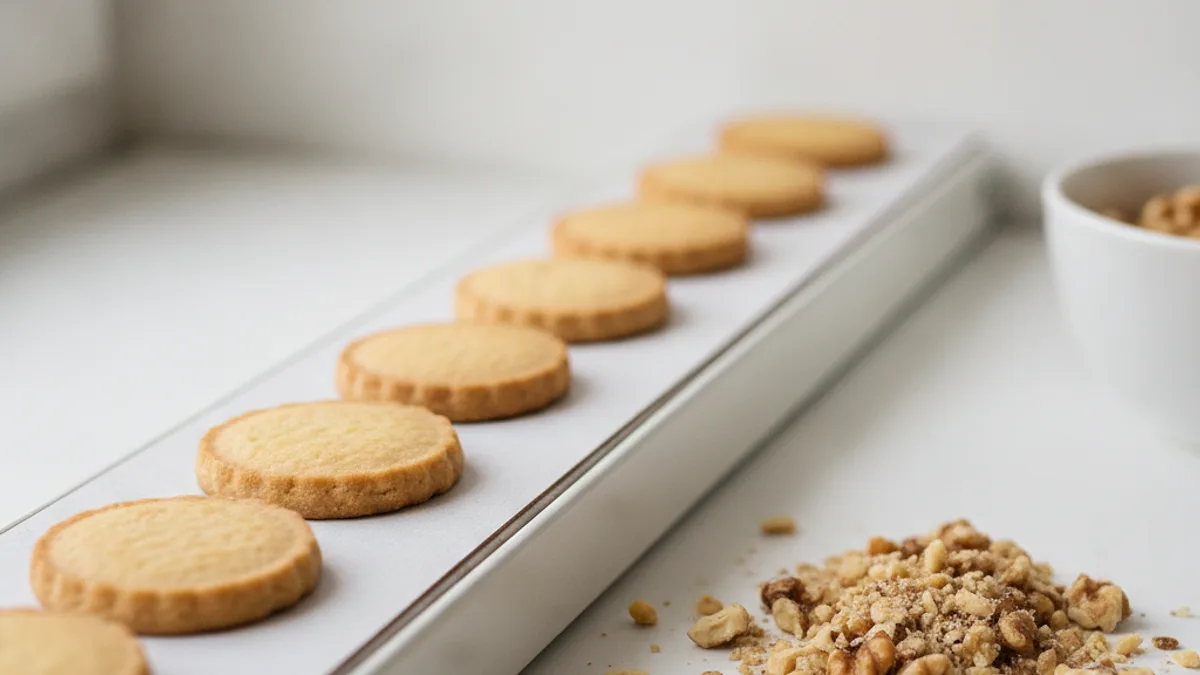
The label "may contain traces of nuts" is found on half the shelves, including products where nuts have no business being. It refers to production, not ingredients, and unlike the allergen list, it is voluntary — the manufacturer adds it themselves and decides on what grounds. This is the source of its main problem.
How this label differs from the ingredients list
The ingredients list is mandatory and precise: the listed allergens are present in the product. The rules for how it is compiled are explained in our article on mandatory allergens.
The trace label is different. It states that the allergen is not part of the recipe but could have been introduced unintentionally: on shared equipment, from the air in the facility, from a shared packaging line, or from raw materials from a neighboring production line.
The key difference: the quantity is not regulated. "Traces" can mean an infinitesimally small amount or a noticeable portion — the wording itself does not distinguish between them.
Where cross-contamination comes from
- Shared line. In the morning, they make cookies with hazelnuts; in the afternoon, they make them without. Cleaning reduces the residue but does not guarantee zero.
- Shared air. Flour and nut dust are carried through the facility.
- Shared storage. Spilled raw materials, adjacent bags, a single forklift.
- Supplier raw materials. Contamination occurred earlier, before reaching the factory gates.
All of the above are real production situations, and they can only be completely eliminated by using a dedicated line, which is expensive and therefore rare.
Why the label appears even where there is no risk
The reason is not technical, but legal. The liability for failing to warn is higher than the costs of an extra label, so it is more profitable for the manufacturer to place it everywhere there is even a theoretical possibility.
The unpleasant consequence: the label is devalued. When "may contain" is written on everything, it is impossible to distinguish a product with a real risk from a product with legal over-cautiousness based on the label alone.
The second consequence is a narrowing of the diet. A person who excludes everything with such a label is left with a very short list of products, often unnecessarily.
When to take it seriously
The only guide here is the severity of your own reaction, and the decision should be made with a doctor, not based on an article.
For reactions that have required emergency care — anaphylaxis, swelling, difficulty breathing — a trace warning is usually considered a reason to avoid the product. The amount that triggers a reaction in such individuals can be very small.
For mild skin or digestive reactions, the approach is discussed individually: completely avoiding everything with the label severely limits the diet, while the risk is of a different order.
For intolerances, not allergies — for example, lactose intolerance — traces usually do not matter: the reaction depends on the dose. The difference is explained in the article on allergies and intolerances.
What to do in practice
- Distinguish between the two lines. Ingredients are a fact; "may contain" is a warning about a possibility.
- Do not apply the decision to the entire category. Different manufacturers of the same product label differently because their production facilities are different.
- Ask the manufacturer. Many will answer a direct question about a dedicated line; this is more specific than a label.
- Check every time you buy. The label may appear or disappear when the production site changes, even if the ingredients remain the same.
- Have a reaction plan. For those who have had severe episodes, having doctor-prescribed medication is more important than reading any labels.
A note on eating out
In restaurants and food delivery, this label does not exist at all, yet cross-contamination is more likely there than in a factory: shared cutting boards, shared fryers, shared tongs. How to ask about this is covered in the article on allergens in restaurants.
Frequently asked questions
- What does "may contain traces" mean?
- That the allergen is not included in the recipe but could have entered the product unintentionally — on shared equipment, from the air in the facility, from a shared packaging line, or from raw materials. It is a warning about production, not part of the ingredients list.
- Is this label mandatory?
- No, it is voluntary. The manufacturer adds it at their own discretion and decides the basis for it, and the quantity is not regulated: "traces" can mean an infinitesimally small amount or a significant one.
- Why is it present even where there is no source for the allergen?
- The liability for failing to warn is higher than the costs of an unnecessary label, so it is placed wherever there is even a theoretical possibility. Because of this, the label loses its value and fails to distinguish real risk.
- Should I avoid products with this label?
- It depends on the severity of the reaction, and the decision should be made with a doctor. For episodes that required emergency care, the warning is usually considered a reason to avoid the product; for mild reactions, complete avoidance significantly limits the diet.
- Is there such a label in a restaurant?
- No, and this should be taken into account: cross-contamination in food service is more likely than in a factory due to shared cutting boards, fryers, and equipment. In such cases, the question should be asked directly to the staff.
Read next
- Allergens that must be on the label — Manufacturers are required to disclose certain allergens at all times—even when their proportion is negligible and even when they entered the product as part of another ingredient.
- Allergens in restaurants and delivery: how to ask for a helpful response — Packaging includes mandatory ingredient lists and warnings about traces.
- Allergy or intolerance: what is the difference and why it matters — Both conditions are described with the same words: "this makes me feel bad.
This article is for general information. It is not medical advice, a diagnosis, or a prescription for treatment or a diet, and it does not replace a consultation with your doctor. If you have a health condition, are pregnant, take medication, or follow a diet prescribed to you, decisions about food belong with your doctor.
Figures from regulations, guidelines and studies are given as they stood when this article was prepared and may since have changed; check them against the primary sources. This article is not advertising, an offer, or individual advice, and neither the author nor the site owner is responsible for decisions taken on the basis of it.