How to determine portion size without a scale
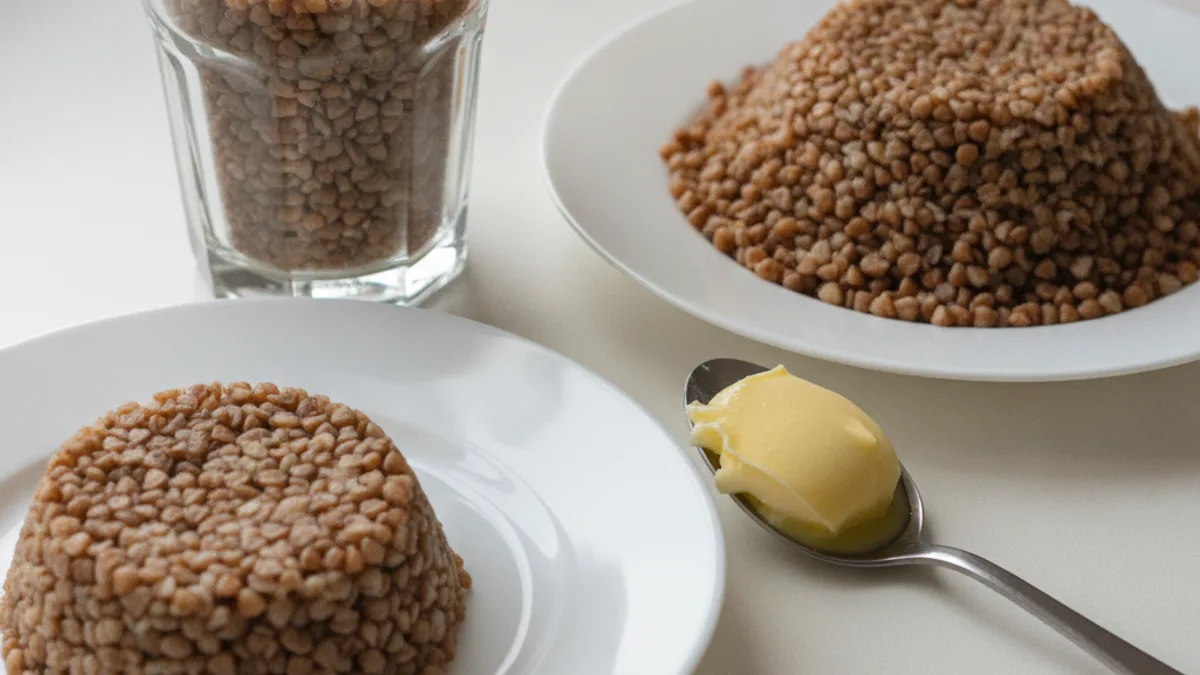
Portion weight is the most inaccurate variable in any calculation, including analysis by photo. The good news is that for practical purposes, a rough estimate is sufficient.
Why weight matters more than it seems
The error in calorie content per 100 grams is usually small: most dishes have a recognizable range. An error in portion weight multiplies everything else. Confusing 200 and 350 grams of pilaf is a difference of almost 300 kcal, which is more than any inaccuracy in determining the recipe provides.
Therefore, if you are going to estimate only one thing, you should estimate the weight.
The palm method
Your own hand is a measure that is always with you and scales to the size of the person:
| Measure | Approximately corresponds to |
|---|---|
| Palm without fingers | Portion of meat or fish, 100–120 g |
| Fist | Portion of side dish or vegetables, 150–200 g |
| Handful | Grains or pasta in cooked form, about 100 g |
| Thumb | Portion of butter, cheese, or nuts, 10–15 g |
| Tip of the thumb | Teaspoon of oil, about 5 g |
Common tableware as a measure
Once you have weighed your tableware, you get permanent reference points:
- Standard faceted glass — 200 ml; grains in it are about 180 g, water is 200 g.
- Tablespoon — 15–20 g for dry ingredients, 15 ml for liquids.
- Teaspoon — 5 g of sugar, 5 ml of oil.
- Standard soup bowl — 300–350 ml.
- Flat dinner plate, filled in a single layer — 250–300 g of cooked dish.
What is estimated worst of all
- Oil in the pan. The most underestimated source of calories: a tablespoon is about 900 kcal per 100 g of product, and it is not visible in a photo.
- Sauces and dressings. Two tablespoons of mayonnaise add more calories to a salad than all its vegetables combined.
- Dry versus cooked. Grains and pasta absorb water during cooking and increase in weight by 2.5–3 times. 100 g of dry buckwheat is about 300 kcal and approximately 300 g of cooked porridge; confusion here leads to a threefold error.
- Liquid calories. They are usually not considered food at all.
How accurate is photo-based estimation
Recognition works well to identify the dish itself and its typical calorie content per 100 grams. Portion weight is a weak point: it is derived from the angle, the size of the tableware, and the volume in the frame, and this is where the error is greatest.
Therefore, the weight is shown as a separate figure that can be corrected: if you know there are 200 g in the plate instead of 300, correct it, and the nutritional breakdown will be recalculated immediately and for free. Shooting from above and in full, with a piece of cutlery or a plate in the frame for scale, significantly improves the estimate.
Are scales needed at all
For daily control — no, the listed reference points are sufficient. But a week with a scale at the beginning pays off: it calibrates your eye, and further estimation "by eye" becomes noticeably more accurate. It makes sense to weigh, first and foremost, things that are most prone to error — oil, dry grains, and nuts.
Frequently asked questions
- How to measure a portion without a scale?
- Using the palm method: palm without fingers — 100–120 g of meat or fish, fist — 150–200 g of side dish, thumb — 10–15 g of butter or cheese. Once weighed, common tableware provides permanent reference points.
- How many grams are in a tablespoon?
- For dry products — 15–20 g, for liquids — about 15 ml. Teaspoon: approximately 5 g of sugar or 5 ml of oil.
- Should I count calories for dry grains or cooked?
- For cooked, if you are weighing what has already been boiled. During cooking, grains and pasta absorb water and increase in weight by 2.5–3 times: 100 g of dry buckwheat is about 300 kcal and approximately 300 g of porridge. Confusion here leads to a threefold error.
- How accurately does the app determine portion weight?
- Weight is the least accurate of the returned values because it depends on the angle and the tableware. Therefore, it is displayed as a separate figure that can be corrected: the nutritional breakdown is recalculated immediately and does not consume a request.
Read next
- How to count calories in homemade food — Processed foods are counted by the label, and restaurant meals by a reference guide.
- What is KBZHU — KBZHU represents four numbers that describe food: caloric content and the three macronutrients that make it up.
- Daily calorie intake — There is no universal norm: it depends on weight, height, age, sex, and activity level.
- Buckwheat or rice: which is higher in calories and how do they really differ — In their cooked form, both grains provide about a hundred kilocalories per 100 grams: buckwheat is approximately 110, white rice is approximately 120.
This article is for general information. It is not medical advice, a diagnosis, or a prescription for treatment or a diet, and it does not replace a consultation with your doctor. If you have a health condition, are pregnant, take medication, or follow a diet prescribed to you, decisions about food belong with your doctor.
Figures from regulations, guidelines and studies are given as they stood when this article was prepared and may since have changed; check them against the primary sources. This article is not advertising, an offer, or individual advice, and neither the author nor the site owner is responsible for decisions taken on the basis of it.