How to count calories in homemade food
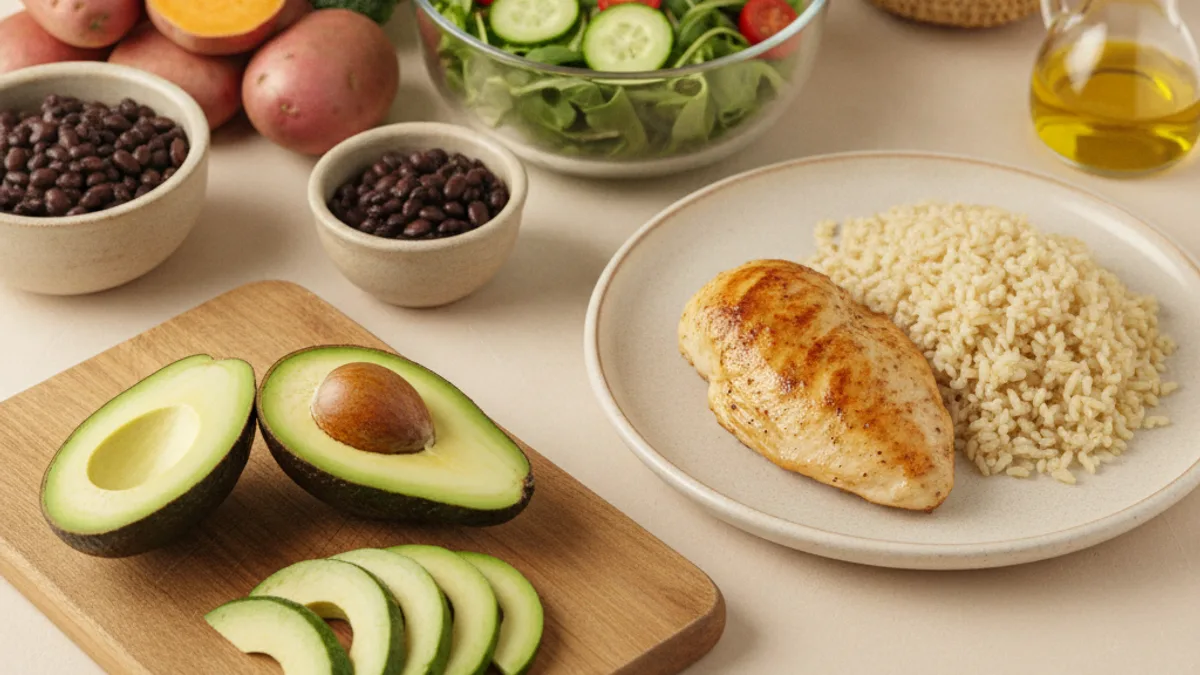
Processed foods are counted by the label, and restaurant meals by a reference guide. Homemade borscht cannot be counted that way: a pot has no label, and everyone has their own recipe. However, there is a method, and it is the same for all dishes.
The main method: divide raw by finished
It looks like this:
- Weigh each ingredient before cooking and add up their calories. Oil and sugar are counted just like grains and meat.
- Weigh the finished dish in its entirety, subtracting the weight of the cookware.
- Divide the total calories by the weight of the finished dish to get the calorie content per 100 grams of your meal.
After that, you just need to weigh your portion. A borscht calculated once works for the next day and the following month, provided the recipe hasn't changed—the recorded "per 100 g" figure turns homemade food into a product as easy to track as yogurt with a label.
This method covers soup, pilaf, casseroles, and meatballs. The reason is that while weight changes during cooking, the amount of energy does not: water evaporates or is absorbed, but the calories remain the same.
What happens to weight during cooking
| What happens | Weight | Calories |
|---|---|---|
| Soup boiled down | Decreased | The same, but higher per 100 g |
| Grains cooked | Increased 2.5–3 times | The same, lower per 100 g |
| Meat fried | Dropped by about a third | The same minus rendered fat, if drained |
| Water added to finished soup | Increased | Unchanged |
From this comes the rule that saves the most mistakes: raw is counted with raw, finished with finished. 100 g of dry buckwheat and 100 g of cooked porridge differ in calorie content by a factor of three.
Where calories are usually lost
- Oil in the pan. A tablespoon is about 120 kcal, and almost all of it remains in the food. When frying, you must count all the oil poured; with deep-frying, the product absorbs some of it, making the estimate rougher.
- Tasting during cooking. Nobody records three spoonfuls of batter or a piece of cheese "for a taste."
- Dressings and sauces. Two tablespoons of mayonnaise add more calories to a salad than all its vegetables combined.
- Breading. Flour and breadcrumbs absorb oil, and a breaded meatball is noticeably higher in calories than the same meatball without it.
- Waste. Bones, skin, trimmed fat, drained broth—these should be subtracted from the total, otherwise the dish will be higher in calories than it actually is.
How to handle cooking for several days
This is actually the simplest case: divide the pot into portions by weight, not by eye. If you have 2400 kcal for 3000 grams, then a 400-gram plate is 320 kcal, regardless of how much meat ended up in it.
A note on soup: solids and liquids are not distributed evenly, and a ladle from the bottom is more caloric than one from the top. For everyday tracking, this difference can be ignored; if you want more precision, stir before serving.
When all this is unnecessary
Nobody can sustain counting every homemade dish by ingredient for long, and there is no need to. It is enough to calculate the five to seven dishes you cook regularly once and write down their calories per 100 g. The rest—rare and one-off meals—can be estimated approximately, and such an error means almost nothing over the course of a week.
For someone else's cooking or things you didn't prepare yourself, photo-based analysis works: it identifies the dish and its typical calorie content, while the portion weight remains a separate figure that can be adjusted. Reference values for common dishes are collected in the calorie table.
Frequently asked questions
- How to calculate the calorie content of soup?
- Add up the calorie content of all raw ingredients, including the oil used for sautéing, weigh the finished soup without the pot, and divide the total calories by the weight. This will give you the calorie content per 100 grams of your soup—after that, you just need to weigh your serving. Water that has evaporated does not affect the total calorie count.
- Should grains and pasta be weighed dry or cooked?
- However you weigh them. During cooking, they absorb water and increase in weight by 2.5–3 times, so 100 g of dry buckwheat and 100 g of cooked porridge differ in calorie content by approximately three times. An error here leads to the largest discrepancy in the entire calculation.
- How to count calories if I am cooking for several days?
- Calculate the entire pot and divide by its weight. Then, a portion is calculated by the weight of the plate, not by the number of servings estimated by eye: 2400 kcal per 3000 g means 80 kcal in every hundred grams.
- Do I need to count the oil used for frying?
- Yes, completely. Almost all the oil poured into the pan ends up in the food, and a tablespoon is about 120 kcal. This is the most underestimated source of calories in home cooking.
Read next
- How to determine portion size without a scale — Portion weight is the most inaccurate variable in any calculation, including analysis by photo.
- What is KBZHU — KBZHU represents four numbers that describe food: caloric content and the three macronutrients that make it up.
- Why count calories — Calorie counting does not burn fat.
- Soups without sautéing: three recipes and what changes in flavor — Sautéing involves 2–3 tablespoons of oil that go entirely into the pot: about 250–350 kcal for the whole pot, which is 50–90 kcal per serving.
This article is for general information. It is not medical advice, a diagnosis, or a prescription for treatment or a diet, and it does not replace a consultation with your doctor. If you have a health condition, are pregnant, take medication, or follow a diet prescribed to you, decisions about food belong with your doctor.
Figures from regulations, guidelines and studies are given as they stood when this article was prepared and may since have changed; check them against the primary sources. This article is not advertising, an offer, or individual advice, and neither the author nor the site owner is responsible for decisions taken on the basis of it.