Why count calories
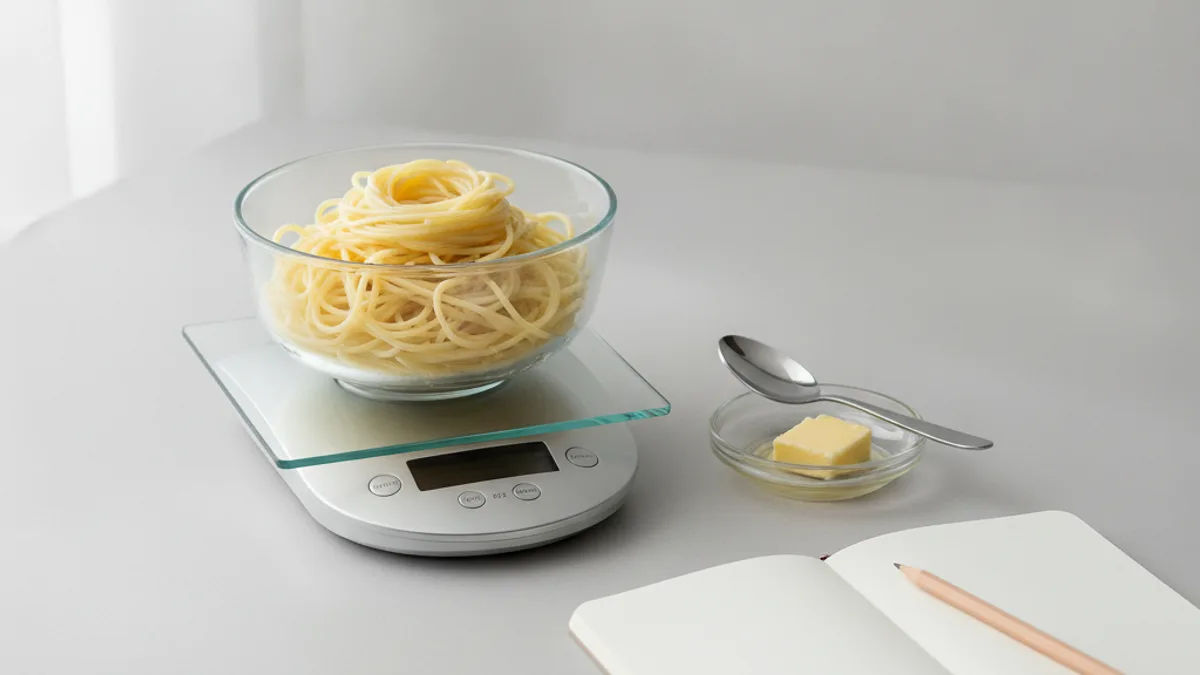
Calorie counting does not burn fat. It makes visible what was previously happening blindly — and almost all its benefit lies precisely in this.
What counting actually does
The body cannot create mass out of nothing: for weight to increase, more energy must be consumed than is expended. This is not a diet fad, but a consequence of the law of conservation of energy, and it is pointless to argue with it. It makes sense to argue with a different claim — that a person knows how much they have eaten.
They don't know. People systematically underestimate their own diet, and the error grows with the caloric content of the dish: a salad is estimated fairly accurately, a shawarma is not. Moreover, they underestimate not out of cunning, but because the oil in the pan, the sauce in the glass, and the sugar in the coffee are not subjectively perceived as food.
Counting closes this gap. It does not forbid foods and does not burn anything — it shows a figure that was previously a guess.
Why paper diaries do not work
A classic food diary has an unpleasant property: the more you need it, the harder it is to keep. Writing down a salad takes a second; writing down homemade borscht according to mom's recipe is a fifteen-minute exercise involving searching a database, choosing between four "Borscht" options, and trying to remember how much sour cream was in it.
Then the predictable happens. One meal is skipped, then a day, then the diary loses its meaning — incomplete data is worse than missing data because it creates a false impression. People usually quit not out of laziness, but because the cost of a single entry turned out to be higher than the benefit from it.
This is the main problem with counting: not accuracy, but whether a person will make it to the second week.
What photography has changed
Services like FoodGPT attack the cost of recording. You photograph your plate and get the name of the dish, an estimate of the portion weight, and the macronutrient breakdown. You don't need to search a database or choose from a list.
To be honest about accuracy: it is an estimate, not a measurement. You cannot see from a photo how much oil went into the pan or whether the sour cream is fatty. Recognition does two things well — it identifies the dish itself and knows its typical caloric content per 100 grams. It is worse at guessing the portion weight because the weight depends on the angle and the tableware. Therefore, the weight is shown as a separate figure that can be corrected.
And this accuracy is sufficient. The difference between "about 600 kcal" and "I have no idea" is huge; the difference between 600 and 640 on a weekly scale means almost nothing.
How much time it takes
For the first two weeks, you have to take a picture of every meal. The snapshot itself takes seconds, and the difficulty is not in that, but in getting your phone out before the plate is empty: a forgotten dinner is later reconstructed from memory, and memory works poorly in this regard.
Then the burden decreases on its own because the diet repeats itself. The same breakfasts, the same lunch at work, a dozen dishes cooked at home — after two weeks, most of what is eaten has already been counted at least once, and you only have to photograph the unfamiliar: a restaurant plate, someone else's cooking, or a product tried for the first time.
Counting every day is not mandatory
It was said above that incomplete data is worse than missing data, but that is about something else — about a diary that includes successful days and misses the rest. A Tuesday skipped entirely does not distort the picture; selectivity does.
Hence a compromise for those who cannot manage two weeks in a row: count weekdays, do not count weekends, and remember that they are not counted. Weekdays are enough to see the main thing — how much you consume on an average day and what contributes to the excess: oil, sauces, drinks, finishing food after children. Weekends are usually higher in calories, so the estimate turns out to be understated, and knowing this is more important than closing the gap.
"I am counting, but my weight is stuck"
The most common complaint about counting, and there is usually nothing mysterious behind it. Body mass fluctuates by a kilogram or two due to water, so over a week-long period, fat loss is not visible in these fluctuations: you need to look at the average over two to three weeks, not at individual morning weigh-ins. If the average is also stuck, the question shifts to the entries — what did not make it into them.
This case is analyzed in the article about calorie deficit: how to distinguish water retention from a lack of deficit and why the arithmetic of "deficit × days" promises more than what shows up on the scale.
When you don't need to count
Counting is a tool, not an obligation. It is unnecessary if your weight is stable and you are satisfied with it. It is harmful if it turns into an anxious ritual: in cases of eating disorders, fixation on numbers worsens the condition, and this is the case when you need to close the app and consult a specialist.
For most people, a few weeks of observation are enough. During this time, it becomes clear where the calories are going, and then choices are made consciously — without the app.
Frequently asked questions
- Is it necessary to count calories to lose weight?
- No. Weight loss occurs due to an energy deficit, and you can create one without counting—for example, by cutting out sugary drinks and adding more protein. Counting is useful for those who don't understand why their weight is stagnant: it shows exactly where the calories are coming from.
- How accurate is calorie estimation from a photo?
- It is an estimate, not a measurement. The dish is recognized well, but portion weight is the hardest to determine because it depends on the angle and the tableware. Therefore, the weight is displayed as a separate figure that can be corrected, and the recalculation happens immediately.
- How much effort does counting by photo take?
- One click: take a photo and get the name, weight, and nutritional value. There is no need to search a database or break down homemade food into ingredients. It is so simple that it can become a habit.
- How many days do you need to count to get a clear picture?
- A good benchmark is two weeks: during this time, your typical diet repeats itself, and you can see what your average daily intake is and where the extra calories come from. It is not necessary to count every single day; weekdays are sufficient, but weekends are usually higher in calories, so an estimate based only on weekdays will be understated.
Read next
- How caloric intake affects health — Caloric intake answers one question: how much of you there will be.
- Daily calorie intake — There is no universal norm: it depends on weight, height, age, sex, and activity level.
- How to count calories in homemade food — Processed foods are counted by the label, and restaurant meals by a reference guide.
This article is for general information. It is not medical advice, a diagnosis, or a prescription for treatment or a diet, and it does not replace a consultation with your doctor. If you have a health condition, are pregnant, take medication, or follow a diet prescribed to you, decisions about food belong with your doctor.
Figures from regulations, guidelines and studies are given as they stood when this article was prepared and may since have changed; check them against the primary sources. This article is not advertising, an offer, or individual advice, and neither the author nor the site owner is responsible for decisions taken on the basis of it.