What is KBZHU
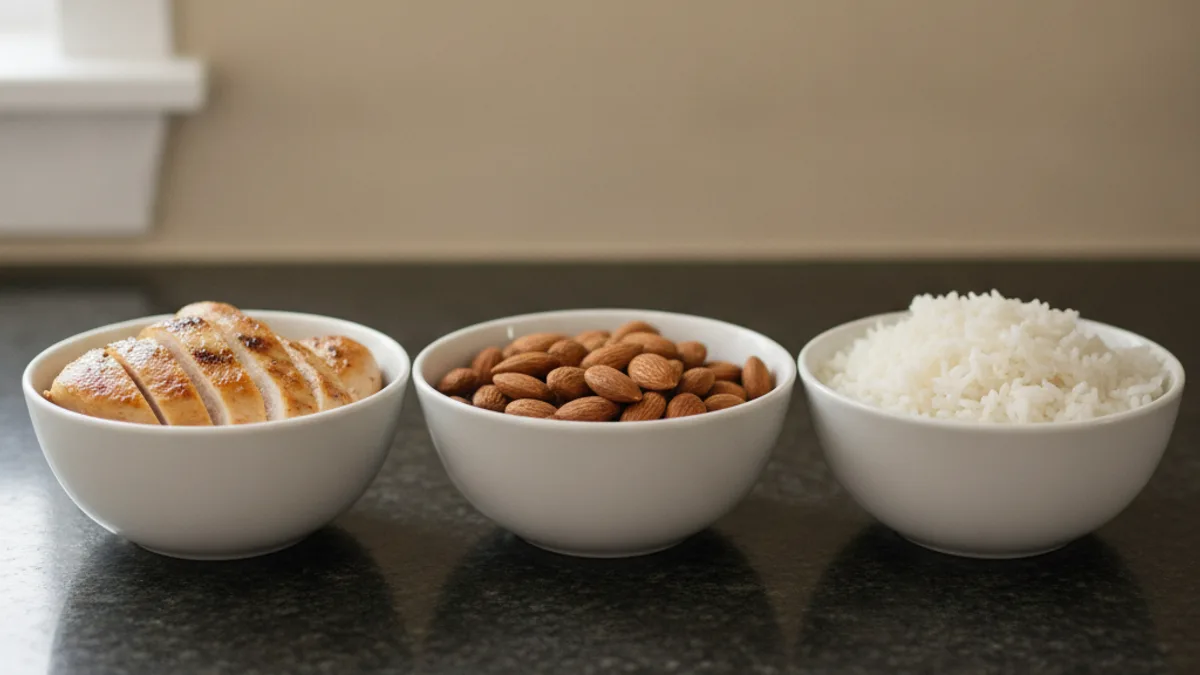
KBZHU represents four numbers that describe food: caloric content and the three macronutrients that make it up. It is not necessary to count all four, but understanding the relationship between them is useful.
What makes up caloric content
Energy is provided by three substances, and the contribution of each gram is known:
| Macronutrient | kcal per 1 g | Function |
|---|---|---|
| Proteins | 4 | Building material: muscles, enzymes, immune cells |
| Fats | 9 | Hormones, absorption of vitamins A, D, E, K, cell membranes |
| Carbohydrates | 4 | Primary source of energy, including for the brain |
From this comes a simple check: 4 × proteins + 9 × fats + 4 × carbohydrates should roughly match the stated caloric content. A discrepancy of more than 15% indicates a typo or an unreliable source. Fiber and alcohol are counted separately and provide an adjustment to this arithmetic.
How much of each is needed
There are no rigid standards, but there are effective benchmarks.
Protein is what should be counted first. For normal activity, 1.2–1.6 g per kilogram of body weight is sufficient; for weight loss and strength training, 1.6–2.2 g. It provides better satiety than others and protects muscles during a deficit.
Fats should not be lower than 0.8 g per kilogram. Attempting to cut fats "for the sake of calories" negatively impacts hormonal balance and the absorption of fat-soluble vitamins.
Carbohydrates make up the rest. This is not a residual value in terms of importance: they meet energy needs and provide fiber if they come from grains, vegetables, and fruits rather than sugar.
Example for 1700 kcal at a weight of 65 kg
- Protein: 65 × 1.8 ≈ 117 g → 468 kcal
- Fats: 65 × 1.0 = 65 g → 585 kcal
- Carbohydrates: (1700 − 468 − 585) ÷ 4 ≈ 162 g
This is not the only correct distribution, but one of the working options. Shifts within reasonable limits affect the result less than total caloric intake.
Is it necessary to count all four numbers
No. For most people, it is enough to monitor caloric intake and protein: calories determine the direction of weight change, and protein determines what that weight will consist of. Fats and carbohydrates then add up on their own and usually fall into an acceptable range.
Full tracking is needed where there is a specific goal—preparing for competitions, working on body composition, or following a doctor's orders.
Where to get the numbers
On packaging, they are listed per 100 g—this is convenient for comparing products with each other and requires recalculation for the amount consumed. It is more difficult with prepared meals: homemade food has no label, and recipes vary for everyone. This is where photo analysis helps: it provides both an estimate of portion weight and KBZHU, and reference values for typical dishes are collected in the calorie table.
Frequently asked questions
- What does KBZHU mean?
- Calories, proteins, fats, and carbohydrates are four numbers that describe the nutritional value of a product or dish. Proteins and carbohydrates provide 4 kcal per gram, and fats provide 9.
- How much protein is needed per day?
- For normal activity, 1.2–1.6 g per kilogram of body weight. For weight loss and strength training, the benchmark is higher: 1.6–2.2 g, as protein helps preserve muscle and provides better satiety.
- Do I need to count fats and carbohydrates separately?
- For most people, it is enough to monitor caloric intake and protein: the rest adds up on its own and usually falls into an acceptable range. Full tracking is needed for specific goals—competitions, working on body composition, or following a doctor's orders.
Read next
- Daily calorie intake — There is no universal norm: it depends on weight, height, age, sex, and activity level.
- How to count calories in homemade food — Processed foods are counted by the label, and restaurant meals by a reference guide.
- Sports supplements: creatine, glutamine, lecithin — The sports nutrition shelf is arranged so that expensive and useless products stand next to cheap and effective ones.
This article is for general information. It is not medical advice, a diagnosis, or a prescription for treatment or a diet, and it does not replace a consultation with your doctor. If you have a health condition, are pregnant, take medication, or follow a diet prescribed to you, decisions about food belong with your doctor.
Figures from regulations, guidelines and studies are given as they stood when this article was prepared and may since have changed; check them against the primary sources. This article is not advertising, an offer, or individual advice, and neither the author nor the site owner is responsible for decisions taken on the basis of it.