Soups without sautéing: three recipes and what changes in flavor
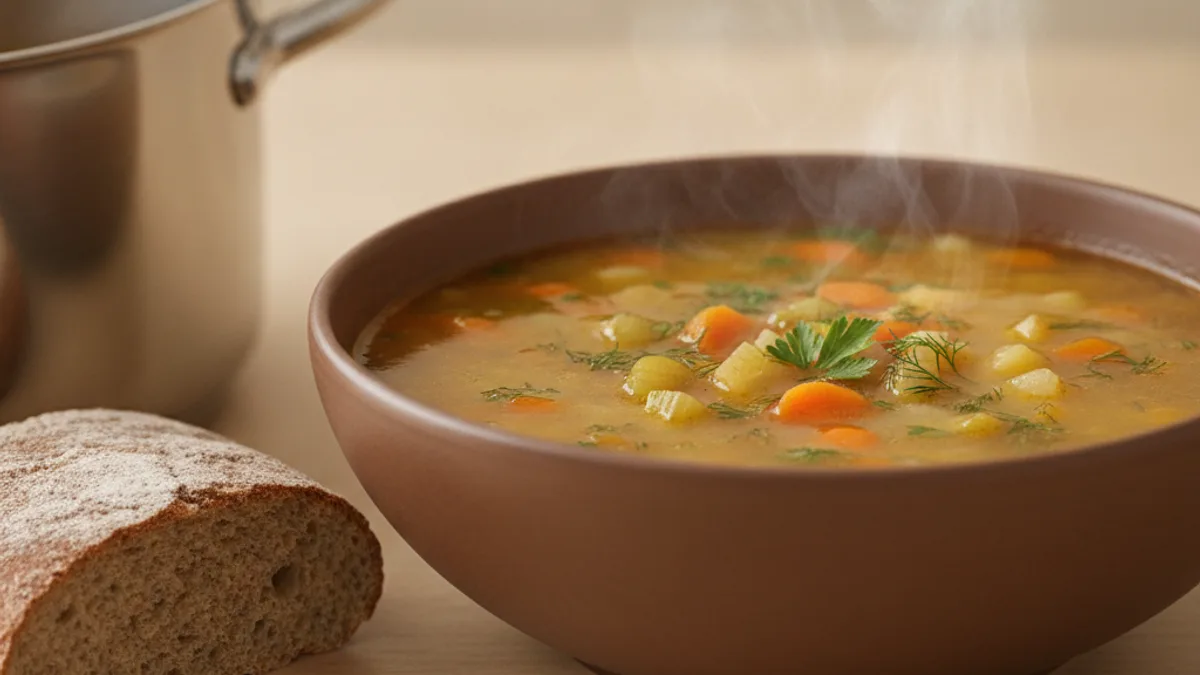
Sautéing involves 2–3 tablespoons of oil that go entirely into the pot: about 250–350 kcal for the whole pot, which is 50–90 kcal per serving. It is not much if you count it once, but it is noticeable if soup is a regular part of your diet. You can skip it without losing flavor, but not just by skipping the step: the flavor it provides must be replaced by something else.
What sautéing actually does
It does more than just add fat. When onions and carrots are sautéed, reactions occur that provide sweetness and depth of flavor that do not appear with simple boiling. Plus, the fat dissolves and distributes the substances responsible for the aroma of vegetables and spices throughout the broth.
Therefore, a soup without sautéing and without a substitute turns out "empty" — and this is not about calories, but about flavor. Below are three ways to bring it back.
How to replace it
- Roast the vegetables. Onions, carrots, and peppers in large pieces in the oven for 20 minutes provide the same reactions without the oil in the pot.
- Sauté in a dry pan. Onions on a non-stick surface without oil provide part of the effect.
- Add acid and umami at the end. A spoonful of tomato paste, a little lemon juice, or dried mushrooms in the broth. For the mechanism of umami flavor, see the article on monosodium glutamate.
- Leave a spoonful of oil, but add it at the end. Oil poured into the finished soup provides more aroma than the same amount used for sautéing.
The last technique is the most underrated: a teaspoon of good oil in the bowl is about 40 kcal and changes the flavor more than three tablespoons in the pot.
Chicken soup with vegetables
Ingredients: 400 g skinless chicken thighs, 2 potatoes, carrot, onion, celery stalk, bay leaf, salt, pepper.
Instructions: cover the chicken with cold water, bring to a boil, skim off the foam, and cook for 25 minutes. Remove the meat and shred it. Chop the vegetables and add them to the broth for 12–15 minutes. Return the meat, add salt, and let it sit for 10 minutes.
Estimated: about 180 kcal and 18 g of protein per 400 ml serving.
Lentil soup
Ingredients: 1 cup red lentils, carrot, onion, a spoonful of tomato paste, a teaspoon of ground cumin, salt, juice of half a lemon.
Instructions: rinse the lentils, cover with 1.5 L of water, and cook for 15 minutes. Add grated carrot and finely chopped onion, and cook for another 10 minutes. Stir in the tomato paste and cumin, and add salt. Add the lemon to the bowl.
Estimated: about 210 kcal and 14 g of protein per serving.
Red lentils break down and thicken the soup on their own, so neither potatoes nor sautéing are required here. For the role of fiber in legumes, see the article on fiber.
Vegetable cream soup
Ingredients: 700 g of any vegetables — pumpkin, cauliflower, broccoli, zucchini — onion, garlic clove, 500 ml of water or broth, salt, pepper.
Instructions: chop the vegetables into large pieces and roast for 20–25 minutes at 200 °C. Transfer to a pot, cover with hot broth, and blend until smooth. Adjust to the desired consistency.
Estimated: about 120 kcal per serving without additions.
Protein is added separately: a spoonful of Greek yogurt, pumpkin seeds, or a piece of chicken on the side — otherwise, the soup remains almost without it. Guidelines can be found in the article on daily protein intake.
What else affects the calorie content of soup
| Addition | Estimated |
|---|---|
| Sautéing per pot | 250–350 kcal |
| Spoon of sour cream in a bowl | about 30 kcal |
| Slice of bread | about 80 kcal |
| Croutons, a handful | about 100 kcal |
| Meat on the bone instead of fillet | noticeably more fat in the broth |
How to calculate homemade dishes in their entirety is covered in the article on calories in homemade food.
Frequently asked questions
- How many calories does sautéing add to soup?
- Two to three tablespoons of oil is about 250–350 kcal for the whole pot, which is 50–90 kcal per serving. The oil goes entirely into the soup, unlike frying in a pan, where some of it remains.
- Why does soup without sautéing seem empty?
- Sautéing provides more than just fat: it triggers reactions that create sweetness and depth of flavor, while the fat itself distributes aromatic compounds throughout the broth. Without a substitute, this contribution is lost.
- How can I replace a sautéed base?
- Roast the vegetables in the oven, sauté onions in a dry pan, or add tomato paste, dried mushrooms, or lemon juice at the end. A teaspoon of oil stirred into the finished soup works well—it provides more aroma than three tablespoons used in a sautéed base.
- How can I make soup more filling without potatoes?
- Add legumes: red lentils break down and thicken the soup on their own, while providing protein and fiber. Another way is to add protein separately: chicken, yogurt, or seeds.
- What else has the biggest impact on the calorie content of soup?
- After the sautéed base, it's bread and croutons: a handful of croutons is about 100 kcal, and a slice of bread is about 80. Meat on the bone instead of fillets also noticeably adds fat to the broth.
Read next
- How to count calories in homemade food — Processed foods are counted by the label, and restaurant meals by a reference guide.
- Weekly menu: how to build your own instead of looking for a ready-made one — People look for a ready-made weekly menu to avoid thinking.
- Salads without mayonnaise: four dressings and what they pair with — In a salad, calories are almost always found not in the vegetables, but in the dressing: two tablespoons of mayonnaise contain about as many calories as everything else on the plate combined.
This article is for general information. It is not medical advice, a diagnosis, or a prescription for treatment or a diet, and it does not replace a consultation with your doctor. If you have a health condition, are pregnant, take medication, or follow a diet prescribed to you, decisions about food belong with your doctor.
Figures from regulations, guidelines and studies are given as they stood when this article was prepared and may since have changed; check them against the primary sources. This article is not advertising, an offer, or individual advice, and neither the author nor the site owner is responsible for decisions taken on the basis of it.