Calorie counting
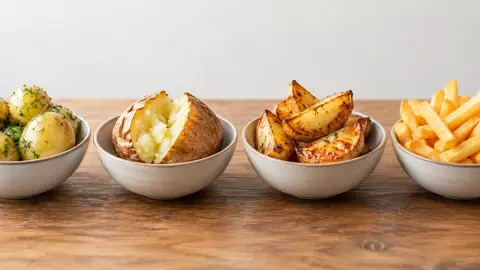
How many calories are in potatoes: boiled, fried, baked and chips
Boiled potatoes have 86 kcal per 100 g, potatoes baked in their skin 93, pan-fried around 265, fast-food French fries 312, crisps about 530.
How to get to grams when there are no scales and the food is already on the plate.
Boiled potatoes have 86 kcal per 100 g, potatoes baked in their skin 93, pan-fried around 265, fast-food French fries 312, crisps about 530.
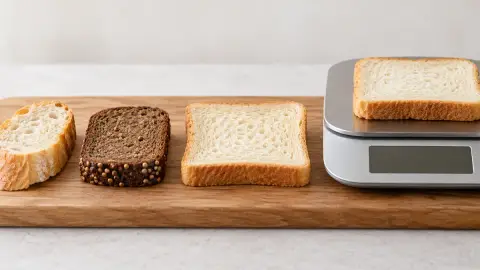
A slice of bread weighs 20 to 40 g depending on the loaf and how thick it is cut.

A level tablespoon of granular caviar weighs 16 g and has about 42 kcal; a level teaspoon about 5 g and 14 kcal.
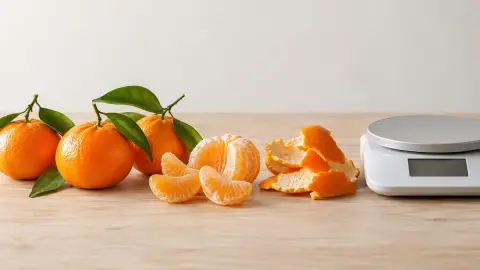
A medium peeled tangerine weighs 88 g and has about 47 kcal, a small one 76 g and 40 kcal, a large one 120 g and 64 kcal.
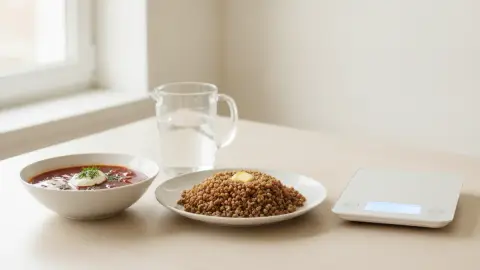
A 300 g bowl of borscht is about 195 kcal, and a 250 g plate of pelmeni about 620 kcal, using reference values per 100 g.
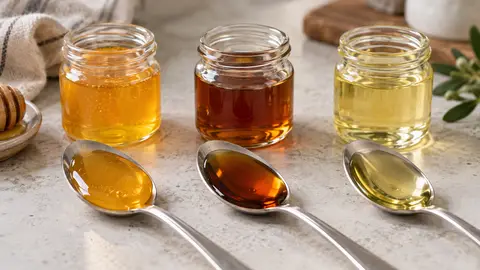
Do not automatically record a tablespoon as 15 g of food.
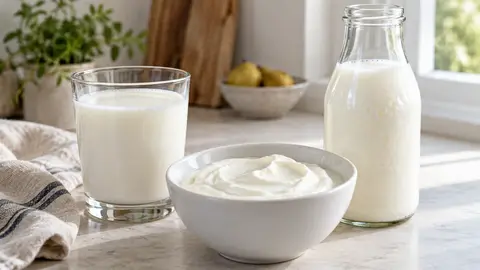
Use the units in the nutrition table when counting milk, kefir and yogurt: grams for values per 100 g, millilitres for values per 100 ml.
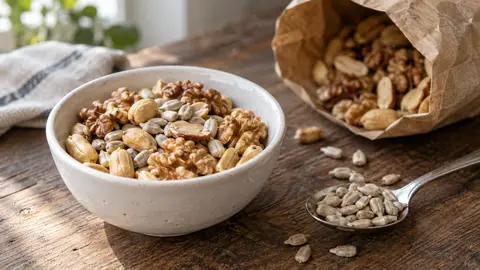
Calculate the calories in a handful of nuts from its weight and the values on that particular pack.
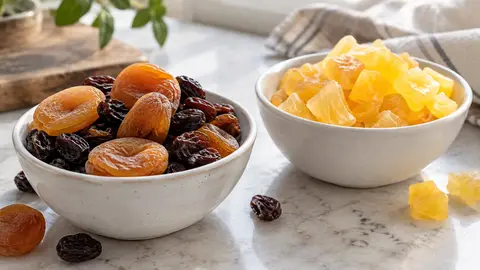
To choose dried fruit without added sugar, read the ingredients: “dried” on the front is not enough.

A 300 ml raf has no single calorie value: the café recipe determines it.
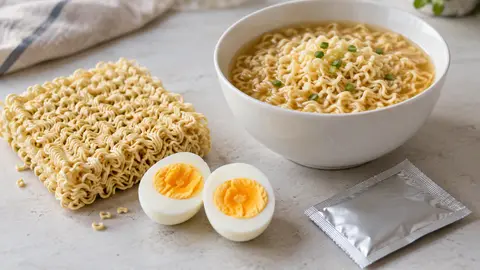
A 90 g chicken-flavor Doshirak tray contains 414 kcal according to the manufacturer.
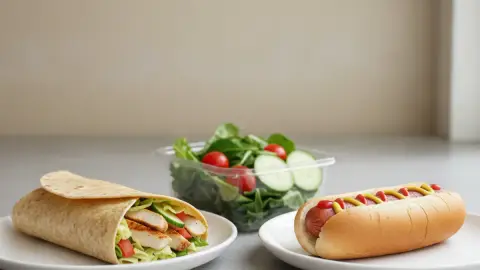
The Chicken Teriyaki roll is 410 kcal, the same salad 207, the 15 cm sandwich 382.
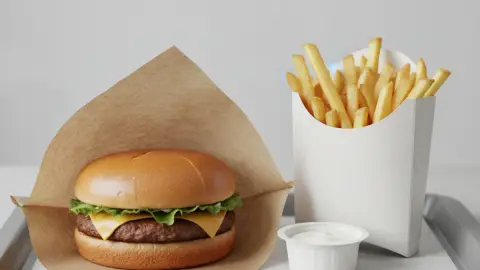
Double Cheeseburger is 441 kcal, Grand 514, Big Special 756, Double Big Special 1,042.

The alcohol calorie calculator shows two numbers: the energy in what you drank and the grams of pure ethanol.
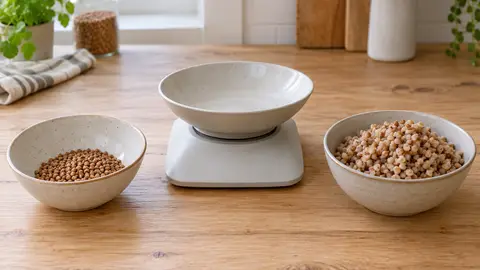
The calculator converts the weight of raw food into cooked weight and back, and counts calories from the raw food: cooking changes the weight, not the calories.
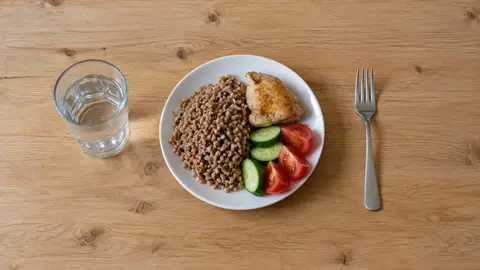
People eat more when they are served a bigger portion, when they eat fast, after a short night and alongside alcohol.
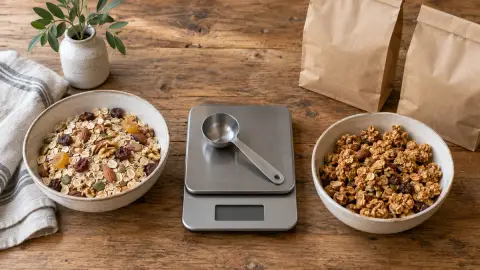
A pack of muesli or granola will not tell you exactly how much added sugar it holds: the "sugars" line adds up everything, syrup and the sugar of dried fruit alike.
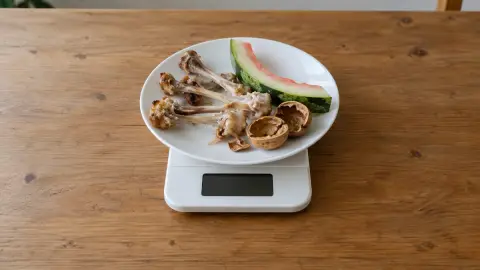
Log the weight of what you ate, not what was on the plate.
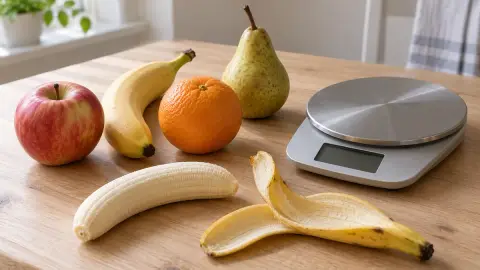
A medium banana without the peel (118 g) has about 105 calories, a medium apple (182 g) about 95, and an orange without the peel (131 g) about 62.
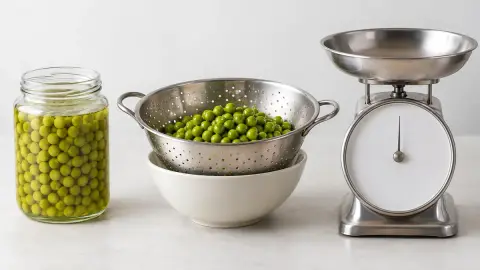
A jar of food packed in liquid should show two weights: everything inside, and the food alone.
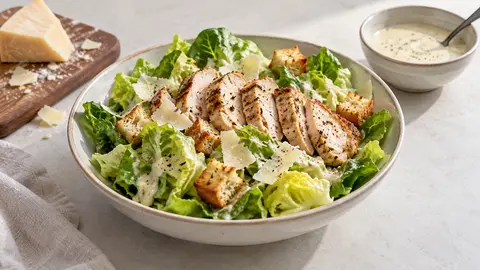
Count homemade Caesar from its ingredients before assembly.
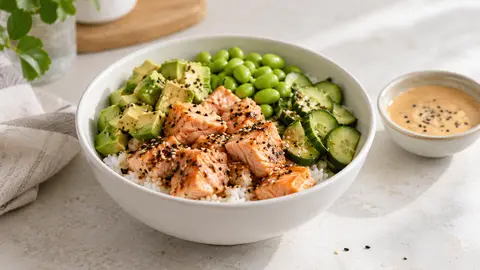
Count poke by adding the ingredients in the whole bowl: the base, fish or meat, vegetables, toppings and sauce.
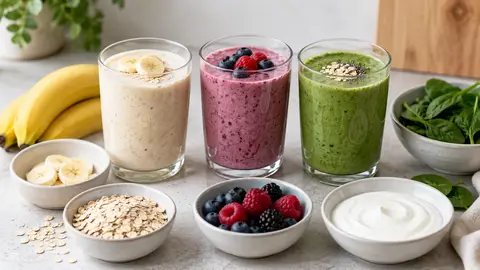
Count a smoothie from its ingredients and the portion you drink.
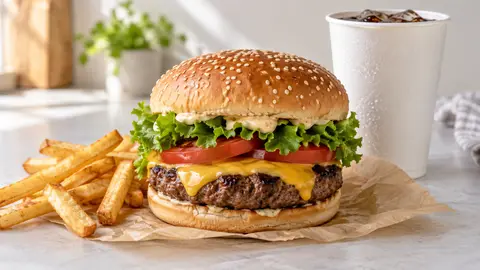
Use the nutrition card for the exact Big Special burger you select, then count the full order separately: fries, drink, sauce and extras.
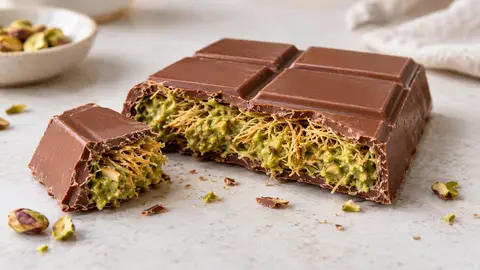
The VkusVill milk chocolate with pistachios and kataifi examined here contains 557 calories per 100 g.
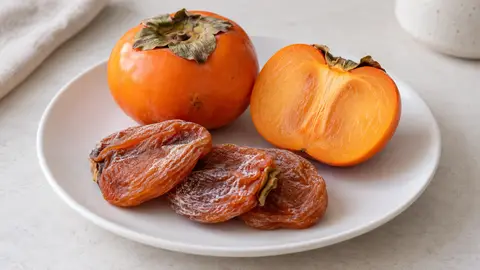
The USDA reference entry for fresh Japanese persimmon contains 70 calories per 100 g.
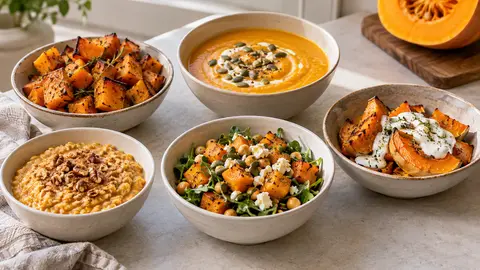
A serving of roasted pumpkin in this collection contains about 81 calories; a serving of pumpkin oatmeal contains 229.
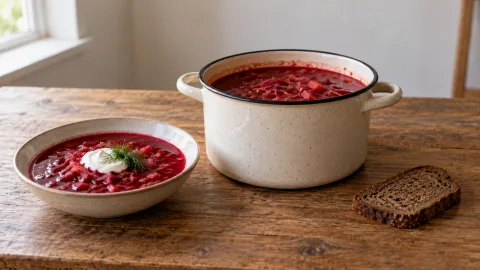
FoodGPT’s reference card lists borscht at 65 kcal per 100 g, so a 300 g bowl contains about 195 kcal.

Yes, but not equally for everyone.
The '0.
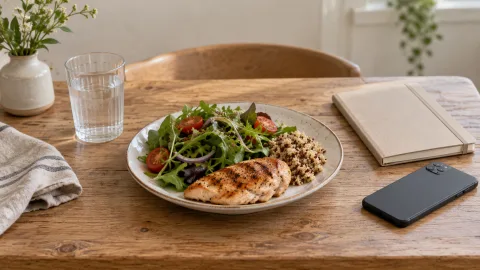
The choice between them should be based not on effectiveness but on your goal: intuitive eating changes your relationship with food, while calorie counting measures energy.
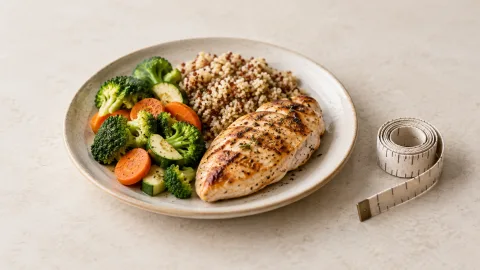
Following a prolonged energy deficit, energy expenditure is indeed lower than in someone with the same body composition who has not lost weight.
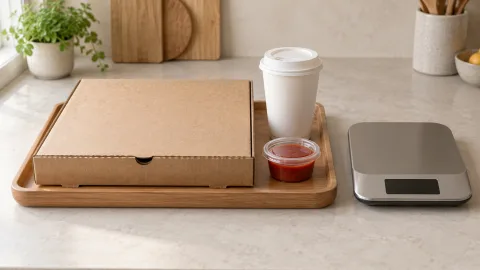
The calorie content of a fast food order is determined less by the chosen dish and more by portion size, drink, and sauces: the same dish may have two values in the chain’s nutritional table that differ by nearly twofold.
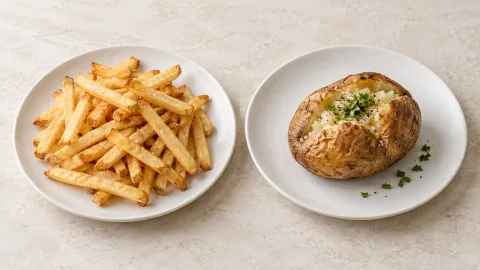
Swapping sauces, sides, and drinks cuts the most calories: mayonnaise for Greek yogurt saves about 180 kcal per 30 g, pasta for zucchini about 280 kcal per serving.
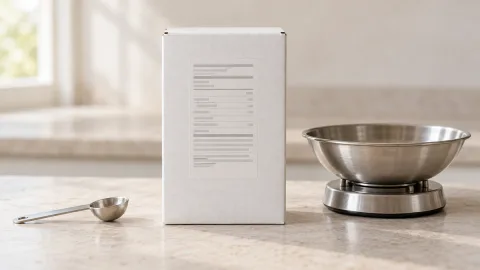
To compare products, use the “per 100 g” column, but calculate how much you’ve eaten based on the actual weight of the portion consumed.
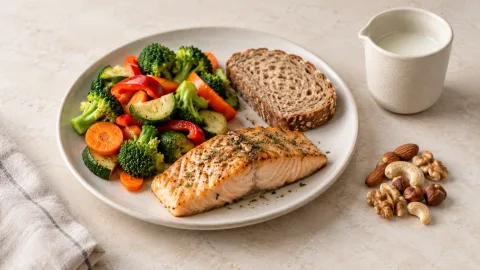
DASH is an eating plan designed to lower blood pressure: plenty of vegetables, fruits, and whole grains; low-fat dairy; and limited salt and sweets.
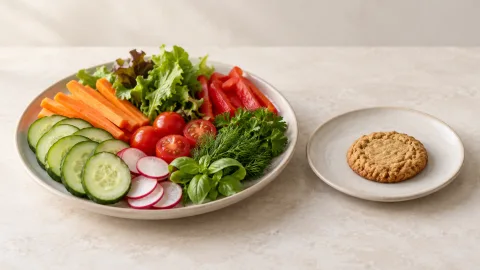
Salad fills you up more than cookies because it contains fewer calories per gram: 100 kcal equals about 670 g of cucumber or about 20 g of cookies.
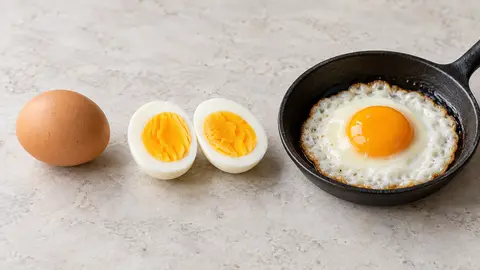
A large egg without its shell weighs about 50 g and has 72 kcal.
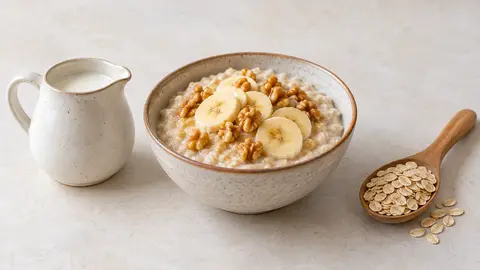
A bowl of oatmeal made with water from 50 g of oats is about 190 kcal, and with 3.

A slice of a 35 cm pizza weighs about 110 g and gives roughly 285–315 kcal, and a whole pizza gives 2,270–2,520 kcal.
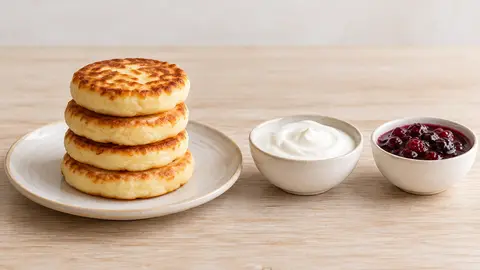
The FoodGPT reference card lists syrniki at 218 kcal per 100 g, so a 50 g syrnik is about 110 kcal.
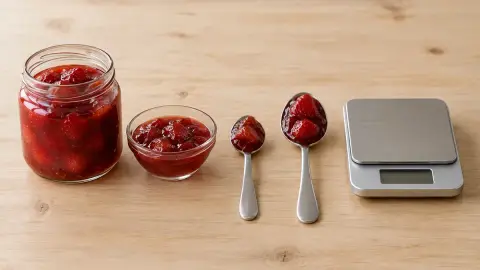
The FoodGPT reference card lists varenye, the Russian whole-fruit preserve, at 271 kcal and 65 g of sugar per 100 g.
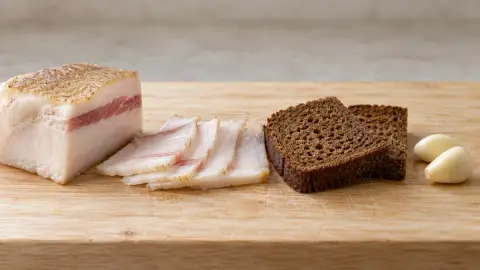
Salo has about 800 kcal per 100 g: the FoodGPT reference card for salted salo lists 816 kcal, and the USDA record for raw pork back fat lists 812.
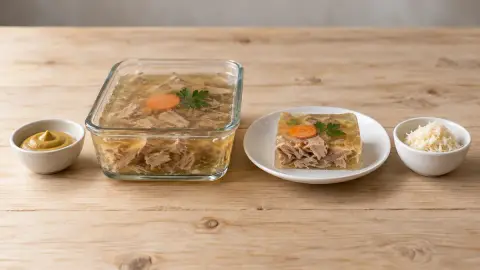
The FoodGPT reference card lists kholodets at 110 kcal per 100 g, so a 150 g slice has about 165 kcal.
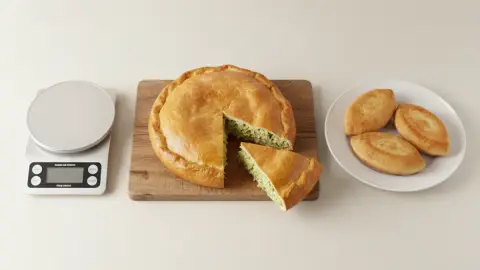
The FoodGPT reference puts a 100 g fried pirozhok (a Russian hand pie) at about 260 kcal, and a baked one at roughly a third less.

The FoodGPT reference card lists blini made with milk at 232 kcal per 100 g, so a 50 g blin has about 116 kcal.
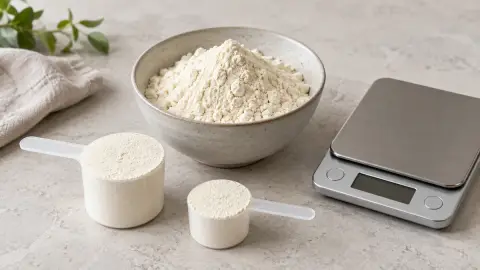
There is no single gram weight for a scoop of protein powder.
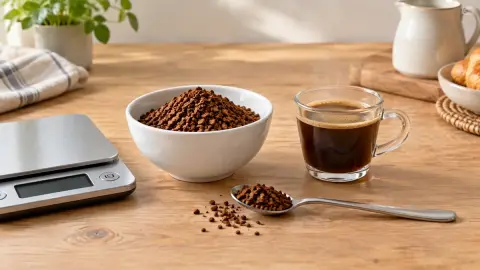
NESCAFÉ lists 1.
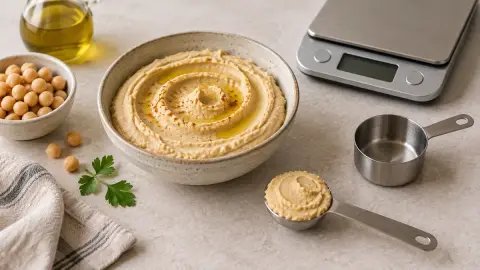
A tablespoon of plain hummus weighs 15 g in the USDA reference entry.
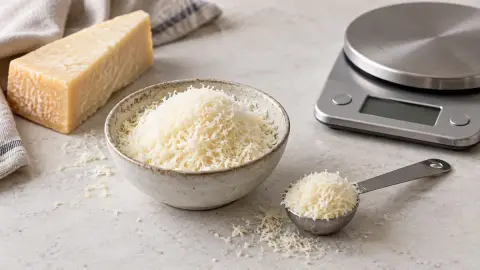
A tablespoon of grated Parmesan weighs 5 g in the USDA reference entry.
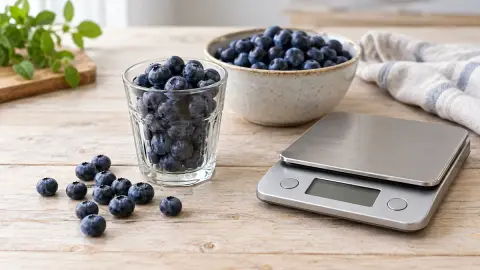
A USDA table lists one cup of fresh blueberries at 148 g and 85 kcal.
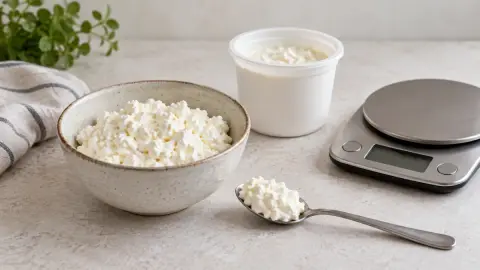
There is no dependable single weight for a tablespoon of cottage cheese curds.
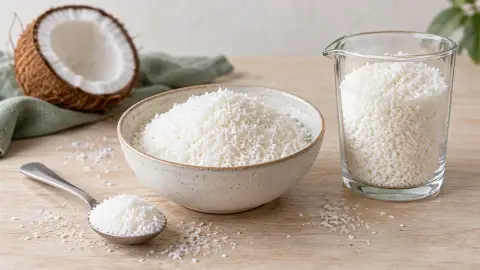
King Arthur Baking lists 85 g for one cup of fine, unsweetened desiccated coconut.
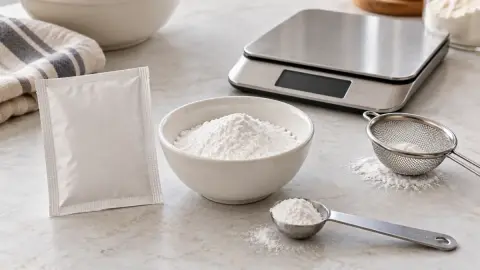
A level teaspoon of baking powder weighs about 4 g in King Arthur Baking’s chart.
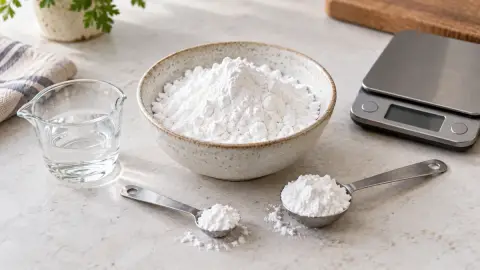
Bob’s Red Mill labels one tablespoon of potato starch as 12 g and 40 kcal.
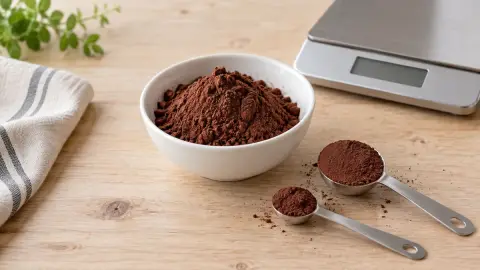
USDA lists 5.

A soup name does not have one calorie count.
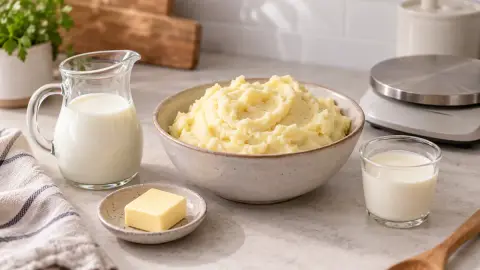
Mashed potatoes do not have one calorie value.
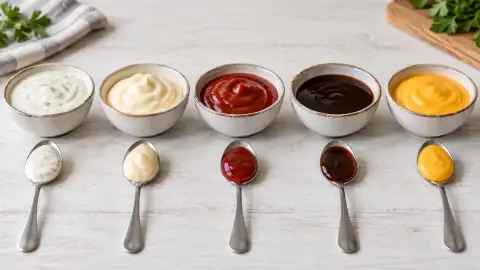
A tablespoon of sauce can add 20 kcal or 90 kcal to a meal.
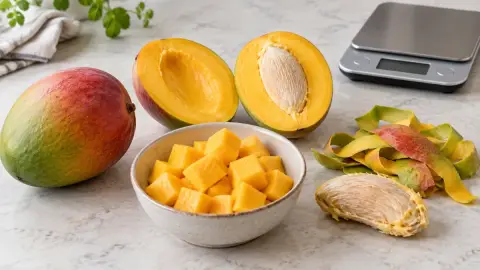
USDA lists one mango without refuse as 336 g and a cup of pieces as 165 g.
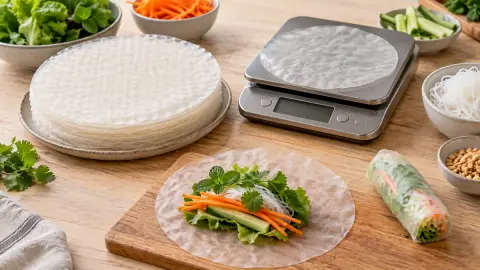
Log rice paper by the dry sheet.
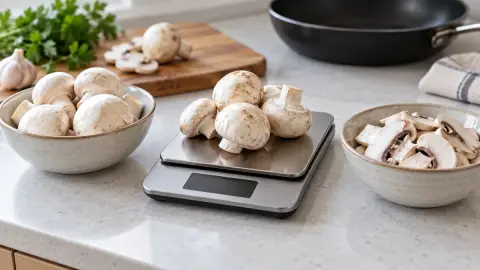
Mushrooms contain little energy on their own, which is why the larger tracking error often comes from the method rather than the mushrooms.

A photo does not turn a home-cooked meal into an exact recipe.
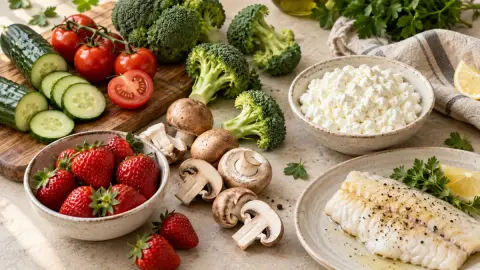
Cucumbers, tomatoes, zucchini, berries and plain yogurt add variety without many calories per serving.

A recipe gives you the calorie content of the entire pot, but you only eat one bowl.

Regulations require four lines on a deli salad container: name, production date, shelf life, and storage conditions.
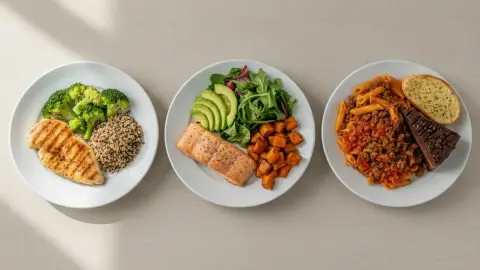
The daily calorie allowance is an abstraction until you see it in grams.
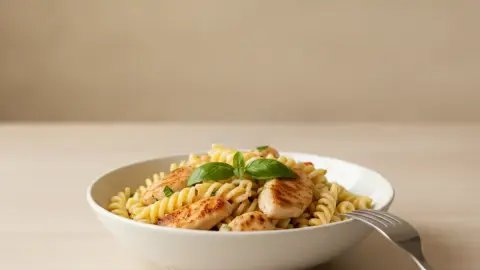
A photo of a plate turns into a number on the screen in a few seconds, and from the outside, it looks like a measurement.
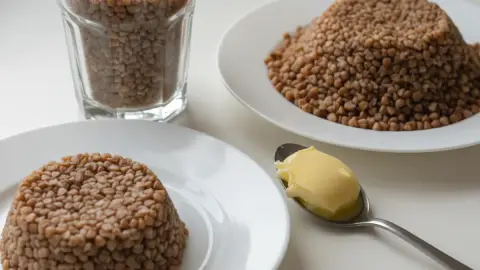
Portion weight is the most inaccurate variable in any calculation, including analysis by photo.
From reading to doing. All of it starts in one place — knowing what is on the plate. Photograph it and the calories and macros appear on their own.
Other topics: Protein · Fats · Carbohydrates · Sugar · Sweeteners · Fibre · Water and salt · Coffee and tea · Drinks and alcohol · Supplements and vitamins · Sports nutrition · Training · Sleep and routine · Appetite and stress · Fasting · Gut and microbiome · Diabetes and blood sugar · Hormones · Age · Children · Pregnancy and breastfeeding · Eating out · Travelling · Gatherings · Food labels · Storage and shelf life · Meat and sausage · Fish and seafood · Dairy · Bread and grains · Sweets and snacks · Plant-based · Food diary · What the research shows · All articles
This article is for general information. It is not medical advice, a diagnosis, or a prescription for treatment or a diet, and it does not replace a consultation with your doctor. If you have a health condition, are pregnant, take medication, or follow a diet prescribed to you, decisions about food belong with your doctor.
Figures from regulations, guidelines and studies are given as they stood when this article was prepared and may since have changed; check them against the primary sources. This article is not advertising, an offer, or individual advice, and neither the author nor the site owner is responsible for decisions taken on the basis of it.