How many grams are in a scoop of protein powder?
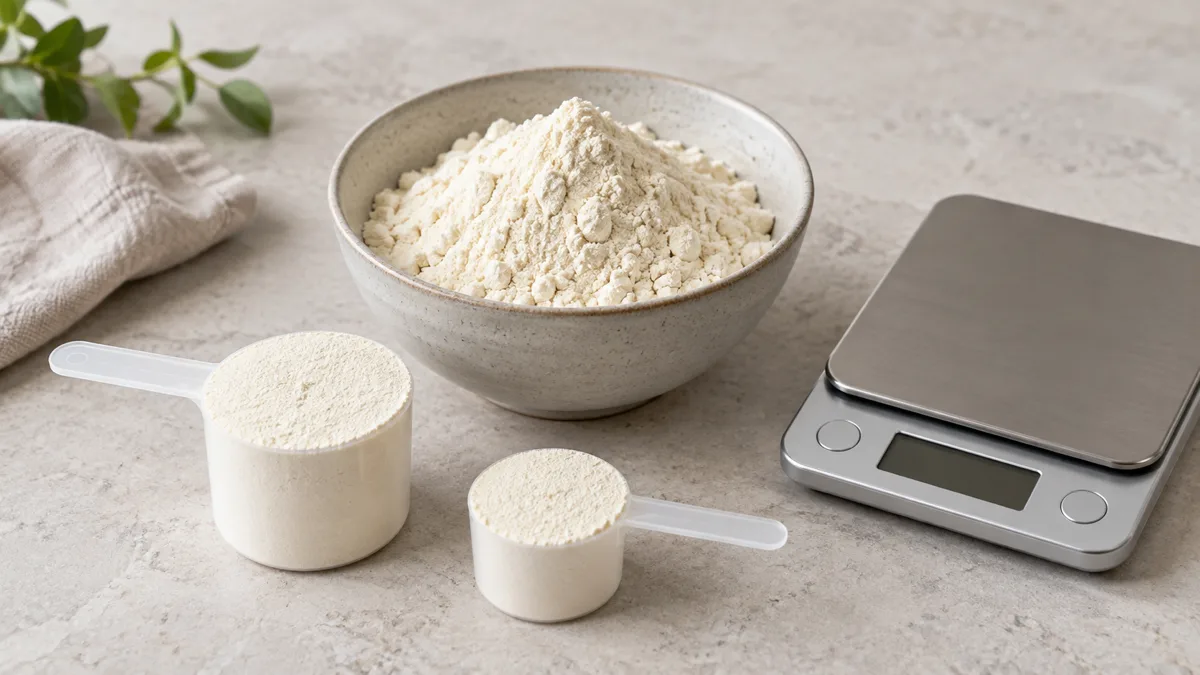
There is no single gram weight for a scoop of protein powder. One product label may use 25 g per scoop and another 30 g. And 25 g of powder does not mean 25 g of protein: the protein amount has its own line on the nutrition panel.
Start with the serving weight on your tub
The nutrition panel for Myprotein Impact Whey Protein defines one scoop as 25 g. The panel for Myprotein 100% Hemp Protein Powder uses 30 g for one scoop. These are serving definitions for two different products, not conversions to apply to all powders.
A scoop holds a volume; grams describe mass. The included scoop can be level, heaped, or packed. “One scoop (25 g)” on a tub explains that product’s serving, but it cannot guarantee that every scoop you take weighs exactly 25 g. See the protein powder measures card for a quick household-measure reference.
Check the weight of your scoop
- Put a dry cup or glass on a kitchen scale and tare it.
- Add one scoop in the way you normally fill it, level or heaped. Note the dry powder weight.
- For two scoops, weigh both together. If the scale displays only whole grams, several scoops together can make the average easier to calculate.
Weigh again when you change the scoop or powder. In a shake, log the dry powder weight; water does not become part of that weight. Milk belongs in a separate entry.
Powder weight is not protein content
The published nutrition panel for unflavored Impact Whey gives 19 g protein and 100 kcal per 25 g serving. Converted to 100 g of that powder, the figures are 19 ÷ 25 × 100 = 76 g protein and 100 ÷ 25 × 100 = 400 kcal. The maker notes that values can change with flavor.
| Powder weight | Protein from this label | Calories from this label |
|---|---|---|
| 20 g | 15.2 g | 80 kcal |
| 25 g | 19 g | 100 kcal |
| 30 g | 22.8 g | 120 kcal |
These are conversions of one specific panel, not averages for protein powder. The hemp product above, for example, lists 16 g protein and 124 kcal per 30 g. Calculate again when you change tubs. Our protein versus gainer guide covers the products themselves.
Convert a per-100-g or per-serving label
If the panel gives values per 100 g, multiply the protein or calorie figure by the grams of powder you used and divide by 100. For example, at 76 g protein per 100 g, a 20 g amount provides 76 × 20 ÷ 100 = 15.2 g protein.
If the panel gives values per serving, find that serving’s weight first. In the example above, 19 g protein belongs to 25 g of dry powder. For a 20 g amount, calculate 19 × 20 ÷ 25 = 15.2 g. Our nutrition-label guide explains the units on the panel.
What to check before logging
Match the product and flavor, the dry serving weight, and the protein line. Enter the weight you actually added, then enter milk, yogurt, or other ingredients separately. “25 g per serving” alone tells you the weight of powder, not the amount of protein.
Frequently asked questions
- How many grams are in one scoop of protein powder?
- There is no universal figure. Manufacturer examples use 25 g and 30 g per scoop. Check your tub’s serving weight and weigh the way you normally fill its scoop if you need a closer figure.
- Does a 25 g scoop contain 25 g of protein?
- No. That is the total powder weight. For example, the nutrition panel for unflavored Myprotein Impact Whey lists 19 g protein in 25 g of powder.
- How do I calculate protein in half a scoop?
- Weigh the powder. Multiply the protein per 100 g on your label by your portion weight and divide by 100. If the panel lists a serving, divide its protein by its serving weight and multiply by your powder weight.
- Should I include milk in a protein shake entry?
- Yes, if you are logging the whole drink. The powder’s protein and calories describe its dry serving; enter the milk or other added ingredients separately.
Read next
- Protein and gainer: how they differ and if they are needed at all — Protein powder is dried milk or plant protein, not a separate class of substances with unique properties.
- Calories and macros on the label: why the numbers don't match reality — The same buckwheat in three different apps gives three different calorie counts, and the package shows a fourth.
- How much protein do you need per day — There are two opposing figures regarding protein: the official recommendation of about 0.
This article is for general information. It is not medical advice, a diagnosis, or a prescription for treatment or a diet, and it does not replace a consultation with your doctor. If you have a health condition, are pregnant, take medication, or follow a diet prescribed to you, decisions about food belong with your doctor.
Figures from regulations, guidelines and studies are given as they stood when this article was prepared and may since have changed; check them against the primary sources. This article is not advertising, an offer, or individual advice, and neither the author nor the site owner is responsible for decisions taken on the basis of it.