How much does a mango weigh: flesh, pit, and serving
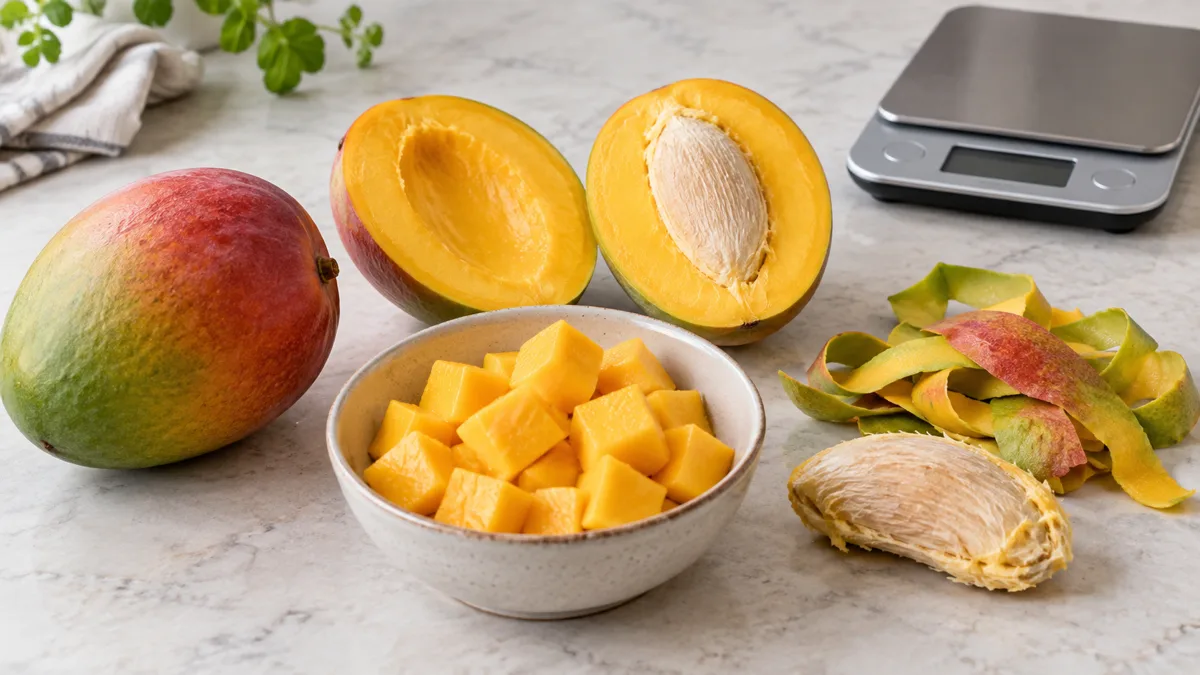
USDA lists one mango without refuse as 336 g and a cup of pieces as 165 g. These are measures of the edible portion, not the store weight of a whole mango. For the fruit in your kitchen, weigh the flesh or subtract the refuse.
What 336 g and 165 g mean
FoodData Central record 169910, “Mangos, raw”, gives two household measures: one fruit without refuse at 336 g and one cup of pieces at 165 g. The fruit measure does not include the peel or pit.
These figures are useful estimates when you do not have a scale. They do not mean that a whole mango from a store weighs 336 g or that every fruit provides exactly that much flesh.
Why the store weight is not the serving weight
A store scale weighs the entire fruit: flesh, peel, and pit. A food diary normally needs the part you ate. Entering the price-label weight for a “raw mango” database item therefore counts parts that were left behind.
There is no universal percentage to subtract. The USDA figure of 336 g already describes a fruit without refuse and does not state what that fruit weighed before preparation. The edible amount in a particular mango is only known after weighing it.
How to weigh mango flesh
The shortest method is to place a bowl on the scale, tare it, add the peeled pieces, and record the result. If you prefer to cut and eat the fruit immediately, calculate it from the refuse:
- Weigh the whole mango before cutting.
- After eating, weigh the peel and pit together with any flesh left on them.
- Subtract the refuse from the original whole-fruit weight.
For example, if a mango weighed 430 g and the peel and pit weighed 145 g afterward, the edible amount was 285 g. This shows the calculation; it is not an average flesh yield.
How to log a serving
Choose a raw-mango entry whose nutrition is stated per 100 g of edible portion, then enter the amount of flesh you ate. If you cut 285 g but ate 120 g, log 120 g rather than one whole fruit.
Without a scale, use a USDA household measure: 165 g for a cup of pieces or 336 g for a fruit without refuse. The result remains an estimate. Half of your fruit does not necessarily weigh 168 g; that reference half comes from dividing the database value, not from measuring your mango.
For several servings, weigh all the flesh once and then weigh each bowl. If the pieces are divided equally, divide the total edible weight by the number of servings. The broader method for estimating food without a scale is covered in our guide to portion size.
If some flesh remains on the pit
You do not need to scrape it clean just to make the diary exact. Weigh the pit after eating: flesh left on it remains in the refuse and is not counted as eaten. For the same reason, weighing the peel after preparation is more useful than applying a preset percentage.
Frequently asked questions
- How much does one mango weigh without the peel and pit?
- USDA FoodData Central record 169910 lists one fruit without refuse at 336 g. This is a reference measure of the edible portion, not a guaranteed flesh weight for every mango.
- How much does a cup of cut mango weigh?
- FoodData Central lists one cup of raw mango pieces at 165 g.
- How do I subtract the pit and peel?
- Weigh the whole fruit, then weigh the peel and pit after eating. The difference is the edible amount. Alternatively, tare a bowl and weigh the peeled pieces directly.
- What mango weight should I enter in a food diary?
- Enter the weight of the flesh you ate. A whole-fruit store weight includes the peel and pit and therefore overstates the serving.
Read next
- How to determine portion size without a scale — Portion weight is the most inaccurate variable in any calculation, including analysis by photo.
- Raw or cooked weight: how to count grains, pasta, and meat — "100 g of buckwheat" can mean 346 kcal or 92, depending on the state of the grain.
- Why the tracker shows a deficit but weight remains the same — The app has shown a deficit for four weeks, but the scale hasn't moved.
- How to count calories in homemade food — Processed foods are counted by the label, and restaurant meals by a reference guide.
This article is for general information. It is not medical advice, a diagnosis, or a prescription for treatment or a diet, and it does not replace a consultation with your doctor. If you have a health condition, are pregnant, take medication, or follow a diet prescribed to you, decisions about food belong with your doctor.
Figures from regulations, guidelines and studies are given as they stood when this article was prepared and may since have changed; check them against the primary sources. This article is not advertising, an offer, or individual advice, and neither the author nor the site owner is responsible for decisions taken on the basis of it.