The communal pot: how to calculate your portion
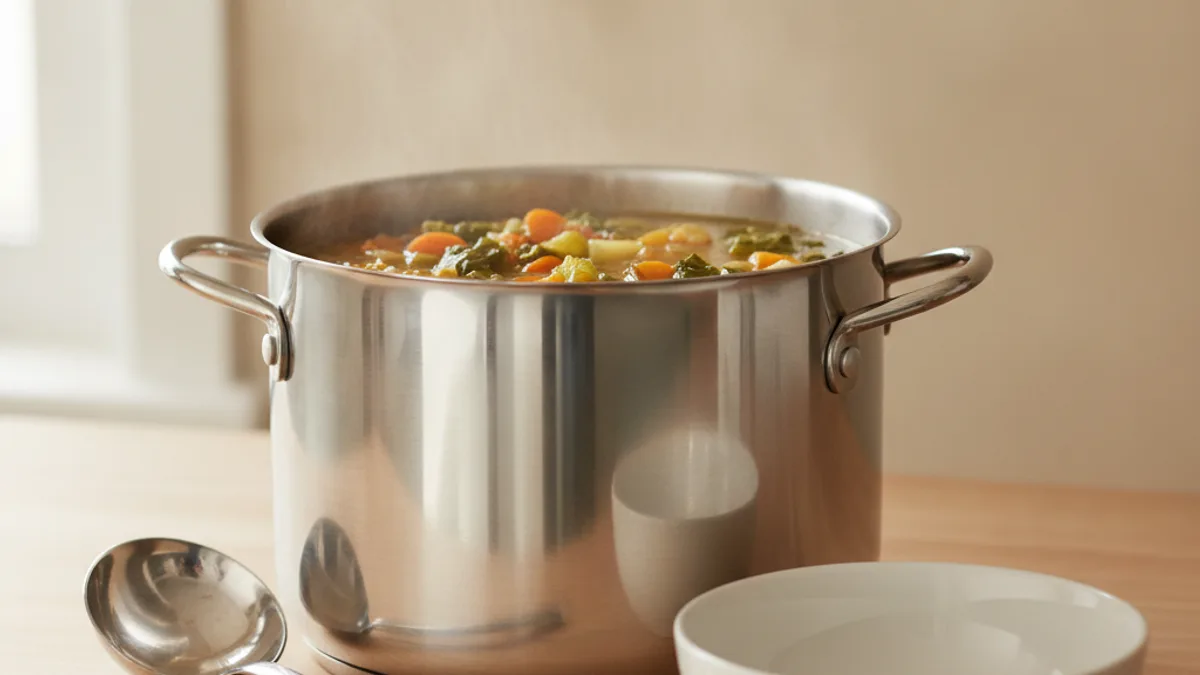
A recipe gives you the calorie content of the entire pot, but you only eat one bowl. There are three ways to divide the former by the latter, and they differ not so much in accuracy as in how many times you have to get the scale out.
Why a bowl of soup is calculated differently than a cutlet
A cutlet has its own weight and composition: you put it on the scale, find the value, and record it. The composition of a pot of stew is also known—you put the ingredients in yourself—but the weight of what you ate is unknown. A ladle pours a different amount each time, and nobody weighs their bowl.
Therefore, the task boils down to one question: what fraction of the pot did you eat? Everything else is just multiplication.
Method one: weigh the finished dish as a whole
The most accurate and the most tedious. The procedure is as follows:
- Record the weight of the empty pot once—it won't change after that.
- Add up the calorie content of all ingredients by raw weight, including the oil from the pan.
- After cooking, place the pot on the scale and subtract the weight of the pot. This is the weight of the finished dish.
- Divide the total calories by the weight to get the value per 100 g of the finished dish.
- Weigh your bowl and multiply.
The key moment is in the third step. Water evaporates during cooking, so the weight of the finished dish is less than the sum of the ingredients, but the calorie content remains the same: calories do not boil away. You must calculate the sum based on raw ingredients, but divide by the finished weight.
One such measurement is usually enough for a long time. If you make the same soup using the same recipe, the value per 100 g repeats, and next time you only need to weigh your bowl.
Method two: calculate by ladle
When you don't have a scale handy, the pot is divided into equal parts in advance. Pour water into the ladle and then into a measuring cup—this way you will know its volume once and for all. Then divide: the calorie content of the pot by the number of ladles in it.
The error here is predictable and always in one direction. The solids are heavier than the broth and settle to the bottom, while the fat floats to the top, so the first ladle from an unstirred pot is fattier than the average, and the last one is thicker. One stir before serving eliminates most of this variance.
Method three: take a photo of your bowl
Analyzing a photo solves exactly the part of the task that is the most difficult: estimating the weight and composition of a portion. You don't need to calculate the pot: the model looks at what is in the bowl and provides an estimate for that specific serving.
In return, there is a margin of error: the photo doesn't show how much oil went into the sauté or how thick the soup is mixed under the top layer. For home cooking, this is usually acceptable, but for a dish you prepare every week, it is wiser to calculate the pot once using the first method and then use that established number.
What to choose
| Method | Requirements | When to use |
|---|---|---|
| Weigh the pot | Scale and one minute after cooking | Dishes you prepare regularly |
| Ladles | Ladle volume, known in advance | Guests, summer house, someone else's kitchen |
| Bowl photo | Phone | One-off meals and eating away from home |
Three things that throw off the count more than others
Oil from the pan. The sauté for the soup absorbs almost everything poured onto it, and these calories go entirely into the pot. A tablespoon of vegetable oil is about 120 kcal; in a breakdown of six portions, it is unnoticeable, but over the course of a week, it adds up. More details in the analysis of how many calories frying adds.
Seconds. A second bowl doubles not half the number, but the whole thing. It appears in a food diary less often than the first precisely because it feels like a continuation of the same meal.
Bread and sour cream. A tablespoon of 20% sour cream is about 40 kcal; two slices of rye bread are about 130. They are usually served with soup by default and are often left unrecorded by default.
When accuracy is not needed
If you eat home-cooked food and your weight stays where you want it, you don't need to weigh the pot at all. The point of counting arises when the result deviates from expectations—and in that case, home-cooked dishes with an unclear portion weight are the first place to look for the discrepancy. For others, see the analysis of typical calorie counting errors.
Frequently asked questions
- Should I calculate ingredients by raw weight or cooked weight?
- Caloric content is calculated based on the raw weight of the ingredients and divided by the weight of the finished dish. Water evaporates during cooking, reducing the total weight, but the calories remain the same.
- How do I calculate a portion if I didn't cook the soup myself?
- The easiest way is to take a photo of your bowl: photo-based analysis can estimate the weight and composition of exactly what is served. Another option is to estimate the portion in ladles, provided you know the volume of the ladle.
- Do I need to account for water added to the pot?
- It does not add calories, but it changes the weight of the finished dish, and therefore the caloric content per 100 g. That is why you should weigh the final result rather than calculating based on the recipe volume.
Read next
- How to count calories in homemade food — Processed foods are counted by the label, and restaurant meals by a reference guide.
- Raw or cooked weight: how to count grains, pasta, and meat — "100 g of buckwheat" can mean 346 kcal or 92, depending on the state of the grain.
- How to determine portion size without a scale — Portion weight is the most inaccurate variable in any calculation, including analysis by photo.
This article is for general information. It is not medical advice, a diagnosis, or a prescription for treatment or a diet, and it does not replace a consultation with your doctor. If you have a health condition, are pregnant, take medication, or follow a diet prescribed to you, decisions about food belong with your doctor.
Figures from regulations, guidelines and studies are given as they stood when this article was prepared and may since have changed; check them against the primary sources. This article is not advertising, an offer, or individual advice, and neither the author nor the site owner is responsible for decisions taken on the basis of it.