How many calories does frying add
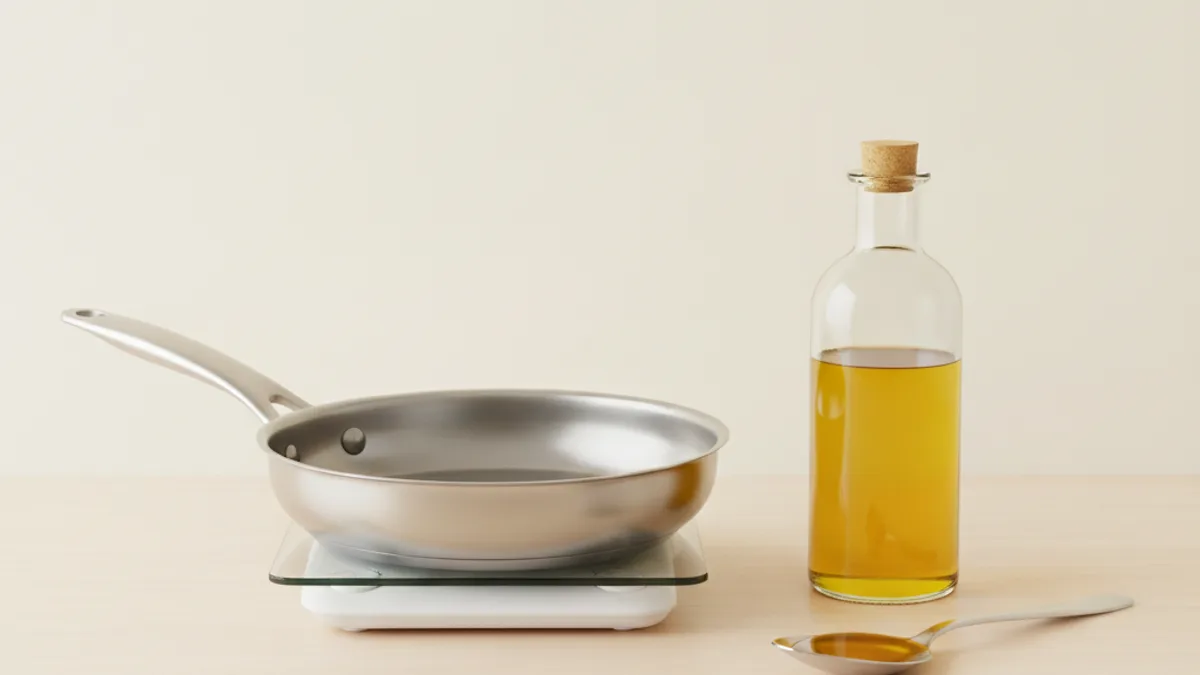
The cooking method adds more calories to a dish than any choice between "healthy" and "unhealthy" foods. The reason is arithmetic: fat provides 9 kcal per gram, and a tablespoon of oil is 15 grams. The only question is how much of it actually makes it to your plate.
Arithmetic behind the numbers
The conversion factor for fats is set by regulation — Annex 4 to TR CU 022/2011: 9 kcal per gram. Here is a simple table:
| Oil | Weight | Calories |
|---|---|---|
| Teaspoon | about 5 g | about 45 kcal |
| Tablespoon | about 15 g | about 135 kcal |
| "Pouring by eye" into a pan | 20–30 g | 180–270 kcal |
In other words, one splash of oil from the bottle into the pan adds as much to your dinner as a slice of bread with butter. The difference is that people log the bread in their food diary, but not the oil.
How much oil actually ends up in the food
You can measure this rather than guessing. The method takes half a minute:
- Place the pan on a scale and record the weight.
- Pour the oil and record the weight again: the difference is how much you poured.
- After cooking, remove the food, let the pan cool, and weigh it again.
- The difference between the "after oil" weight and the "after food" weight is what was absorbed.
One such measurement gives you a personal figure for your specific pan; you can then use it as a reference point without repeating the measurement every time.
What reference data shows
Comparison based on the FoodData Central database per 100 g of potatoes:
| Preparation method | Calories | Fat |
|---|---|---|
| Raw | 77 kcal | 0.09 g |
| Boiled, peeled | 86 kcal | 0.1 g |
| Frozen fries, oven-baked | 158 kcal | 5.48 g |
Note the middle column: boiling barely changes the calories per 100 g and adds no fat at all. The entire increase in the last row is fat, which accounts for about 50 kcal out of 158.
Deep-fried potatoes absorb more than pre-packaged oven-baked versions—and the difference between homemade and restaurant versions of the same dish is most often exactly this.
What absorbs the most
- Breadcrumbs and batter. Dry crumbs act like a sponge: this is the fastest way to double the calories of a piece of meat.
- Porous vegetables. Eggplant and zucchini absorb oil with almost no resistance and then release it onto the plate.
- Small cuts. The larger the surface area for the same weight, the more oil remains on it.
- Dough. Anything fried in dough absorbs fat both on the outside and inside.
Dense pieces of meat and fish absorb the least, especially on a good non-stick surface: the oil stays in the pan rather than soaking into the product.
How to cook and count honestly
- Measure oil with a spoon, not "by eye." This is the only way to know the upper limit of what might have been absorbed.
- Log the oil as a separate entry. It should be in your diary even if some of it remained in the pan: it is better to slightly overestimate than to miss 200 kcal.
- Don't forget about marinades and dressings. The oil in them doesn't disappear during baking.
- Change the method, not the product. The oven, grill, air fryer, and stewing provide the same dish without an extra hundred or two calories—usually, this is easier than changing your diet itself.
How to calculate whole homemade dishes is covered in the article on calories in homemade food, and about the weight of grains and meat before and after cooking — in the article on raw and cooked weight. About fats themselves and their recommended intake — in the article on daily fat intake.
Frequently asked questions
- How many calories does a tablespoon of oil add?
- About 135 kcal: a tablespoon is approximately 15 g, and the conversion factor for fats according to Annex 4 to TR CU 022/2011 is 9 kcal per gram.
- How to determine how much oil has been absorbed by food?
- Weigh the pan before adding oil, after the oil is added, and after the food is removed. The difference between the second and third measurement is the amount absorbed.
- How much does frying increase the calorie content of potatoes?
- According to FoodData Central, raw potatoes contain 77 kcal per 100 g with 0.09 g of fat, boiled potatoes contain 86 kcal with 0.1 g, and frozen french fries prepared in the oven contain 158 kcal with 5.48 g of fat.
- What absorbs the most oil?
- Breaded items and batter, porous vegetables like eggplant and zucchini, and finely chopped pieces with a large surface area. Dense cuts of meat and fish absorb the least.
- Should I log the oil if some of it remains in the pan?
- Yes. It is easier to log the entire amount poured and slightly overestimate than to ignore the oil entirely: 20–30 g is 180–270 kcal, and such an error can consume your entire daily deficit.
Read next
- How to count calories in homemade food — Processed foods are counted by the label, and restaurant meals by a reference guide.
- Raw or cooked weight: how to count grains, pasta, and meat — "100 g of buckwheat" can mean 346 kcal or 92, depending on the state of the grain.
- How much fat do you need per day and what happens if you don't get enough — People usually only know the upper limit for fat.
This article is for general information. It is not medical advice, a diagnosis, or a prescription for treatment or a diet, and it does not replace a consultation with your doctor. If you have a health condition, are pregnant, take medication, or follow a diet prescribed to you, decisions about food belong with your doctor.
Figures from regulations, guidelines and studies are given as they stood when this article was prepared and may since have changed; check them against the primary sources. This article is not advertising, an offer, or individual advice, and neither the author nor the site owner is responsible for decisions taken on the basis of it.