
Weight loss
Losing weight from your legs, thighs or face: what research says about spot reduction
You cannot lose fat from just your legs, thighs or face: in studies, training one part of the body did not remove fat from that part.
What to eat around a workout, and how much one actually burns.
You cannot lose fat from just your legs, thighs or face: in studies, training one part of the body did not remove fat from that part.

Yes, but not equally for everyone.
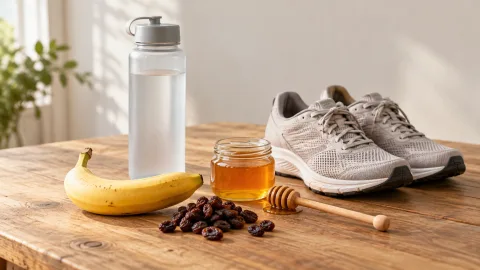
The joint position stand of ACSM, the Academy of Nutrition and Dietetics, and Dietitians of Canada recommends 30–60 g of carbohydrates per hour for exercise lasting 1 to 2.

Eight thousand steps is about 5.

If your weight is steady but your waist measures smaller, change may be happening without a visible shift on the scale.

Fasted exercise increases fat use during the workout itself.

Yes.

The shape of a postpartum abdomen does not reveal what is producing it.

Weight loss sometimes makes cellulite less visible, but it cannot guarantee that the dimples will disappear.

Japanese interval walking alternates three minutes of fast walking with three minutes at an easy pace.

A light snack before a run can feel uneventful for one person and uncomfortable for another.

Energy expenditure for household chores is calculated using a single formula and a standard reference: the Compendium of Physical Activities, where each activity is assigned a MET value.
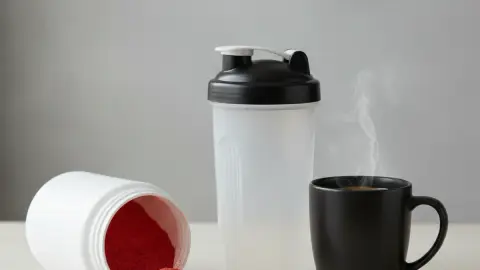
A pre-workout supplement is a blend of five to fifteen substances, only one of which is reliably effective.

A calorie surplus is necessary for muscle gain, but the amount matters less than people think.

Zone 2 is an intensity at which you can speak in full sentences and blood lactate levels barely rise.

VO2max is the maximum volume of oxygen the body can consume per minute during maximal exertion.

Protein comes with its own arithmetic: thirty grams per meal, a leucine threshold, a window after training.
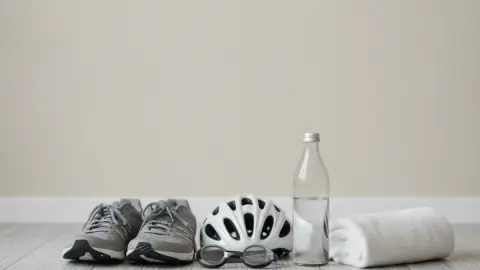
An hour of running at a moderate pace for a 70 kg person is about 550–700 kcal, cycling at a leisurely pace is 350–450, swimming is 400–600, and strength training is 200–350.

Plain water is enough for almost everyone, almost all the time.
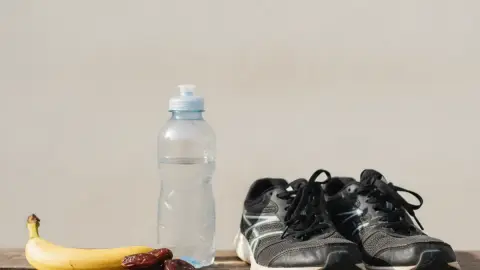
Gels, isotonic drinks, and bars on the course solve one problem — preventing fuel from running out where it is truly needed.

The rule that you must "eat protein within half an hour after a workout or it's all for nothing" is known to anyone who has ever stepped into a gym.

The question "what to eat before a workout" is almost always actually a question of "how long before.
The search for "how to lose belly fat" almost always assumes that there is an exercise or product that targets this specific area.
The term comes from competitive bodybuilding, where it meant preparing to step on stage: losing fat while maintaining muscle, and shedding water in the final days.

On a tracker screen, three numbers look equally reliable: heart rate, steps, and "calories burned.

A treadmill does not create a calorie deficit.

Two people at the same weight, with the same BMI, can carry very different metabolic risk.
Everyone knows the number 10,000, but almost no one knows its origin.

Sedentary work affects health not because a person doesn't exercise enough, but because they barely move during the other fifteen hours of the day.

Weight loss is boring: a slight energy deficit, enough protein, strength training, and time.
From reading to doing. All of it starts in one place — knowing what is on the plate. Photograph it and the calories and macros appear on their own.
Other topics: Protein · Fats · Carbohydrates · Sugar · Sweeteners · Fibre · Water and salt · Coffee and tea · Drinks and alcohol · Supplements and vitamins · Sports nutrition · Sleep and routine · Appetite and stress · Fasting · Gut and microbiome · Diabetes and blood sugar · Hormones · Age · Children · Pregnancy and breastfeeding · Eating out · Travelling · Gatherings · Portion size · Food labels · Storage and shelf life · Meat and sausage · Fish and seafood · Dairy · Bread and grains · Sweets and snacks · Plant-based · Food diary · What the research shows · All articles
This article is for general information. It is not medical advice, a diagnosis, or a prescription for treatment or a diet, and it does not replace a consultation with your doctor. If you have a health condition, are pregnant, take medication, or follow a diet prescribed to you, decisions about food belong with your doctor.
Figures from regulations, guidelines and studies are given as they stood when this article was prepared and may since have changed; check them against the primary sources. This article is not advertising, an offer, or individual advice, and neither the author nor the site owner is responsible for decisions taken on the basis of it.