What to eat before a workout
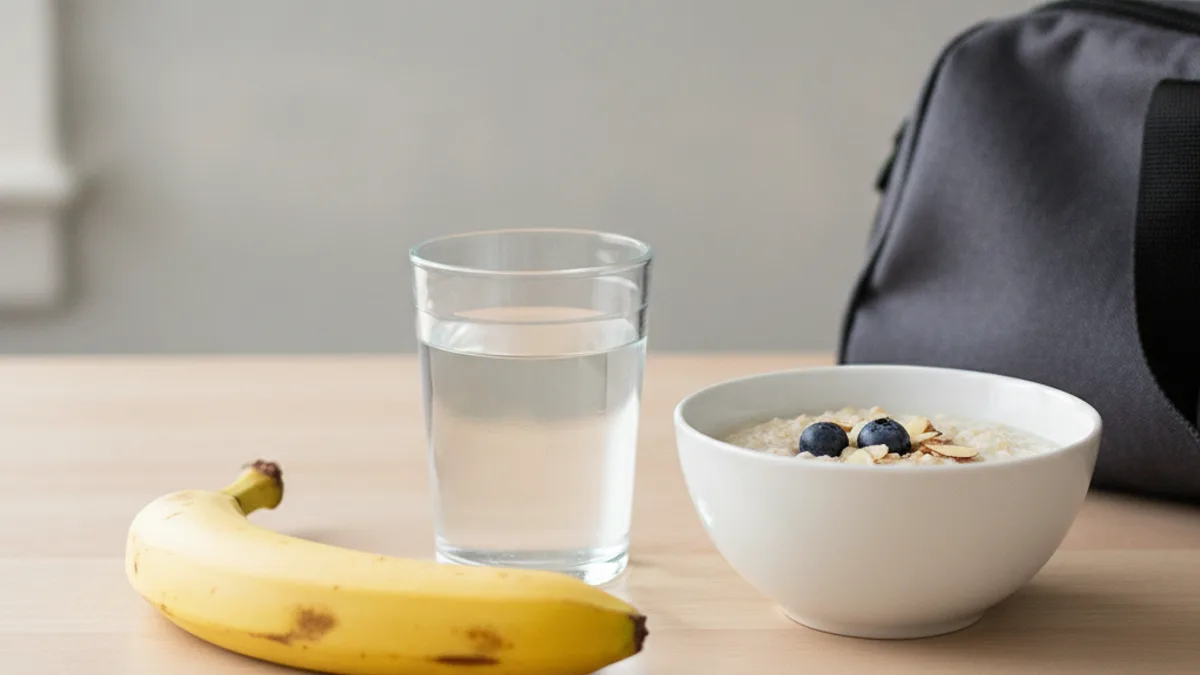
The question "what to eat before a workout" is almost always actually a question of "how long before." Composition is important, but it is secondary: a stomach occupied with digestion diverts blood flow from the muscles, and this affects how you feel during exercise more than the choice between a banana and oatmeal.
The interval is what matters, not the product
The guidelines are simple and work for most people:
| Before exercise | What is appropriate |
|---|---|
| 3–4 hours | A full meal: protein, side dish, vegetables |
| 1.5–2 hours | A light meal: porridge, yogurt with fruit, a sandwich |
| 30–60 minutes | A small carbohydrate snack: banana, crispbread, a few dried fruits |
| Less than 30 minutes | Better to have nothing or only liquids |
The closer you are to the workout, the smaller the volume and the simpler the composition should be. Fat and fiber slow down stomach emptying the most, which is why they are the first things to be removed before a workout — not because they are harmful, but because they stay in the stomach longer.
Why eat before a workout at all
There are two reasons, and both are practical.
Fuel for intense work. During high-intensity exercise, muscles work primarily on carbohydrates — their own glycogen stores. These stores last for about an hour to an hour and a half of intense work, and for short workouts, additional fuel does not change anything. For long ones, it does.
Well-being. For some people, working out on an empty stomach goes worse: concentration drops, and fatigue sets in earlier. For others, it makes no difference. This is individual and should be checked through observation, not by following a rule.
About working out on an empty stomach
A morning workout without breakfast is a viable option, and there is no harm in it if your well-being does not suffer. The idea that "more fat is burned" on an empty stomach requires clarification: the proportion of fat as an energy source during the exercise itself is indeed higher, but the daily balance does not change, and that is what determines the result. The mechanics are in the article about calorie deficit.
There is one limitation: the more intense and longer the work, the more noticeable the lack of fuel. A calm half-hour walk or a light jog on an empty stomach is normal; interval training or an hour of strength training is not.
It is also worth mentioning sleep: lack of sleep affects the quality of a workout more than the composition of the breakfast before it — more on this in the article about sleep deprivation.
What not to eat before exercise
- Fatty foods. They stay in the stomach for a long time. This is not about the harm of fats — an analysis of their types is in the article about healthy and unhealthy fats — but about time.
- High fiber. A large portion of vegetables or legumes before running is a common cause of abdominal discomfort.
- New foods. An unfamiliar product before an important workout or race is a bad idea for the same reason you don't change your running shoes on the day of a race.
- A large volume of liquid at once. It is better to drink in advance and in small amounts — more on this in the article about water and electrolytes.
Is protein needed before a workout
There is no separate necessity: the total daily amount of protein matters more than its timing around a workout. Guidelines on the amount are in the article about daily protein intake.
The practical sense in having protein before exercise appears in one case: if you won't be able to eat for a while after the workout. In that case, the meal before covers both — more details in the article about post-workout nutrition.
What to try if nothing has worked
- Push the meal back, don't change it. Heaviness during exercise is more often about timing than the product itself.
- Reduce the volume by half. Half of a normal portion an hour before is a good starting point.
- Try without food. For workouts under an hour, this is a normal option, and it suits many people better.
- Keep a log. Two weeks of notes on "what I ate, how long before, and how it went" provide more value than any universal scheme.
Frequently asked questions
- How many hours before a workout should you eat?
- A full meal should be consumed 3–4 hours before, a light meal 1.5–2 hours before, and a small carbohydrate snack 30–60 minutes before. Less than half an hour before, it is better to stick to liquids.
- Can you exercise on an empty stomach?
- Yes, if you feel fine. For low-intensity or short workouts, this is a normal option. The longer and more intense the activity, the more noticeable the lack of fuel becomes.
- Is it true that more fat is burned on an empty stomach?
- The proportion of fat as an energy source during the activity itself is higher, but the daily energy balance does not change because of this, and the result is determined precisely by that balance.
- What is best to avoid eating before a workout?
- Fatty foods and foods rich in fiber—they stay in the stomach longer—as well as any foods that are new to you. It is also better to avoid drinking a large volume of liquid at once, opting instead to drink small amounts in advance.
- Is protein necessary immediately before a workout?
- There is no specific need: the total daily amount matters, not the timing around the workout. It makes sense if you will not be able to eat for a while after the activity.
Read next
- What to eat after a workout and does the "anabolic window" exist — The rule that you must "eat protein within half an hour after a workout or it's all for nothing" is known to anyone who has ever stepped into a gym.
- How much protein do you need per day — There are two opposing figures regarding protein: the official recommendation of about 0.
- Water and electrolytes during training: when plain water is not enough — Plain water is enough for almost everyone, almost all the time.
- How to gain weight when you can't — People trying to lose weight have the goal of eating less without feeling hungry.
This article is for general information. It is not medical advice, a diagnosis, or a prescription for treatment or a diet, and it does not replace a consultation with your doctor. If you have a health condition, are pregnant, take medication, or follow a diet prescribed to you, decisions about food belong with your doctor.
Figures from regulations, guidelines and studies are given as they stood when this article was prepared and may since have changed; check them against the primary sources. This article is not advertising, an offer, or individual advice, and neither the author nor the site owner is responsible for decisions taken on the basis of it.