How to gain weight when you can't
People trying to lose weight have the goal of eating less without feeling hungry. Here, the task is the mirror image: eating more without feeling heavy. And it is solved not by "eating everything in sight," but by increasing calorie density while keeping the volume of food the same.
First to the doctor, then to the plate
This is not a formality. Underweight and unintentional weight loss are reasons to rule out causes that cannot be treated with diet: thyroid diseases, diabetes, celiac disease and other malabsorption disorders, inflammatory bowel diseases, infections, oncology, depression, eating disorders.
Especially if weight decreases on its own, rather than simply not increasing. Being thin all your life and losing weight over six months are two different scenarios, and the second begins with an examination.
You can roughly check your status using the body mass index: below 18.5 is underweight. The indicator is approximate, but it serves as a reason to talk to a doctor.
Why 'just eat more' doesn't work
For people who don't gain weight, appetite is usually not suppressed, but rather quickly satisfied. The reasons vary: a small volume of a habitual portion, high daily activity, the habit of eating once or twice a day. As a result, the advice to eat more runs into the physical feeling of fullness already halfway through the plate.
Therefore, what works is not increasing the volume, but increasing the caloric content of the same volume. This is the same energy density as for weight loss, only used in reverse.
Density instead of volume
| Was | Became | Increase |
|---|---|---|
| Porridge with water | Porridge with whole milk | +80–100 kcal |
| Salad without dressing | Spoon of olive oil | +120 kcal |
| Cottage cheese 2% | Cottage cheese 9% with nuts | +200 kcal |
| Tea | Milkshake or cocoa with milk | +150–250 kcal |
| Bread | Bread with nut butter or avocado | +150 kcal |
| Chicken | Red fish, chicken thigh | +80–120 kcal per serving |
No single line increases the amount of food on the plate. In total, six such substitutions amount to 700–900 kcal per day, which is significantly more than the required surplus.
Three approaches that yield the most
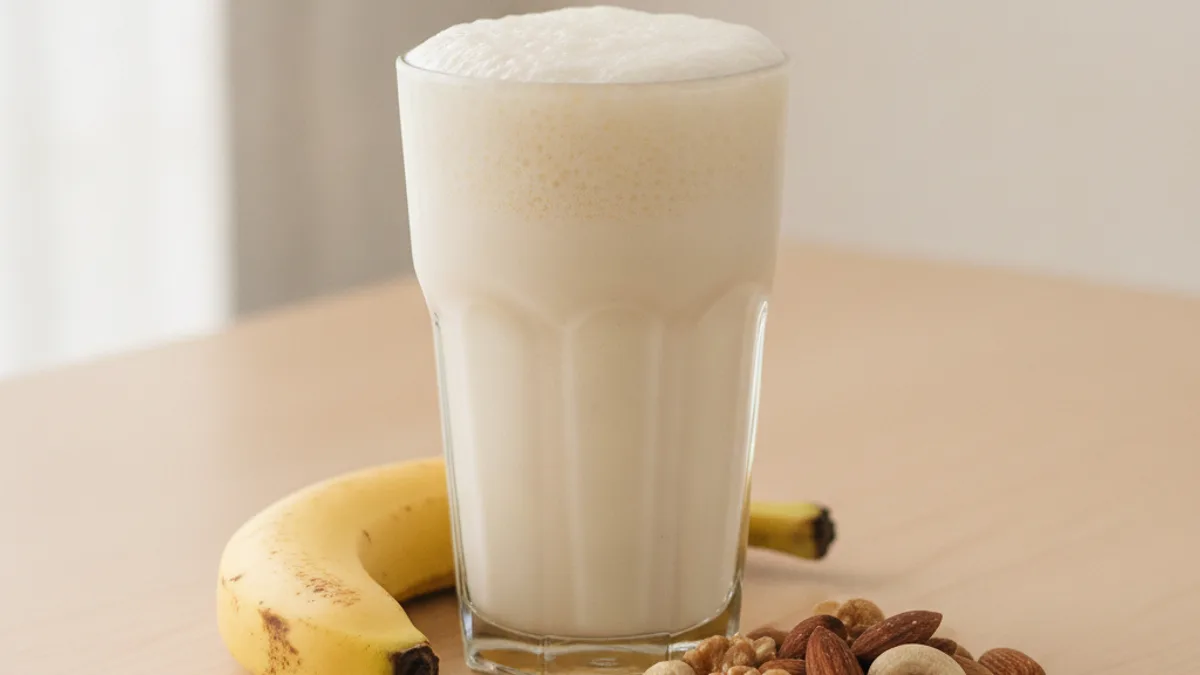
Liquid calories. The satiety mechanism hardly accounts for what is drunk — this is a disadvantage for weight loss, but an advantage here. Milkshakes, cocoa, smoothies with milk, banana, and nut butter add 300–500 kcal without taking up space.
More meals, not larger portions. This is precisely where meal frequency helps: not because it 'boosts metabolism' — that's not true — but because four moderate meals are manageable where three large ones are not.
Do not drink before eating. A glass of water half an hour before a meal is a trick for those losing weight. Here, it works against you.
How much to add
A surplus of 300–500 kcal above maintenance calories yields approximately 0.25–0.5 kg per week. More means faster fat gain, not faster muscle gain; this has been measured in athletes, and an analysis is available in the material on muscle mass gain.
How to find a starting point: calculate your norm using a formula, eat as usual for a week and record it, then compare the average with the calculation. For people with a 'fast metabolism,' actual consumption is almost always lower than the calculated norm — not because the calculation is wrong, but because less is eaten than it seems. How to interpret this week is covered separately.
Protein and exercise
Without strength training, the gain will primarily be fat. With it, a significant portion goes into muscle tissue, and this is the only difference that determines the outcome after six months.
Protein — 1.6–2.2 g per kilogram of body weight; guidelines are in the analysis of how much protein is needed per day, and products with the best ratio are in the protein per calorie table. Gainers and protein supplements are not mandatory; they address convenience, not physiology — analysis.
What not to do
- Gaining with fast food. It will provide a surplus, but along with it — a shift in lipid profile and almost no micronutrients.
- Expecting quick results. Half a kilogram per week is two kilograms per month, and on the scales, such a gain is lost in normal fluctuations within a week: weight changes by a kilogram per day on its own.
- Relying on appetite supplements. Medications with a proven effect on appetite exist, but they are prescription-only and administered based on indications.
- Considering the problem solved upon reaching a number. Maintenance requires the same surplus, but a smaller one — otherwise, the weight will return.
Frequently asked questions
- How much should one eat to gain weight?
- A surplus of 300–500 kcal above maintenance calories yields about 0.25–0.5 kg per week. A larger surplus accelerates fat gain, not muscle growth.
- What to do if you can't eat more?
- Increase the caloric density of the same volume, not the volume itself: add oil to salad, use milk instead of water in porridge, include nuts and nut butter, and full-fat cottage cheese. Plus, liquid calories that provide little satiety.
- When is underweight a reason to see a doctor?
- If weight decreases unintentionally or the body mass index is below 18.5. Thyroid diseases, diabetes, celiac disease, inflammatory bowel diseases, and eating disorders cannot be treated with diet alone.
Read next
- Muscle gain: how much of a surplus is needed and how much food that is — A calorie surplus is necessary for muscle gain, but the amount matters less than people think.
- Energy density: why the same calorie count can mean different amounts of food — Energy density is calories per gram, and it is already printed on every package: that very line "per 100 g" that people usually overlook while searching for the per-serving figure.
- How much protein do you need per day — There are two opposing figures regarding protein: the official recommendation of about 0.
This article is for general information. It is not medical advice, a diagnosis, or a prescription for treatment or a diet, and it does not replace a consultation with your doctor. If you have a health condition, are pregnant, take medication, or follow a diet prescribed to you, decisions about food belong with your doctor.
Figures from regulations, guidelines and studies are given as they stood when this article was prepared and may since have changed; check them against the primary sources. This article is not advertising, an offer, or individual advice, and neither the author nor the site owner is responsible for decisions taken on the basis of it.