Muscle gain: how much of a surplus is needed and how much food that is
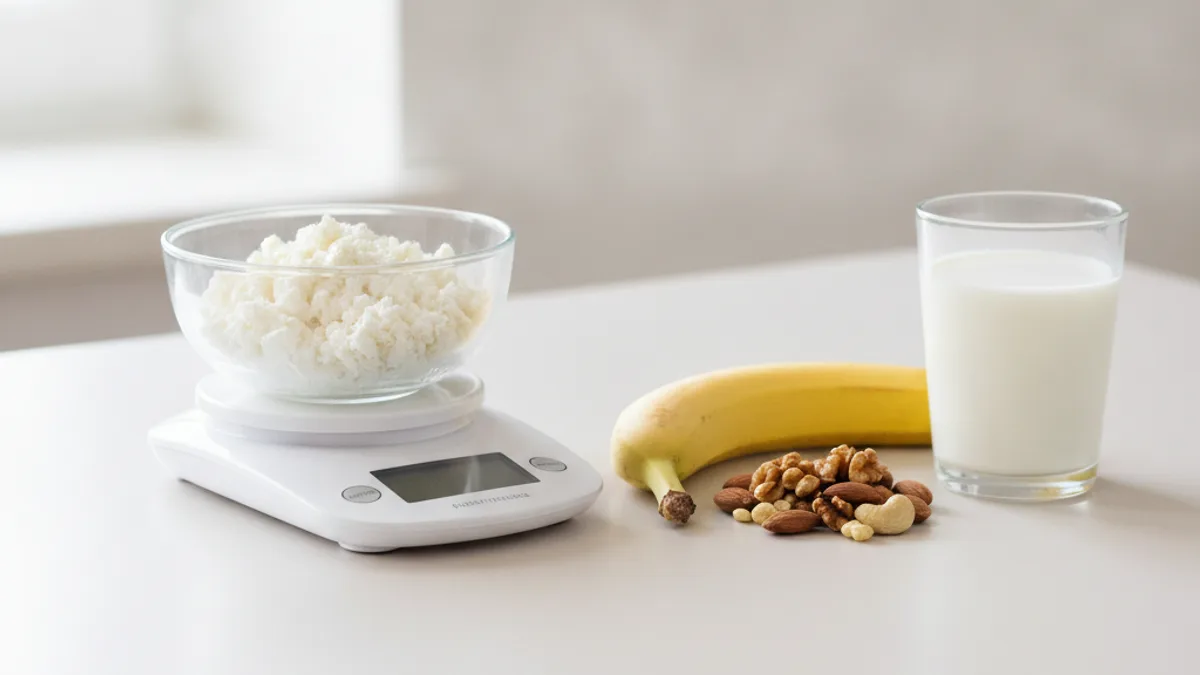
A calorie surplus is necessary for muscle gain, but the amount matters less than people think. In a Norwegian study of elite athletes, the group that ate 600 kcal more per day gained three times as much weight—and five times as much fat—while muscle growth remained the same in both groups.
How much to add above the norm
The target is a small surplus: 10–15% above maintenance calories, which is roughly 200–350 kcal per day for a baseline of 2200–2400 kcal. You can calculate your baseline using formulas adjusted for activity level—how this is done is covered in the article on daily calorie requirements.
Why not more was shown by an experiment with 39 elite athletes. Over eight to twelve weeks, everyone performed four additional strength training sessions per week. One group followed a planned surplus diet, while the second ate as usual.
| With meal plan | As usual | |
|---|---|---|
| Energy intake | 3585 kcal | 2964 kcal |
| Body weight gain | 3.9% | 1.5% |
| Fat mass gain | 15% | 3% |
| Lean mass gain | no difference between groups | |
In other words, the extra 600 kcal went entirely into fat. The authors' conclusion is stated cautiously: an energy surplus in a weight gain program should be chosen carefully due to unwanted fat mass gain.
A review of data on surpluses reaches the same conclusion: a small positive balance is sufficient for muscle growth, and in trained individuals, growth is slow and a large surplus does not accelerate it.
How much food is that in practice
300 kcal is not a "second dinner," but a small addition that is easy to lose track of:
- 40 g of nuts;
- 200 g of 5% cottage cheese and a banana;
- a tablespoon of oil in porridge and a glass of milk;
- one and a half portions of a side dish instead of one.
This is precisely why a surplus should be calculated rather than just "eating more": the difference between +300 and +900 kcal is not visible to the eye, but in terms of results, it is the difference between muscle gain and fat gain.
Protein: 1.6 g per kilogram is enough
In a meta-analysis of 49 studies with 1863 participants, lean mass gain from strength training stopped increasing once total protein intake reached about 1.6 g per kilogram of body weight per day.
Practical takeaway: protein is not something to overdo, but something to ensure you meet. How to achieve this through food is covered in the article on protein requirements, and what happens to muscle protein synthesis after a meal is explained in the article on protein and muscle synthesis.
Training is more important than supplements
A surplus without strength training is simply weight gain. How much load is needed was evaluated in a meta-analysis of 15 studies: the relationship between weekly volume and muscle mass gain proved to be dose-dependent; each additional set per week added about 0.37% to the result, and the difference between higher and lower volume programs was 3.9%.
No supplement provides a contribution anywhere near that: what is known about creatine and the rest of the shelf is in the article on sports supplements.
How to know if the surplus is chosen correctly
- Look at the trend over 3–4 weeks, not the morning scale. Weight fluctuates by a kilogram per day due to water and gut content—there is a separate article on this: why weight jumps during the day.
- Measure more than just weight. Body measurements and strength results in the gym tell more about the composition of the gain than a single number.
- React to the speed. If weight is going up faster than your working weights, the surplus is too high—reduce it by 100–150 kcal rather than doubling your workouts.
- Do not confuse gaining with "dirty" eating. A surplus from ultra-processed food is easier to achieve, but the fat percentage of the gain is higher.
Who should not aim for weight gain
It is worth mentioning something usually absent from articles about mass. A surplus program is a conscious increase in weight, and for conditions where weight is monitored, it should be discussed with a doctor. Adolescents, pregnancy, and recovery from illness are also matters for a doctor, not a calculator.
And one more thing: most people cannot gain mass and lose fat at the same time. If the goal is to preserve muscle while in a deficit, that is a different regimen, which is covered in the articles on calorie deficit and body recomposition.
Frequently asked questions
- What calorie surplus is needed for muscle gain?
- A small one — about 10–15% above maintenance calories. In a study of elite athletes, the group that ate 600 kcal more gained three times as much weight and five times as much fat, while the increase in lean body mass did not differ from the control group.
- How much protein is needed for weight gain?
- About 1.6 g per kilogram of body weight per day: in a meta-analysis of 49 studies, the increase in lean body mass stopped growing at this level of intake.
- Is it possible to gain mass without a surplus?
- For beginners and people with significant fat stores, growth is possible even at maintenance calories, but for trained individuals, a small positive balance works better. At the same time, a larger surplus increases the fat proportion of the gain rather than muscle.
- How much food is a 300 kcal surplus?
- Approximately 40 g of nuts, or 200 g of 5% cottage cheese with a banana, or a tablespoon of oil plus a glass of milk. By eye, such an addition does not look different from one three times larger — which is why it is tracked.
- Is a gainer mandatory for weight gain?
- No: a gainer is a way to reach calorie goals, not a separate growth mechanism. How it differs from protein is explained in the article about protein and gainers.
Read next
- How much protein do you need per day — There are two opposing figures regarding protein: the official recommendation of about 0.
- Protein and gainer: how they differ and if they are needed at all — Protein powder is dried milk or plant protein, not a separate class of substances with unique properties.
- Sports supplements: creatine, glutamine, lecithin — The sports nutrition shelf is arranged so that expensive and useless products stand next to cheap and effective ones.
- How to gain weight when you can't — People trying to lose weight have the goal of eating less without feeling hungry.
This article is for general information. It is not medical advice, a diagnosis, or a prescription for treatment or a diet, and it does not replace a consultation with your doctor. If you have a health condition, are pregnant, take medication, or follow a diet prescribed to you, decisions about food belong with your doctor.
Figures from regulations, guidelines and studies are given as they stood when this article was prepared and may since have changed; check them against the primary sources. This article is not advertising, an offer, or individual advice, and neither the author nor the site owner is responsible for decisions taken on the basis of it.