The scale is steady but your waist is shrinking: what it means
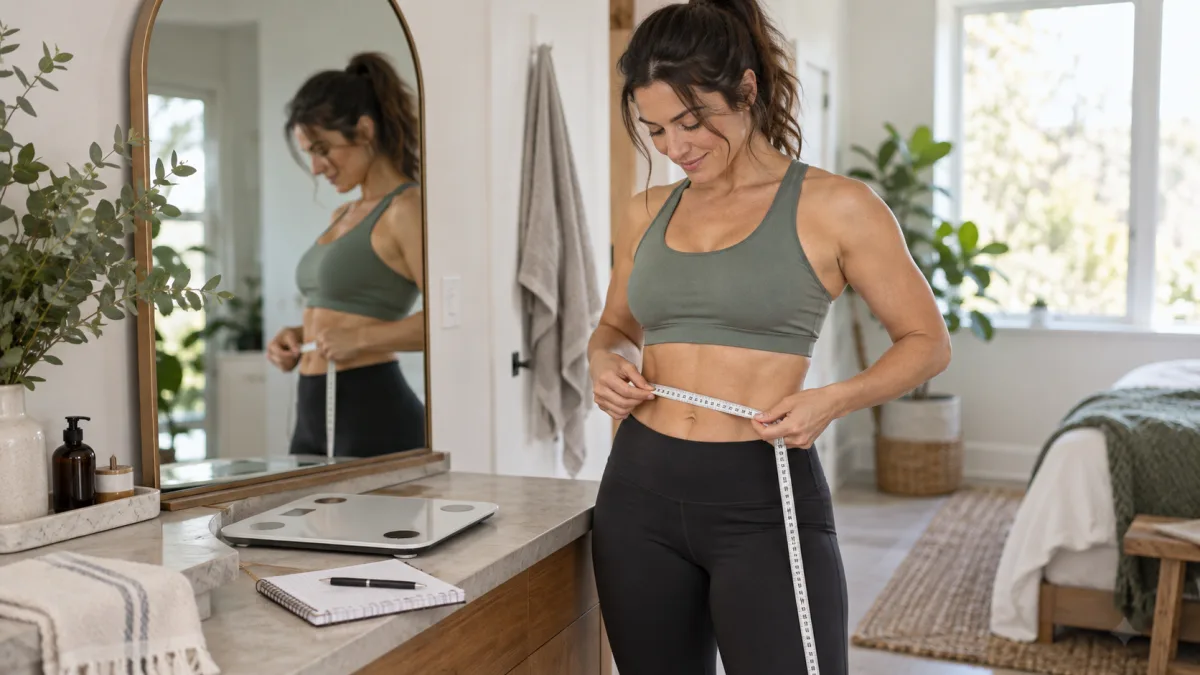
If your weight is steady but your waist measures smaller, change may be happening without a visible shift on the scale. First check whether you measured your waist the same way each time. A persistent difference is useful information, but a tape measure cannot tell you how much fat you have lost.
Why the scale and tape can tell different stories
A scale measures total body mass. A tape measures circumference at one place. So steady weight and a smaller waist are compatible. Changes in water and digestive contents can obscure a change on the scale; the article on daily weight fluctuations explains these shifts.
Body composition can also change with little change in weight. In a study of 33 postmenopausal women with type 2 diabetes, the aerobic exercise group had no significant loss of body weight, while abdominal fat measured by MRI decreased. That finding concerns one group and a 14-week program. It does not provide a way to calculate fat loss from a home waist measurement.
Measure your waist the same way each time
Choose one measurement site and keep it consistent. In the NHANES examination protocol, the tape runs horizontally just above the top of the hip bone. It rests snugly without compressing the skin, and the reading is taken after a normal exhalation. This is not necessarily the narrowest point of your torso or the level of your navel.
- Stand upright, relax your abdomen, and find the top of your hip bone at your side.
- Wrap the tape around at that level, parallel to the floor. Use a mirror to check its position behind you.
- Read it after a normal exhalation. Measure again in the same way; if the readings differ, check the tape's position and tension.
Compare readings taken in similar conditions, such as before breakfast. Measurements have error: in a study of self-measured and technician-measured circumferences, technical error across duplicate measurements ranged from 0.08 to 0.76 inches, depending on the measurement. Recheck a small difference and look at a series of readings.
What a persistent difference can tell you
If several comparable measurements show a smaller waist, your circumference at that point has decreased. It adds information to weight: the CDC considers waist circumference alongside BMI because BMI alone does not show where body fat is carried.
Two home measurements cannot prove that fat was lost specifically inside the abdomen, that muscle was gained, or that your personal risk of a disease changed. A tape cannot separate fat under the skin from fat around internal organs. The article on visceral fat explains what it is and how it is measured.
If you recently started strength training, a change in body composition is possible, but every centimeter cannot be attributed to muscle gain. A home smart scale cannot settle the question either; see the limits of bioimpedance readings.
Keep a record without chasing one reading
Record your weight and waist measurement with the date. Compare weights taken under similar conditions across several readings and repeat waist measurements at the same site. When the numbers disagree, check your method first. Then see whether the pattern persists.
One weigh-in or waist reading is no reason to tighten your diet. If both weight and circumferences remain unchanged over time, the article on weight loss plateaus covers that separate question. Seek medical care for new pronounced swelling, shortness of breath, or a rapid unexplained change in weight.
Frequently asked questions
- Can my waist shrink without losing weight?
- Yes. Weight reflects total mass, while the tape measures circumference at one point. In a study of postmenopausal women with type 2 diabetes, exercise reduced MRI-measured abdominal fat without significant weight loss. A home tape reading cannot identify which component changed.
- Does a smaller waist prove that I lost visceral fat?
- No. A tape cannot separate fat under the skin from visceral fat. It shows the change in total circumference at the chosen level.
- Where should I measure my waist?
- Just above the top of your hip bone, with the tape level and snug without compressing the skin. Read it after a normal exhalation and use the same site each time.
- What if my waist measured smaller only once?
- Measure again at the same site and with the same tape tension. A small difference can be measurement error; several comparable readings can show whether it persists.
Read next
- Why weight changes by a kilogram in a day — Fat cannot be gained overnight: a kilogram of adipose tissue is thousands of kilocalories that cannot be acquired in eight hours of sleep.
- Weight loss plateau: why weight stalls and what to do about it — The weight has stayed at the same number for the third week in a row, even though the diet hasn't changed — and the first instinct is usually the same: to cut even more.
- Visceral fat: why it matters and how to measure it — Two people at the same weight, with the same BMI, can carry very different metabolic risk.
- Smart scales: what bioimpedance actually measures — Smart scales display body fat percentage, water percentage, muscle mass, bone mass, and "metabolic age.
This article is for general information. It is not medical advice, a diagnosis, or a prescription for treatment or a diet, and it does not replace a consultation with your doctor. If you have a health condition, are pregnant, take medication, or follow a diet prescribed to you, decisions about food belong with your doctor.
Figures from regulations, guidelines and studies are given as they stood when this article was prepared and may since have changed; check them against the primary sources. This article is not advertising, an offer, or individual advice, and neither the author nor the site owner is responsible for decisions taken on the basis of it.