Smart scales: what bioimpedance actually measures
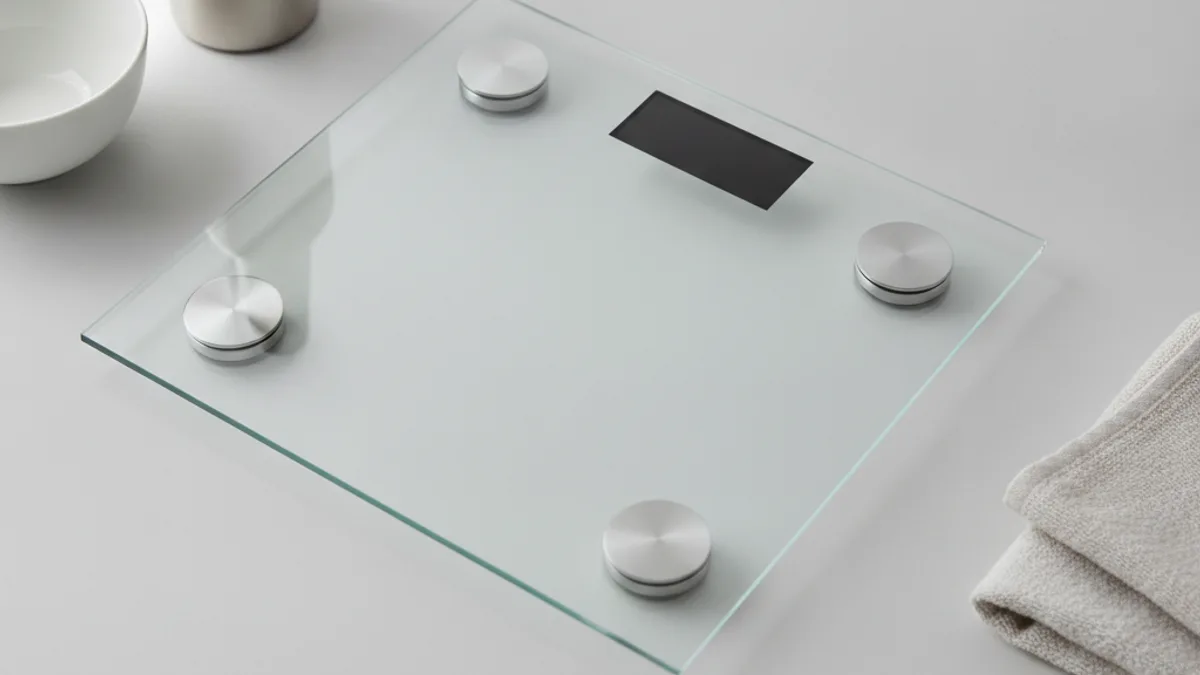
Smart scales display body fat percentage, water percentage, muscle mass, bone mass, and "metabolic age." However, they only measure two values: body mass and electrical resistance. The other figures are derived through calculation, and their accuracy is not as precise as the decimal points in the table might suggest.
What happens when you step on the scale
A weak alternating current is passed through your feet—so weak that it is imperceptible—and the resistance your body offers to it is measured. This value is meaningful: adipose tissue is low in water and electrolytes and conducts poorly, while muscles and other tissues with high water content conduct well.
Next, the calculation begins. Based on resistance, height, weight, age, and sex, the formula estimates the total amount of water in the body, from that—the fat-free mass, and it obtains the fat mass by subtracting it from the total. All the lines of the table on the screen are derived from this single number.
The key point: the formulas were derived from samples of people for whom body composition was determined by a reference method, and they are accurate only to the extent that you resemble that sample. The device does not look inside—it plugs your resistance into an equation built on others.
How this differs from the reference
Dual-energy X-ray absorptiometry usually serves as the reference. Comparisons have been made repeatedly, and the picture is consistent.
A comparison of bioimpedance with the reference in students showed an underestimation of body fat percentage and very wide limits of agreement—from approximately −1.5 to +10 percentage points. The authors explicitly state that the method is of limited suitability for estimating body fat percentage in an individual.
Work with scales where you stand with both feet described this more accurately: high reproducibility with systematic bias. That is, the device consistently repeats its own result, but this result is shifted relative to the reference.
This is the most useful thing to take away. The number "22.4% fat" may be off by a few points, but if it becomes 22.1% tomorrow, the change is likely real—the bias has remained the same.
Why body fat percentage changes in a single day
Resistance depends on the amount and distribution of water in the body, and water moves quickly. Hence the daily fluctuations that have nothing to do with fat:
- Dehydration. In the morning after the night, there is less water, resistance is higher, and fat is calculated as higher.
- A glass of water before weighing. The opposite effect, and a quick one at that.
- A salty dinner. Water retention changes the picture for a day or two. How much salt comes from processed food—in the article about salt in processed food.
- A workout the day before. Edema of the worked muscles and fluid loss through sweat act in opposite directions.
- Damp or cold feet. They change the contact with the electrodes.
- Cycle phase. Fluid retention shifts the result.
Therefore, a change in body fat percentage over a day means nothing. A trend over a month, taken under identical conditions, becomes meaningful.
Feet or hands: why models differ
Consumer scales pass current only through the lower half of the body: the current goes from one foot to the other and passes through the torso along the shortest path. The upper body is barely included in the measurement, and its composition is filled in by assumption. Devices with handles pass current through the upper body as well, so they give a different result—not necessarily a more accurate one, but a different one.
Hence the practical rule: it is pointless to compare readings from different devices. Each has its own bias, and the difference between two scales will tell you about the scales, not about your body.
Lines that are better to ignore
Besides body fat percentage, there are usually several other indicators on the screen, and they are worth examining separately.
Bone mass. Using the electrical method, bone is practically not separated from other tissues; the number is obtained by a coefficient from the fat-free mass and hardly changes in a healthy adult.
Water percentage. This is exactly what is closest to what is being measured, but that is precisely why it fluctuates along with your hydration habits.
Metabolic age. A marketing value without a generally accepted definition: the manufacturer compares your calculated metabolism with the average for age groups in their sample.
Visceral fat in "points." An estimate based on a formula, not a measurement. What this fat is and why it is important—in the article about visceral fat; for home monitoring, waist circumference with a measuring tape provides more information than a score on the screen.
How to get value from the scales
- Weigh yourself under identical conditions. In the morning, on an empty stomach, after using the toilet, before drinking, barefoot, on the same surface.
- Look at the moving average for the week. Daily fluctuations in mass within a kilogram are water and intestinal contents, not fat.
- Do not compare with someone else's device or a previous device. Compare only your own curve with itself.
- Keep a measuring tape nearby. Waist circumference changes more slowly, but it does not depend on water.
And in general: body mass still remains the most reliable indicator among those provided by a consumer device—the scales actually measure it. What to do with it next is covered in the articles about calorie deficit and excess weight and health.
Frequently asked questions
- How accurate are smart scales at measuring body fat percentage?
- For an individual, it is limited. In comparisons with the reference method, the limits of agreement reached approximately ten percentage points, and bioimpedance usually underestimates the result. However, the device consistently repeats its own value, so the trend is more informative than the absolute figure.
- Why does body fat percentage change within a single day?
- The method is based on electrical resistance, which depends on the amount and distribution of water in the body. Dehydration, drinking water, a salty dinner, a workout the day before, and even damp feet change the result without changing the amount of fat.
- Why do my scales and the device at the gym show different results?
- Consumer scales pass current only through the lower half of the body, while devices with handles also pass it through the upper half, and each manufacturer uses its own formulas. Every device has its own bias, so their readings are not comparable with each other.
- What does "metabolic age" on the screen mean?
- This is a value without a generally accepted definition: the manufacturer compares your calculated metabolism with the average values for age groups in their own sample. There is no medical significance behind this indicator.
- When should I weigh myself so that the data is comparable?
- In the morning, on an empty stomach, after using the restroom, before drinking anything, barefoot, and on the same hard surface. You should look at the weekly average rather than an individual measurement.
Read next
- Fitness trackers and calorie expenditure: why they measure heart rate but estimate calories — On a tracker screen, three numbers look equally reliable: heart rate, steps, and "calories burned.
- Visceral fat: why it matters and how to measure it — Two people at the same weight, with the same BMI, can carry very different metabolic risk.
- Calorie deficit: how to calculate it and how to hold it — A calorie deficit is the one thing without which weight does not come down.
This article is for general information. It is not medical advice, a diagnosis, or a prescription for treatment or a diet, and it does not replace a consultation with your doctor. If you have a health condition, are pregnant, take medication, or follow a diet prescribed to you, decisions about food belong with your doctor.
Figures from regulations, guidelines and studies are given as they stood when this article was prepared and may since have changed; check them against the primary sources. This article is not advertising, an offer, or individual advice, and neither the author nor the site owner is responsible for decisions taken on the basis of it.