Pre-workout supplements: what works in the jar
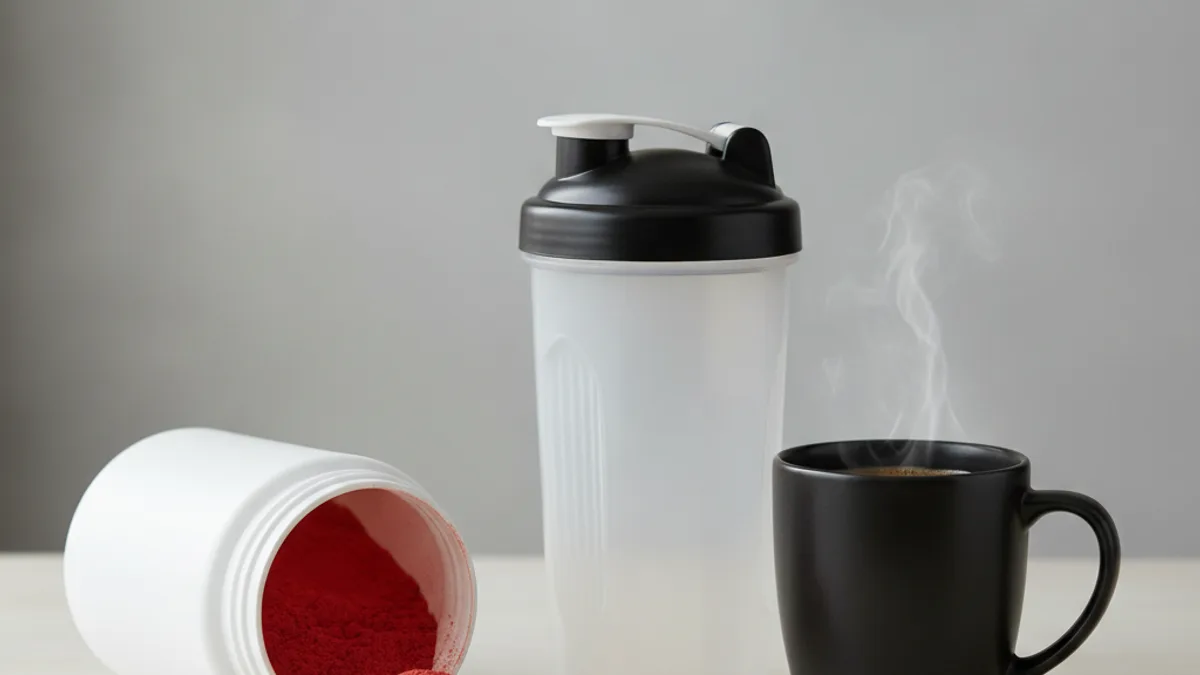
A pre-workout supplement is a blend of five to fifteen substances, only one of which is reliably effective. Below is what the International Society of Sports Nutrition and meta-analyses have shown regarding the four most common components, and the doses at which these substances have actually been studied.
Caffeine: the only ingredient with a significant effect
The International Society of Sports Nutrition position stand on caffeine clearly states the effective range: 3–6 mg per kilogram of body weight, most often taken 60 minutes before exercise. The minimum effective dose has not been established and may be around 2 mg/kg.
The upper limit is also noted: very high doses on the order of 9 mg/kg are associated with a high frequency of side effects and are not required for ergogenic action. For a 70 kg person, the effective range is 210–420 mg, which is two to three cups of coffee.
This leads to the first check for any container: how much caffeine is in a serving. If it is 150 mg, the effect will be closer to a cup of coffee rather than the claims on the label. How caffeine works and why it stops working is covered in the article on caffeine and adenosine.
Beta-alanine: a narrow but real niche
The same society's position on beta-alanine: taking 4–6 g per day for 2–4 weeks increases muscle carnosine concentration and improves performance in exercises lasting approximately one to four minutes.
Two details are important here. First: the effect is cumulative; a single dose before a workout does nothing — regular intake over weeks is what works. Second: skin tingling (paresthesia) is a known consequence of a single large dose, not a sign that the "formula is working."
A typical serving of a pre-workout contains 1.5–2 g of beta-alanine, which is two to three times less than the studied daily dose, and it is taken sporadically — a combination where one should not expect the described effect.
Citrulline: there is an effect, but it is small
A three-level meta-analysis of 30 randomized trials (138 effect estimates, 644 participants) found a small improvement in results when taking citrulline malate: g = 0.16 at p = 0.01. There was no significant impact on perceived exertion.
A value of 0.16 is a "small effect" on the accepted scale, and it also comes with wide prediction intervals. Such an improvement exists on average for the group and is not guaranteed for an individual.
Beetroot juice and nitrates: not where you expect
A review of 23 randomized trials with 401 participants showed an improvement in time to peak power (SMD −0.92) and grip strength (0.40). At the same time, there were no significant changes in jumping, peak or average power, 10 m or 20 m sprints, perceived exertion, heart rate, or lactate levels.
The authors rated the certainty of the evidence as low to very low and explicitly stated that the data do not support the routine use of beetroot juice for sprinting tasks.
The rest of the ingredients
The rest of the container usually contains substances that each deserve a separate discussion, but they have one thing in common: the dose in a serving is less than the studied amount, and there is no data at all on the combined effect of the mixture. Individual substances are tested, but a combination is sold.
It is worth noting the genre itself: trials on mixtures most often show an effect comparable to the effect of the caffeine in the same formula. For more on the rest of the sports nutrition shelf, there is an article on sports supplements, and for fat burners, see the article on fat burners.
How to read a label in a minute
- Find the dose per serving, not per 100 g. The measuring scoop is often smaller than the serving size used to calculate the composition.
- Compare with the studied dose. Caffeine — 3–6 mg/kg, beta-alanine — 4–6 g per day as a course, citrulline — grams, not milligrams.
- Check the total caffeine content, including guarana and green tea extracts: they add to the total figure.
- Look at the timing. An evening workout with 300 mg of caffeine means poor sleep, and sleep affects results more than any pre-workout; see the article on sleep hygiene.
Who should avoid them
Stimulants in sports nutrition doses are not a neutral intervention. In cases of heart rhythm disorders, high blood pressure, anxiety, pregnancy, and breastfeeding, as well as when taking medications that interact with caffeine, the decision should be made by a doctor, not the author of the formula on the label.
These complexes are not intended for adolescents: the doses are calculated for an adult, and there is no data on the safety of regular intake at this age.
Frequently asked questions
- Do pre-workout complexes work?
- The main contribution comes from caffeine: according to the ISSN position, it is ergogenic at doses of 3–6 mg per kilogram of body weight 60 minutes before exercise. The effects of other common components are either small (citrulline, g = 0.16) or narrow (beta-alanine — exercise lasting 1–4 minutes).
- How much caffeine is needed before a workout?
- 3–6 mg per kilogram of body weight, which is 210–420 mg for a 70 kg person. Doses around 9 mg/kg cause many side effects and are not required for the effect.
- Why does pre-workout make my skin tingle?
- This is paresthesia from beta-alanine, a known consequence of a single large dose. It is not a sign that the supplement is working: the effect of beta-alanine is cumulative and requires 4–6 g per day for 2–4 weeks.
- Does beetroot juice help?
- In a review of 23 trials, it improved time to peak power and grip strength, but did not affect sprinting, jumping, heart rate, or perceived exertion. The confidence in the evidence is low, and the authors do not support routine use.
- Can I replace a pre-workout with coffee?
- In terms of caffeine, yes: two to three cups provide a dose within the effective range. Other components in pre-workouts are usually present in amounts smaller than those studied.
Read next
- Sports supplements: creatine, glutamine, lecithin — The sports nutrition shelf is arranged so that expensive and useless products stand next to cheap and effective ones.
- Caffeine and adenosine: why it works, why it stops, and what to do about it — Caffeine does not supply energy.
- What to eat before a workout — The question "what to eat before a workout" is almost always actually a question of "how long before.
This article is for general information. It is not medical advice, a diagnosis, or a prescription for treatment or a diet, and it does not replace a consultation with your doctor. If you have a health condition, are pregnant, take medication, or follow a diet prescribed to you, decisions about food belong with your doctor.
Figures from regulations, guidelines and studies are given as they stood when this article was prepared and may since have changed; check them against the primary sources. This article is not advertising, an offer, or individual advice, and neither the author nor the site owner is responsible for decisions taken on the basis of it.