How to count mushrooms: one mushroom, a cup, raw and fried
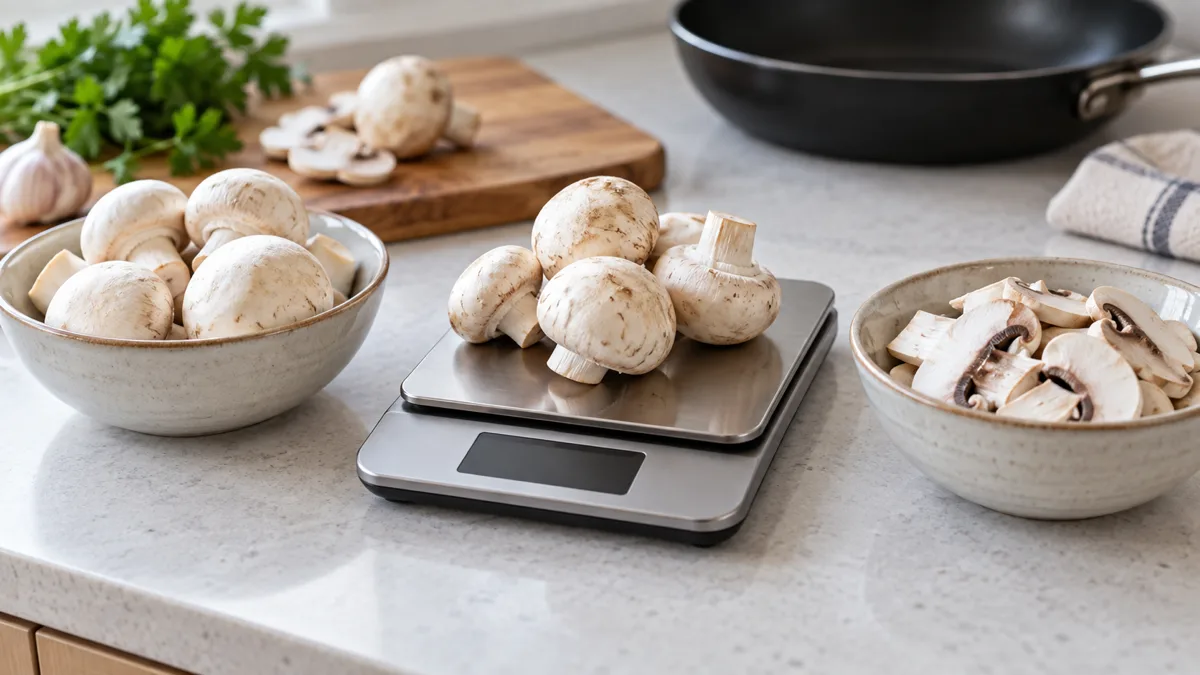
Mushrooms contain little energy on their own, which is why the larger tracking error often comes from the method rather than the mushrooms. One mushroom and one cup are estimates of weight, cooking changes the share of water, and oil remains a separate ingredient. Each case needs a matching diary entry.
Start with what was actually weighed
The entry “100 g of mushrooms” is missing one word: raw or cooked. If the mushrooms were weighed before they reached the pan, use a raw-mushroom entry. If the scale held fried mushrooms, use a matching cooked entry or calculate your own recipe. Do not combine a cooked weight with the nutrition values for the raw food.
The reason is visible in FoodData Central record 169251 for raw white mushrooms: 100 g provides 22 kcal and contains 92.45 g of water. Some of that water leaves during cooking. The weight falls even though the mushrooms' starting calories do not disappear, so cooked mushrooms can contain more calories per 100 g even without oil. There is no fixed conversion for your pan because the result depends on the cut, cookware, temperature and time.
One mushroom and one cup are conversions to grams
A piece and a cup are not separate kinds of mushroom. They are ways to estimate weight when a scale is unavailable. The same USDA record provides separate portions for small, medium and large mushrooms, and distinguishes a cup of whole mushrooms from a cup of sliced pieces. The structure of the data itself shows why there is no universal weight for “one” or “one cup.”
The practical conversions for a medium mushroom and a cup of sliced raw mushrooms are collected in the weights-and-measures card. Preserve the state of the food: a measure for loosely filled raw slices should not be applied to a cup of cooked mushrooms.
For a one-off entry, choose the closest measure and convert it to grams. If you cook mushrooms regularly, weigh your usual handful, pack or cup once. A personal household measure is more useful than a database average and can be reused.
How to log raw mushrooms
- Weigh the mushrooms without their packaging and after removing any obvious inedible waste.
- Choose “white mushrooms, raw” or an exact equivalent in the database.
- Enter the measured weight. Without a scale, use the piece or cup conversion as an estimate.
Washing does not turn them into a different food: surface water may shift the scale slightly, but the database entry remains raw. Slicing does not change the composition either; it only changes how much fits into a cup.
How to calculate a pan without counting twice
The most repeatable method is to calculate the recipe rather than assigning an averaged value to the cooked mushrooms.
- Record the weight of the raw mushrooms.
- Record every addition separately: oil, butter, cream, sour cream, cheese or sauce.
- Weigh the entire cooked batch.
- Add the calories of the ingredients, divide by the final weight, and multiply by the weight of your serving.
A pan is therefore not logged as both “raw mushrooms” and “fried mushrooms.” The raw mushrooms and additions form one recipe; the cooked weight is used only to divide that recipe into servings. The full method is covered in the guide to counting calories in home cooking.
This calculation does not need a reference cooking-yield factor. The final weight already reflects how much water left your particular pan, while the batch calories come from the ingredients that went into it.
Oil is not included in the word “mushrooms”
The nutrition profile for raw mushrooms describes the mushrooms, not the cooking method. Oil poured into the pan needs its own entry. You can weigh the bottle before and after pouring, or place the oil container on a scale, tare it, and read the amount removed.
If some oil visibly remains in the pan, the consumed amount cannot be known exactly without another measurement. For ordinary home tracking, counting all the oil added gives a known upper bound. Do not subtract an arbitrary “left in the pan” percentage. The measurement options and the effect of fat on the result are explained in the article on calories added by cooking oil.
If the mushrooms are already cooked and the recipe is unknown
For mushrooms without visible oil, choose a cooked entry that matches the method: boiled, stewed or cooked with dry heat. This remains an estimate because the amount of water in your serving need not match the database sample.
For fried mushrooms, unknown oil will usually matter more than the small differences among entries for the mushrooms themselves. For a packaged product or restaurant dish, use the producer's or menu's nutrition information. If none is available, the closest fried-mushroom entry is a useful estimate, not a measurement. The general choice between states is explained in the guide to raw and cooked food weight.
A short rule for the food diary
| What you have | How to log it |
|---|---|
| Raw mushrooms on a scale | Raw entry and the measured grams |
| One raw mushroom or a cup of slices | Convert the measure to grams, then use the raw entry |
| A pan cooked at home | A recipe made from raw mushrooms and every addition, divided by final weight |
| Cooked mushrooms with a known method | An entry that matches that cooking method |
| Fried mushrooms with an unknown recipe | The closest prepared entry as an estimate, allowing for possible oil |
Frequently asked questions
- How much does one mushroom weigh?
- It depends on size. Use the medium mushroom in the weights-and-measures card for an estimate, or weigh several mushrooms of the size you usually buy and use their average weight for repeat tracking.
- How do I count a cup of sliced mushrooms?
- Convert a loosely filled cup of raw sliced mushrooms to grams using the measures card, then log that weight as raw mushrooms. Do not use the same measure for mushrooms after cooking.
- Why do fried mushrooms have more calories per 100 g?
- Mushrooms lose water during cooking, so the same starting calories are concentrated in less weight. Oil adds its own calories and must be counted as a separate ingredient.
- Should I weigh mushrooms before or after frying?
- Either can work if the database entry matches the state. The most repeatable home method is to log the raw mushrooms and additions, then use the final cooked weight only to calculate your share of the recipe.
Read next
- Raw or cooked weight: how to count grains, pasta, and meat — "100 g of buckwheat" can mean 346 kcal or 92, depending on the state of the grain.
- How many calories does frying add — The cooking method adds more calories to a dish than any choice between "healthy" and "unhealthy" foods.
- How to count calories in homemade food — Processed foods are counted by the label, and restaurant meals by a reference guide.
- How to determine portion size without a scale — Portion weight is the most inaccurate variable in any calculation, including analysis by photo.
This article is for general information. It is not medical advice, a diagnosis, or a prescription for treatment or a diet, and it does not replace a consultation with your doctor. If you have a health condition, are pregnant, take medication, or follow a diet prescribed to you, decisions about food belong with your doctor.
Figures from regulations, guidelines and studies are given as they stood when this article was prepared and may since have changed; check them against the primary sources. This article is not advertising, an offer, or individual advice, and neither the author nor the site owner is responsible for decisions taken on the basis of it.