DASH diet: foods, servings, and a week-long menu
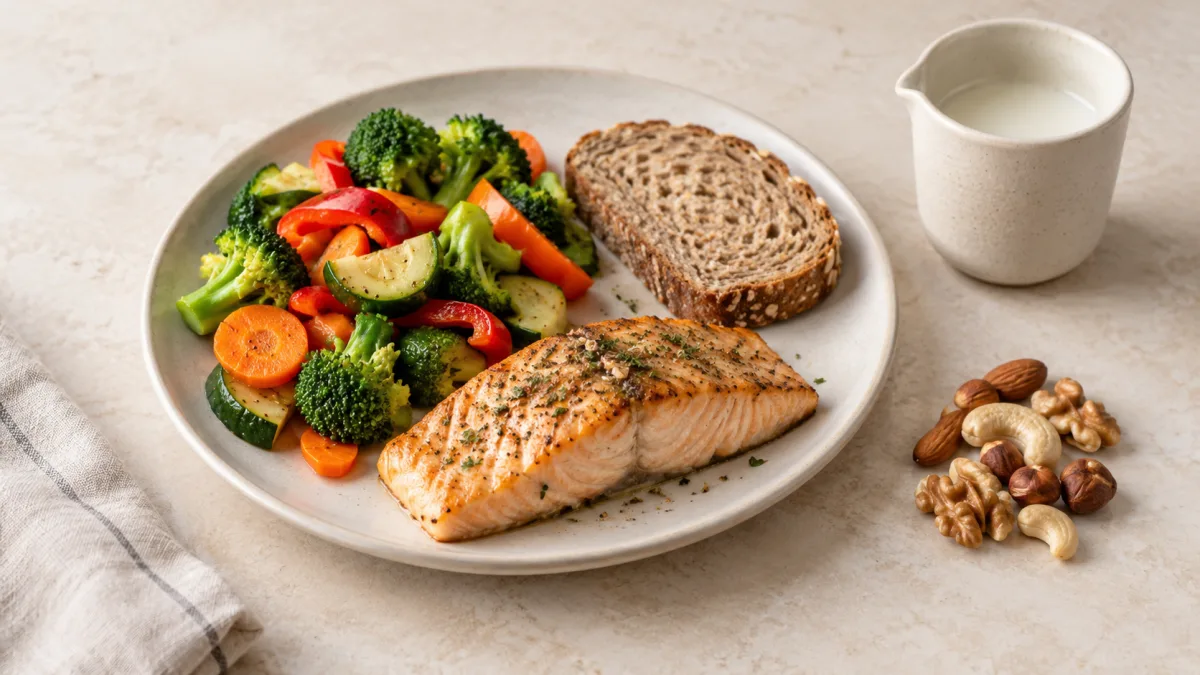
DASH is an eating plan designed to lower blood pressure: plenty of vegetables, fruits, and whole grains; low-fat dairy; and limited salt and sweets. Instead of restrictions, it specifies daily servings—and in two large trials, it effectively reduced blood pressure. People with hypertension, kidney disease, or those taking blood pressure medication should consult a doctor before starting this plan, as it is high in potassium, which can be risky in these conditions.
What is DASH
The name stands for Dietary Approaches to Stop Hypertension. The U.S. National Heart, Lung, and Blood Institute (NHLBI) describes the plan as flexible: it doesn’t require special foods but provides daily and weekly intake guidelines by food group.
It recommends eating vegetables, fruits, and whole grains; including low-fat dairy products, fish, poultry, legumes, nuts, and vegetable oils. Foods high in saturated fats—fatty meats, full-fat dairy, coconut, palm kernel, and palm oils—as well as sweetened beverages and sweets are limited.
Servings for a 2000 kcal diet
The number of servings depends on the calorie level of the diet. According to NHLBI, for a 2000 kcal daily intake, the recommendations are:
| Group | Guideline | What counts as one serving |
|---|---|---|
| Grains, mostly whole grains | 6–8 per day | 1 slice of bread; ½ cup cooked rice, pasta, or cereal |
| Vegetables | 4–5 per day | 1 cup raw leafy greens; ½ cup chopped raw or cooked vegetables |
| Fruits | 4–5 per day | 1 medium fruit; ½ cup fresh or frozen |
| Dairy, low-fat or fat-free | 2–3 per day | 1 cup milk or yogurt; about 40 g cheese |
| Meat, poultry, fish | no more than 6 per day | about 28 g cooked meat, poultry, or fish; 1 egg |
| Fats and oils | 2–3 per day | 1 teaspoon vegetable oil; 1 tablespoon mayonnaise |
| Nuts, seeds, legumes | 4–5 per week | about 40 g nuts; 2 tablespoons seeds; ½ cup cooked legumes |
| Sweets and added sugars | no more than 5 per week | 1 tablespoon sugar or jam; ½ cup sorbet |
For other calorie levels—from 1200 to 3100 kcal—NHLBI provides a separate table. Energy needs depend on age and activity level; the same table includes reference values. For guidance on estimating portion sizes without a scale, see the article on portion weight.
Sodium: 2300 and 1500 mg
The upper limit for all calorie levels is 2300 mg of sodium per day. NHLBI also allows a stricter version—1500 mg—which lowers blood pressure more effectively.
Most sodium enters the diet not from the salt shaker but from processed foods: bread, sausages, soups, sauces, cheeses, and snacks. Therefore, DASH advice starts at the grocery store: read labels, choose fresh meat and fish instead of smoked products, and select fresh or frozen vegetables over canned ones. Where salt hides in foods is covered in the article on salt in processed foods.
Clinical trial results
DASH, 1997 (Appel et al., New England Journal of Medicine). 459 adults (systolic blood pressure below 160, diastolic 80–95 mm Hg) received prepared meals while sodium intake and body weight were kept constant. After 8 weeks, the “combination” diet—rich in fruits, vegetables, low-fat dairy, and reduced in fat—lowered systolic blood pressure by 5.5 mm Hg and diastolic by 3.0 mm Hg more than the control diet. Among the 133 participants with hypertension, the difference was 11.4 and 5.5 mm Hg, respectively.
DASH-Sodium, 2001 (Sacks et al., New England Journal of Medicine). 412 participants followed either a typical American diet or DASH, each with high, intermediate, and low sodium levels for 30 days each. The DASH diet with low sodium resulted in systolic blood pressure 7.1 mm Hg lower in people without hypertension and 11.5 mm Hg lower in those with hypertension compared to the typical high-sodium diet. Sodium reduction worked on both diets, but the combined effect of DASH plus low sodium was greater than either measure alone.
In both trials, meals were provided to participants.
Sample weekly menu
This sample weekly menu follows DASH principles: dishes are prepared without salt or with minimal amounts, and oils used are vegetable-based. This is an example, not a menu from the clinical study; actual sodium content depends on specific products—bread, cheese, canned goods. Portion sizes should be adjusted to individual calorie needs.
| Day | Breakfast | Lunch | Dinner | Snack |
|---|---|---|---|---|
| Mon | Oatmeal made with milk, topped with banana and walnuts | Lentil soup with vegetables, slice of whole-grain bread | Baked cod, buckwheat, cucumber and herb salad | Apple |
| Tue | Two-egg omelet with tomatoes, whole-grain toast | Bulgur with baked chicken and stewed cabbage | Vegetable stew with rice, glass of kefir | Unsweetened yogurt |
| Wed | Cottage cheese with berries and flaxseeds | Vegetable soup, durum wheat pasta with turkey | Baked salmon, boiled potatoes in skin, fresh vegetables | Handful of almonds |
| Thu | Buckwheat porridge with milk and apple | Barley soup, beet salad with vegetable oil | Steamed chicken breast, rice, broccoli | Orange |
| Fri | Unsweetened muesli with kefir and berries | Beans stewed with tomatoes and onion, whole-grain bread | Steamed fish, mashed cauliflower and potato | Carrot sticks |
| Sat | Low-fat cottage cheese pancakes, pear | Cold beet soup (okroshka) made with kefir, no sausage, with boiled chicken | Baked vegetables with egg and herbs | Banana |
| Sun | Rice porridge with pumpkin and raisins | Chickpeas with roasted vegetables and whole-grain flatbread | Turkey with stewed zucchini, millet porridge | Yogurt and a handful of nuts |
A similar plant-based pattern is discussed in the article on the Mediterranean diet.
How to calculate sodium from nutrition labels
Manufacturers list either sodium in milligrams or salt in grams. According to WHO data, 1 g of salt contains 400 mg of sodium. Thus:
- from salt to sodium: grams of salt × 400 = milligrams of sodium;
- from sodium to salt: milligrams of sodium ÷ 400 = grams of salt, or equivalently, grams of sodium × 2.5.
A 2300 mg sodium limit equals approximately 5.75 g of salt, and 1500 mg equals about 3.75 g. For comparison, WHO recommends adults consume less than 2000 mg of sodium per day, i.e., less than 5 g of salt.
Label values are usually given per 100 g of product. To find sodium in the consumed portion, multiply the listed value by the portion weight and divide by 100. If only “salt” is listed, convert it to sodium using the same method. Sodium also comes from additives—for example, sodium glutamate—so always check the full ingredient list, not just the “salt” line.
When to consult a doctor before starting the plan
DASH is designed for a daily intake of 4700 mg of potassium. Potassium is beneficial for most people—but not for everyone. NHLBI explicitly states that increasing potassium is recommended for adults with hypertension who are otherwise healthy.
In chronic kidney disease, kidneys may not excrete excess potassium, and certain medications—as noted by NIDDK—can also raise blood potassium levels. Elevated potassium often causes no symptoms and is detected only through blood tests. Therefore, consult a physician before starting DASH if you have:
- hypertension, especially if taking blood pressure medication: combining medication with dietary changes or altering treatment without medical supervision is unsafe;
- kidney disease;
- are taking any medications that affect potassium or fluid balance.
Separately, consider salt substitutes. Many contain potassium chloride; NHLBI advises consulting a doctor before using them, and NIDDK recommends avoiding them entirely in kidney disease. The composition of such products is detailed in the article on low-sodium salt.
DASH does not replace medical treatment: decisions about medications are made by a physician.
Summary
DASH is a set of proportions, not a short-term program: more plant-based foods, less salt and saturated fat. Blood pressure effects were demonstrated using meals provided to study participants, so real-world results depend on food choices and the sodium content listed on labels.
Frequently asked questions
- What is the DASH diet?
- An eating plan developed to lower blood pressure: vegetables, fruits, whole grains, low-fat dairy, fish, poultry, legumes, and nuts, with limited salt, saturated fats, and sweets. It specifies daily servings by food group based on calorie intake.
- How many servings per day for a 2000 kcal diet?
- According to NHLBI: grains 6–8, vegetables 4–5, fruits 4–5, dairy 2–3, meat, poultry, and fish no more than 6, fats and oils 2–3. Per week: nuts, seeds, and legumes 4–5 servings, sweets no more than 5.
- How much sodium is allowed on DASH?
- No more than 2300 mg per day; the 1500 mg version lowers blood pressure even further. One gram of salt contains 400 mg of sodium, so 2300 mg of sodium equals approximately 5.75 g of salt.
- How do you convert sodium to salt?
- Divide milligrams of sodium by 400 to get grams of salt—or multiply grams of sodium by 2.5. Conversely, multiply grams of salt by 400 to get milligrams of sodium.
- Who should discuss the DASH diet with a doctor?
- People with hypertension, especially those taking blood pressure medication, and those with kidney disease. The plan is high in potassium, which can build up in the blood without symptoms in people with kidney disease or those on certain medications. Salt substitutes containing potassium should also be discussed with a doctor.
Read next
- Salt in processed food: where it is most abundant and why the salt shaker is not the culprit — The WHO recommendation is less than five grams of salt per day, but the actual intake is about twice that.
- Mediterranean diet: food list and 7-day meal plan — Build a Mediterranean-style week around vegetables, grains, beans, fish and plant oils.
- Low-sodium salt: what replaces sodium, and who should be careful? — Low-sodium salt usually replaces some sodium chloride with potassium chloride.
- Monosodium glutamate: why E621 is feared more than other additives — Food additives have a general background of suspicion, but E621 stands apart: it is feared specifically, with symptoms and stories.
This article is for general information. It is not medical advice, a diagnosis, or a prescription for treatment or a diet, and it does not replace a consultation with your doctor. If you have a health condition, are pregnant, take medication, or follow a diet prescribed to you, decisions about food belong with your doctor.
Figures from regulations, guidelines and studies are given as they stood when this article was prepared and may since have changed; check them against the primary sources. This article is not advertising, an offer, or individual advice, and neither the author nor the site owner is responsible for decisions taken on the basis of it.