Mediterranean diet: food list and 7-day meal plan
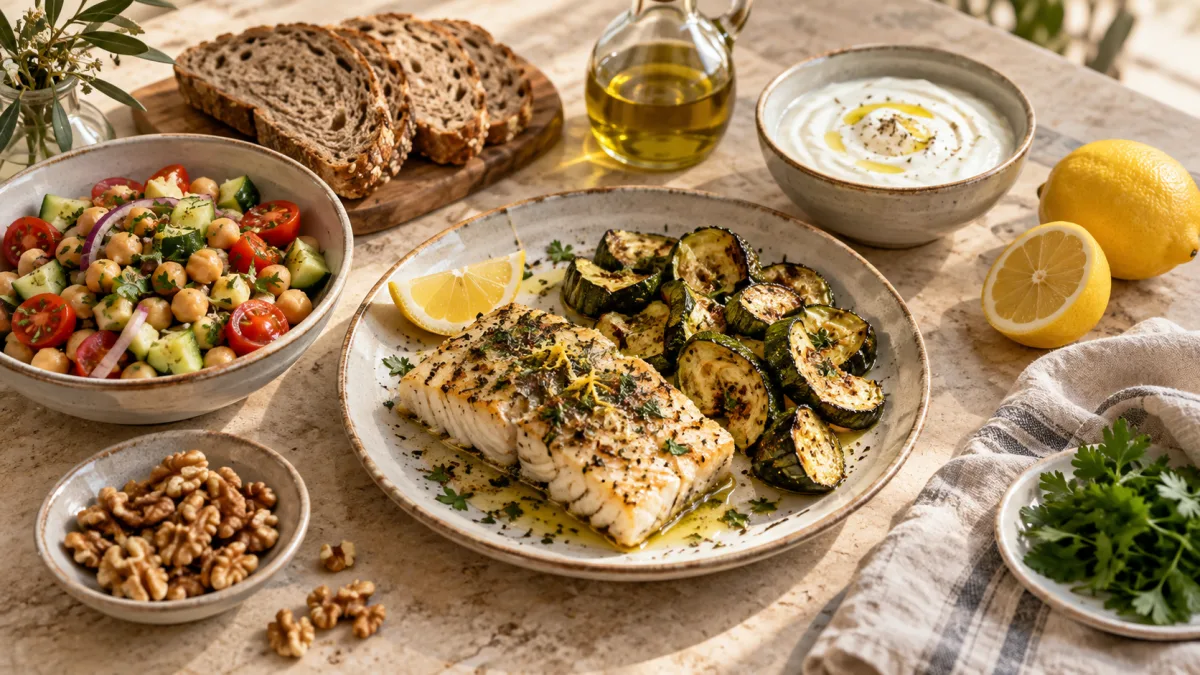
Build a Mediterranean-style week around vegetables, grains, beans, fish and plant oils. This seven-day plan includes everyday meals, a grocery list and swaps you can make at an ordinary supermarket.
What foods belong in a Mediterranean diet?
Vegetables, fruit, whole grains, beans and nuts form the base. Fish, eggs, poultry and dairy also appear, with olive oil commonly used for cooking and dressing. The American Heart Association explains that there is no single standard Mediterranean diet: eating habits vary between countries and regions.
You can adapt these ingredients to meals you already cook. A bowl of buckwheat with beans and vegetables works here, too. Choose dishes you would be willing to make during an ordinary working week. Our comparison of diet types covers the broader approaches.
How to use the plan and adjust portions
The table suggests meal combinations for an adult. Swap the days around, repeat a breakfast you like or pack lunch for work. Adjust portions to your appetite, activity and individual needs. The calorie total depends on quantities, added oil, the type of yogurt and other recipe choices.
For lunch or dinner, combine vegetables with a grain, bread or potatoes, then add beans, fish, eggs or poultry. Dress the meal to taste. If you regularly finish still hungry, reconsider the amount and combination of food. Add beans and bread to a vegetable soup, for example, or serve yogurt alongside breakfast porridge.
Oil, nuts and cheese are part of the meal. Include them if you keep a food diary, though weighing food is not a requirement of this eating pattern. If you have diabetes, kidney disease or a prescribed diet, discuss changes with your clinician; the plan does not account for individual treatment needs.
A 7-day Mediterranean meal plan
Vegetables can be raw or cooked. Try olive oil and lemon juice for salads, and use garlic, herbs and spices in soups and stews. Choose a drink with your meal if you wish, such as water, tea or coffee.
| Day | Breakfast | Lunch | Dinner |
|---|---|---|---|
| Monday | Oatmeal with plain yogurt, apple and walnuts | Lentil soup with carrots and tomatoes, whole-grain bread | Baked mackerel, potatoes, cucumber and tomato salad |
| Tuesday | Whole-grain toast with egg and tomato | Buckwheat with beans, bell pepper and herbs | Chicken stewed with zucchini, brown rice |
| Wednesday | Plain yogurt with oats, pear and seeds | Chickpea, cucumber and tomato salad, whole-grain bread | Whole-wheat pasta with tomatoes and sardines |
| Thursday | Spinach omelet, whole-grain bread | Bean stew with carrots, tomatoes and brown rice | Baked chicken with potatoes, cabbage salad |
| Friday | Oatmeal made with milk, berries and nuts | Lentil soup, whole-grain toast and a tomato | Buckwheat with stewed vegetables and chickpeas |
| Saturday | Toast with mashed beans, egg and herbs | Whole-wheat pasta with chicken and vegetables | Warm lentil and roasted carrot salad, bread and a little feta |
| Sunday | Plain yogurt with banana, oats and nuts | Chickpeas stewed with tomatoes, brown rice | Vegetable omelet, potatoes and cucumber salad |
Add snacks according to your appetite and schedule. Options include fruit with yogurt, bread with hummus, vegetables with a bean dip, or nuts. If there is a long gap between lunch and dinner, pack something suitable and account for how it needs to be stored. You do not need to stay hungry until the next meal in the table.
Your grocery list
First count how many meals you will actually eat at home or pack for work. Choose the dishes, then work out quantities for your household and usual portions. If you buy lunch on two days, leave those ingredients off the list.
- Vegetables and herbs: carrots, cabbage, zucchini, bell peppers, cucumbers, tomatoes, spinach, garlic and lemon. Frozen vegetables and canned tomatoes work for cooked dishes.
- Fruit and berries: apples, pears, bananas, and fresh or frozen berries.
- Grains and bread: oats, buckwheat, brown rice, whole-grain bread, whole-wheat pasta and potatoes.
- Legumes: lentils, beans and chickpeas. Choose dried versions to cook or canned ones according to your schedule.
- Fish, poultry and eggs: mackerel for baking, canned sardines, chicken and eggs.
- Dairy: plain yogurt, milk and a little feta for the salad.
- Dressings and extras: olive oil, nuts or seeds, and your usual spices.
This list follows the meals in the table. Check your cupboard for grains, oil and spices before shopping. To shorten the list, use beans in place of chickpeas, repeat one fruit at breakfast and choose one grain for several different side dishes.
Affordable swaps
Use local availability and prices to choose ingredients. These are cooking substitutions for the menu; they do not have identical nutritional profiles or flavors.
| Instead of | Try | How to use it |
|---|---|---|
| Salmon or other expensive fish | Mackerel or sardines | Bake the mackerel; stir sardines into pasta |
| Chickpeas | Beans or lentils | In soups, warm salads or vegetable dishes |
| Fresh berries out of season | Frozen berries or an apple | With oatmeal or yogurt |
| Brown rice | Buckwheat or barley | Alongside vegetables and beans |
| Feta | Cottage cheese or another cheese you enjoy | In a salad, with a different texture and flavor |
| Olive oil that exceeds your budget | Canola or sunflower oil | For cooking or dressing, to taste |
The NHS Eatwell Guide includes fresh, frozen and canned vegetables, and lists olive, rapeseed and sunflower oils among plant oil options. You can adapt the meals to what is on your supermarket shelves. Compare salt or sodium labels when choosing between similar cans of beans or fish.
Make the cooking manageable
Choose a grain, a bean dish and some vegetables for the next few days. Lentil soup can cover lunch, while buckwheat works with either beans or chicken. Repeat meals that fit your schedule. If soup is easy to take to work, put it on the plan more than once.
Separate your shopping list into ingredients for early and late in the week. Unopened cans and frozen ingredients are convenient for later meals. Prepare perishable dishes closer to when you will eat them and follow storage instructions on packaging. A seven-day menu does not mean cooking everything on Sunday and keeping it in the refrigerator for the whole week.
Start with one dinner from the table and a breakfast you already have ingredients for. You can then decide which dishes to repeat and what to buy next. Our guide to everyday eating habits has more ideas for making the routine manageable.
Frequently asked questions
- Can you eat bread and pasta on a Mediterranean diet?
- Yes. Include bread and pasta, choosing whole-grain versions more often. Serve them with vegetables and a protein source, and adjust the portion to your needs.
- Do you have to buy olive oil?
- Olive oil is characteristic of this eating pattern. If its price or flavor does not suit you, other plant oils such as canola or sunflower oil can work in this home meal plan.
- Do you need to count calories?
- The eating pattern itself does not require calorie counting. If you keep a food diary, record your portions, oil and other additions.
- Can you replace fish with beans?
- You can use beans, lentils or chickpeas in an individual meal. That is a cooking substitution, not a nutritionally identical replacement. If you exclude fish and other food groups entirely, discuss the overall diet with a dietitian.
- Do you need to follow the meal plan in order?
- No. Swap days around, repeat convenient meals and add snacks according to your appetite. The table is a way to organize shopping and cooking, not a mandatory eating schedule.
Read next
- Types of diets — When comparing diets in studies, an inconvenient result emerges: the difference between them is smaller than the difference between the people who follow them and those who do not.
- Eating habits: what works and what doesn't — Almost all nutrition plans fail not because of a lack of knowledge, but because of execution.
- Fiber: what it does in the gut and how much you need — We know that we "need more" fiber, but that is usually where the conversation ends: it is unclear what it physically does, why it causes bloating, and where the 25–30 grams per day recommendation comes from.
This article is for general information. It is not medical advice, a diagnosis, or a prescription for treatment or a diet, and it does not replace a consultation with your doctor. If you have a health condition, are pregnant, take medication, or follow a diet prescribed to you, decisions about food belong with your doctor.
Figures from regulations, guidelines and studies are given as they stood when this article was prepared and may since have changed; check them against the primary sources. This article is not advertising, an offer, or individual advice, and neither the author nor the site owner is responsible for decisions taken on the basis of it.