Homemade Caesar: how dressing and croutons change the calories
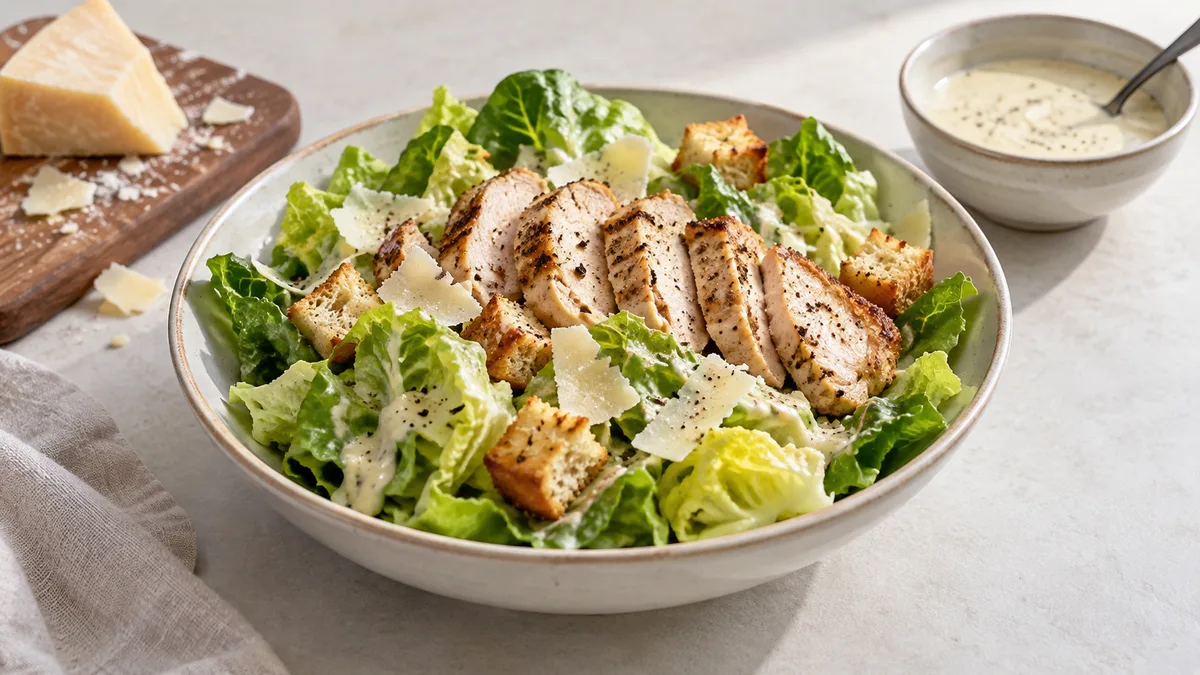
Count homemade Caesar from its ingredients before assembly. The same lettuce, chicken and cheese produces different totals with yogurt dressing, mayonnaise or croutons cooked in oil. This preparation and calculation method lets you compare versions using your own labels.
Prepare a base for two plates
For this homemade version, use 160 g of lettuce, 200 g of cooked chicken breast, 30 g of hard cheese and 60 g of bread before toasting. These are selected recipe amounts, not recommended portion targets. Prepare your dressing and any oil for the croutons separately.
Cook the chicken in advance, cool it and weigh it without bones. Choose an entry for cooked breast. You can instead build a recipe from raw chicken and its actual cooked yield, but cannot multiply a raw-chicken calorie value by the weight of cooked meat. See counting homemade food for the method.
Wash and dry the lettuce, slice the chicken and grate or shave the cheese. Cut the bread into cubes and toast it until crisp. Dry toasting and cooking with oil need different crouton recipes. Dress the salad before serving so the bread has less time to soften.
Compare two chosen dressings
For the mayonnaise version, take 26 g of Kraft Real Mayo. Its official label lists 90 kcal per 13 g, so this amount contributes 180 kcal to the recipe, or 90 per half.
For the second version, take 60 g of plain yogurt. The checked FAGE Total 2% page lists 70 kcal per 100 g, so this amount contributes 42 kcal. The table below compares plain yogurt with mayo. Log any lemon juice, mustard, garlic or other additions separately using the amounts added.
These two dressing bases differ by 138 kcal per batch, or 69 per half. Their weights and flavours differ too. Adding oil, cheese or mayo to the yogurt changes the result; the word “yogurt” does not establish a calorie value.
Add seasonings gradually and taste. Lemon, garlic and mustard do not need identical proportions in every homemade version. Include any anchovies or cheese added to the dressing as ingredients. For bottled Caesar dressing, use its label: it may differ from both examples. The mayo-free salad guide covers other dressing recipes.
Weigh the bread and any added oil
The USDA white bread entry lists 266 kcal per 100 g, so 60 g contributes 159.6 kcal. Suppose toasting reduces it to 45 g and you use every crouton: retain the same calculated 159.6 kcal from bread. Use the package label for your own loaf.
The USDA olive oil entry lists 884 kcal per 100 g. Six grams remaining entirely on the croutons adds 53.04 kcal. Those croutons therefore contribute 212.64 kcal instead of 159.6. If some oil remains on the tray, counting all the added oil gives an upper estimate of its contribution.
For packaged croutons, use the finished product label and the amount added. Do not transfer the starting bread value to croutons containing oil and flavourings. If one packet serves several salads, weigh the part used in this one.
Four versions of the same salad
For the base, use specific USDA entries: romaine has 17 kcal per 100 g, roasted skinless chicken breast has 165 and grated Parmesan has 420. At our selected weights, they contribute 27.2 + 330 + 126 = 483.2 kcal. The recipe sets the amounts; the reference values describe those specific foods.
| Version | Whole recipe | Half |
|---|---|---|
| Yogurt, dry-toasted croutons | 483.2 + 42 + 159.6 ≈ 685 kcal | ≈ 342 kcal |
| Yogurt, oiled croutons | 483.2 + 42 + 212.64 ≈ 738 kcal | ≈ 369 kcal |
| Mayo, dry-toasted croutons | 483.2 + 180 + 159.6 ≈ 823 kcal | ≈ 411 kcal |
| Mayo, oiled croutons | 483.2 + 180 + 212.64 ≈ 876 kcal | ≈ 438 kcal |
The lowest and highest examples differ by about 96 kcal per half. Choose whichever dressing you enjoy: the calculation records what you prepared and ate. Add any seasonings or chicken cooking oil separately. These results do not transfer to a restaurant Caesar with different amounts of chicken, cheese and sauce.
Divide by ingredients or finished weight
The easiest way to make equal portions is to put half of each ingredient on each plate. Both plates then receive the same calculated energy. For a mixed salad, weigh the finished batch and your portion: portion kcal = recipe kcal × portion weight ÷ whole salad weight. This assumes a reasonably even mixture.
If one plate has more remaining croutons and the other more remaining chicken, equal leftover weight does not mean equal composition. Adjust the record from the visible leftovers. A photo before eating can help you remember the plate, but cannot reconstruct the exact oil amount or dressing ingredients.
Frequently asked questions
- How many calories are in homemade chicken Caesar?
- It depends on the recipe. Add lettuce, cooked chicken, cheese, bread, oil and dressing, then allocate the part eaten.
- What can replace mayo in homemade Caesar?
- Try plain yogurt with lemon juice, mustard and garlic. Count every addition and expect a different flavour and texture.
- Does toasting remove the bread’s calories?
- Keep the starting bread energy in the recipe if all the resulting croutons are used. A reduction in weight does not mean the same reduction in energy.
- Should I count oil used for croutons?
- Yes, when it reaches the salad. Counting all added oil gives an upper estimate if the amount remaining on the tray cannot be measured.
Read next
- Salads without mayonnaise: four dressings and what they pair with — In a salad, calories are almost always found not in the vegetables, but in the dressing: two tablespoons of mayonnaise contain about as many calories as everything else on the plate combined.
- How to count calories in homemade food — Processed foods are counted by the label, and restaurant meals by a reference guide.
- Sauce calories: mayo, ketchup, cheese, garlic, and teriyaki by the spoonful — A tablespoon of sauce can add 20 kcal or 90 kcal to a meal.
- How to determine portion size without a scale — Portion weight is the most inaccurate variable in any calculation, including analysis by photo.
This article is for general information. It is not medical advice, a diagnosis, or a prescription for treatment or a diet, and it does not replace a consultation with your doctor. If you have a health condition, are pregnant, take medication, or follow a diet prescribed to you, decisions about food belong with your doctor.
Figures from regulations, guidelines and studies are given as they stood when this article was prepared and may since have changed; check them against the primary sources. This article is not advertising, an offer, or individual advice, and neither the author nor the site owner is responsible for decisions taken on the basis of it.