Net carbs: how to calculate and where the method fails
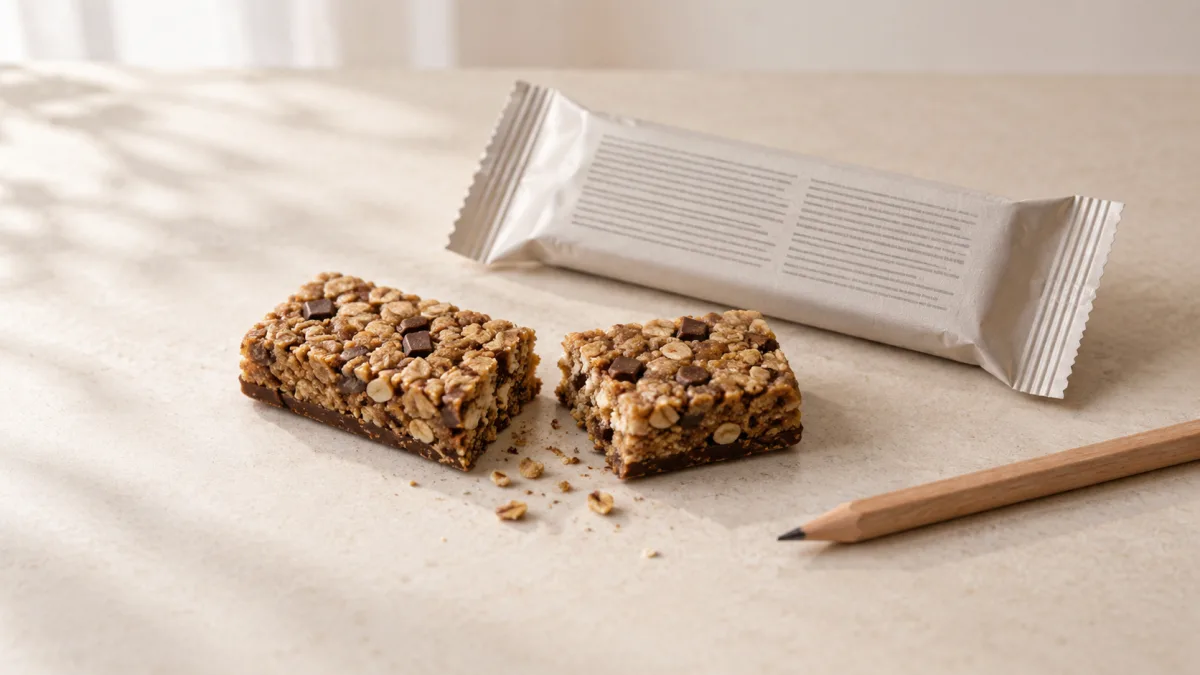
Net carbs are total carbohydrates listed on the label minus fiber and, for some manufacturers, sugar alcohols. The formula is simple, but it’s an approximation: there’s no official definition, and fiber and sugar alcohols are metabolized differently. On Russian labels, fiber is already subtracted, so it must not be deducted again.
The formula
Net carbs are calculated as follows: total carbohydrates minus dietary fiber minus sugar alcohols. The idea is that fiber isn’t broken down in the small intestine, and sugar alcohols are only partially absorbed, so they raise blood glucose less than sugar and starch.
The American Diabetes Association describes the method exactly this way and immediately adds a caveat: it assumes fiber and sugar alcohols aren’t absorbed or metabolized at all, which isn’t always true. Some of them are partially digested, contributing calories and raising blood glucose. Since the label doesn’t specify the type of fiber or sugar alcohol, the exact effect can’t be determined from it (ADA, “Get to Know Carbs”, accessed October 1, 2026).
Example from a U.S. label
A hypothetical bar lists on its label: Total Carbohydrate 20 g, Dietary Fiber 8 g, Sugar Alcohol 6 g. Calculation: 20 − 8 − 6 = 6 g net carbs.
Subtracting sugar alcohols is the weakest point here. If it’s erythritol, review data suggest its contribution to blood glucose is nearly zero. If it’s maltitol, a noticeable portion is still absorbed, so the actual glycemic load will exceed six grams.
What the FDA says about “net carbs”
“Net carbs” aren’t recognized in U.S. regulations. The Total Carbohydrate value includes starch, sugars, sugar alcohols, and fiber. According to the ADA, the term “net carbs” has no legal definition and isn’t used by the FDA.
This issue arose during the revision of the Nutrition Facts label. A petition noted that manufacturers define “net carbs” inconsistently: some subtract fiber and sugar alcohols, others also subtract “other carbohydrates” (Federal Register, March 3, 2014). In the final 2016 rule, the FDA declined to exclude fiber from the total carbohydrate figure: fibers (except lignin) are classified as carbohydrates. For those needing a fiber-free number, the FDA suggested subtracting it manually from the declared value. Additionally, the agency clarified that label values aren’t intended for people with acute or chronic conditions like diabetes (Federal Register, May 27, 2016, accessed October 1, 2026).
Practical takeaway: “net carbs” on the front of packaging reflect the manufacturer’s calculation, not a regulator-verified figure, and two manufacturers may calculate it differently.
How carbohydrates are listed on Russian labels
The approach differs here. Technical Regulation TR CU 022/2011 (Article 4, Section 4.9, Clause 15) states: when determining carbohydrate content, only metabolically active carbohydrates (excluding dietary fiber) and sugar alcohol sweeteners are counted. Appendix 2 refers to this same value as “available carbohydrates.”
Practical implications:
- Fiber isn’t included in the “carbohydrates” line, so subtracting it again would yield an artificially low figure;
- Sugar alcohols are included in the carbohydrates line and can only be subtracted if their quantity is known;
- Fiber and sugar alcohols aren’t part of the mandatory nutrient list (energy, protein, fat, carbohydrates, vitamins, and minerals), so “net” carbs on Russian labels must be estimated from the ingredients list.
The caloric conversion factors in Appendix 4 confirm this logic: carbohydrates (excluding sugar alcohols) are counted as 4 kcal/g, sugar alcohols (except erythritol) as 2.4 kcal/g, erythritol as 0 kcal/g, and dietary fiber as 2 kcal/g (TR CU 022/2011 text on the EEC website, accessed October 1, 2026).
Table: what to subtract
| Label | Fiber | Sugar alcohols |
|---|---|---|
| U.S. (Total Carbohydrate) | included in line, subtracted | included in line, optionally subtracted |
| Russia (TR CU 022/2011) | already excluded, not subtracted | included in line, subtracted if quantity is known |
Sugar alcohols: where the method fails
Erythritol and maltitol are subtracted identically, yet behave differently. In a review on sugar alcohols in diabetes (Table 4, data adapted from other studies), erythritol’s glycemic index is listed as 0, maltitol’s as 35, and sucrose’s as 69. Maltitol elicits lower glucose and insulin responses than sucrose, but not zero (Suitability of sugar alcohols as antidiabetic supplements: A review, accessed October 1, 2026). These are aggregate values; individual studies vary.
Another caveat concerns the gut: large amounts of sugar alcohols cause bloating and laxative effects. See more in the article on polyols and the GI tract.
Fiber presents a similar issue: according to the ADA, some fibers are partially digested. The regulation assigns fiber 2 kcal/g, not zero. More on fiber—in a dedicated article.
Who needs this method and how to use it
Net carbs most commonly appear in discussions of the ketogenic diet (about keto), where daily carb limits are strict and a 10-gram error matters. For general dietary tracking (how many carbs you need per day), standard label carbohydrates suffice.
A special case is diabetes. Net carbs aren’t suitable for insulin dosing: the ADA recommends counting total grams of carbohydrates and monitoring glucose when consuming products high in fiber or sugar alcohols. Insulin doses and counting methods are determined solely by a physician; see our article on type 2 diabetes nutrition. Related approaches include bread units and the glycemic index.
Conclusion
Net carbs serve as a rough estimate for carb-limited diets, provided you know exactly what’s being subtracted. They’re unsuitable as a basis for medical decisions: the formula doesn’t distinguish between types of fiber or sugar alcohols, and regulators provide no official definition. On Russian packaging, remember that fiber has already been excluded from the “carbohydrates” line.
Frequently asked questions
- How to calculate net carbs?
- Subtract dietary fiber and, optionally, sugar alcohols from total carbohydrates listed on a U.S. label. Example: 20 g total carbs, 8 g fiber, and 6 g sugar alcohols yield 6 g net carbs.
- Should fiber be subtracted on Russian labels?
- No. According to TR CU 022/2011, dietary fiber is not included in the carbohydrate content, meaning it is already excluded from the “carbohydrates” line. Sugar alcohols, however, are included in this line.
- What are net carbs according to the FDA?
- There is no official definition. According to the ADA, the term has no legal definition and is not used by the FDA. In its 2016 rule, the FDA kept fiber within the total carbohydrate value.
- Do sugar alcohols affect blood glucose equally?
- No. Review data show erythritol has a glycemic index of 0, maltitol 35, and sucrose 69. Maltitol raises glucose less than sugar but still noticeably. Values vary across studies.
- Can people with diabetes calculate insulin doses based on net carbs?
- No. The ADA recommends using total grams of carbohydrates for such calculations because the label does not specify the type of fiber or sugar alcohols. Insulin dosing and calculation methods are determined by a physician.
Read next
- How many carbs do you need per day? — For an illustrative 2,000-calorie diet, the European reference range of 45–60% of energy works out to about 225–300 g of carbohydrates per day.
- Glycemic index: what it measures and when it is useless to use — Glycemic index tables look like a list of allowed and forbidden foods: buckwheat has one number, potatoes have another, and it seems straightforward from there.
- Bread units: how to count them and who needs them today — A bread unit is a measure of carbohydrates designed to convert food into an insulin dose.
- Keto diet: what happens in the body and what comparisons have shown — The keto diet promises a non-standard mechanism: not counting calories, but switching metabolism to a different fuel.
This article is for general information. It is not medical advice, a diagnosis, or a prescription for treatment or a diet, and it does not replace a consultation with your doctor. If you have a health condition, are pregnant, take medication, or follow a diet prescribed to you, decisions about food belong with your doctor.
Figures from regulations, guidelines and studies are given as they stood when this article was prepared and may since have changed; check them against the primary sources. This article is not advertising, an offer, or individual advice, and neither the author nor the site owner is responsible for decisions taken on the basis of it.