Maltitol, xylitol, erythritol: polyol sweeteners
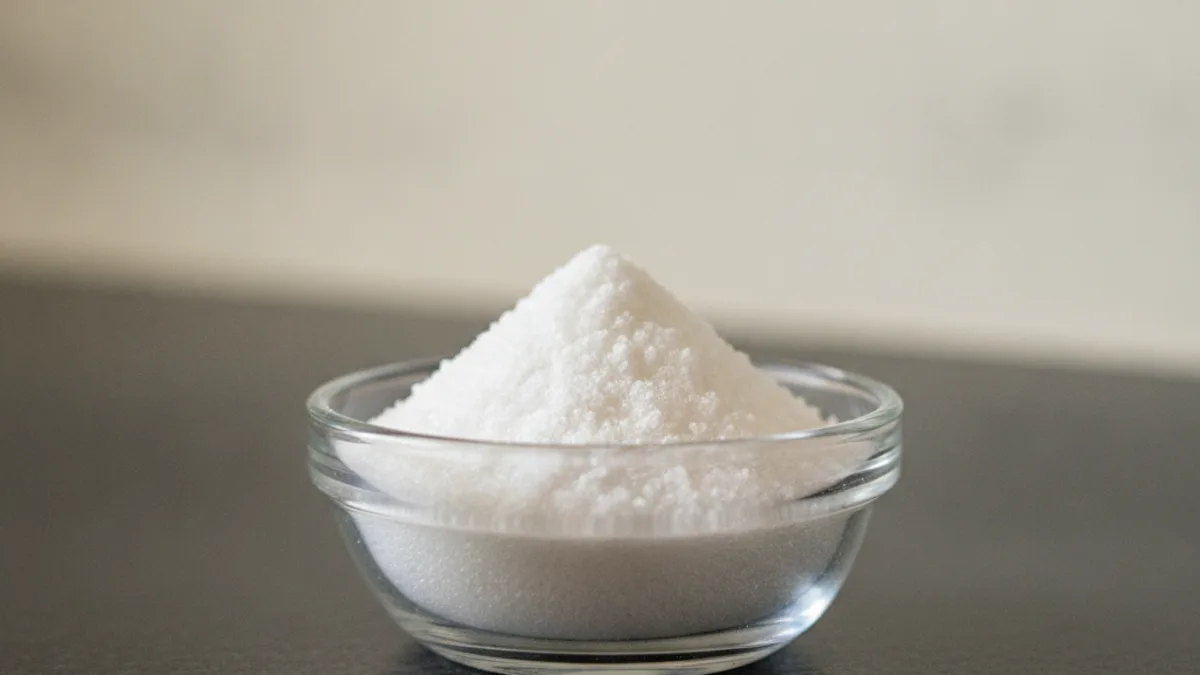
Polyols sit between sugar and intense sweeteners: they are less sweet, contain calories, yet the packaging still says "sugar-free." All three statements are true at the same time.
What this group is
Polyhydric alcohols, also known as sugar alcohols or polyols, are substances that provide a sweet taste while being absorbed significantly more slowly and less efficiently than sugar. The group includes:
- Maltitol (E965) — the most common in "diabetic" chocolate and cookies;
- Sorbitol (E420) — chewing gum, dried fruits, confectionery;
- Xylitol (E967) — chewing gum, toothpaste;
- Isomalt (E953) — hard candies, glazes;
- Lactitol (E966), mannitol (E421);
- Erythritol (E968) — stands apart, more on this below.
They differ fundamentally from intense sweeteners like sucralose or aspartame: the latter are hundreds of times sweeter than sugar and are added in milligram amounts, whereas polyols are roughly as sweet as sugar and replace it by volume. This is the source of both their caloric content and their side effects.
How many calories they contain
The technical regulation TR TS 022/2011 sets coefficients for calculating energy value: proteins and carbohydrates — 4 kcal/g, fats — 9, organic acids — 3, polyhydric alcohols — 2.4, erythritol — 0.
This leads to a practical consequence. A bar of "sugar-free chocolate" with maltitol does not contain zero carbohydrates or zero calories: 100 g of maltitol is 240 kcal, which is slightly more than half that of sugar. Cocoa butter is added to this, and the final caloric content of such a bar often turns out to be not lower than a regular one, but higher — the fat in it compensates for the loss of sweetness.
This can be checked in one step: look at the "energy value" line, not the label on the front. There is a separate analysis regarding what other promises the front label makes — what food labels mean.
Why they can have a laxative effect
Polyols are partially absorbed in the small intestine. The remainder reaches the large intestine, where it attracts water and serves as food for the microflora — this causes bloating, rumbling, and a laxative effect.
The magnitude of the effect depends on the substance and the dose. The threshold is individual, but reviews provide a guideline: unpleasant symptoms are unlikely with an intake below approximately 20 g of polyols per day from all sources. One bar of "diabetic" chocolate can provide more than that.
The requirement to warn about this is legally established. In the European Regulation 1169/2011, products containing more than 10% added polyols must carry the warning "excessive consumption may produce laxative effects." If you have encountered this on imported packaging and did not understand what it referred to, this is why.
It is also worth knowing that polyols are part of the FODMAP group and are tolerated significantly worse than average in cases of irritable bowel syndrome.
Erythritol: zero calories and the question of 2023
Erythritol stands apart from the group for two reasons. It is almost completely absorbed in the small intestine and excreted by the kidneys in unchanged form — which is why it is assigned zero calories and is better tolerated than other polyols.
In March 2023, a study by Witkowski et al. was published in Nature Medicine, where blood levels of erythritol were linked to a three-year risk of major cardiovascular events. The association was found in a group of 1,157 people undergoing cardiovascular risk assessment and was replicated in two independent cohorts — an American one of 2,149 people and a European one of 833. Additionally, in the laboratory portion, erythritol enhanced platelet aggregation, and in a pilot intake study of eight healthy volunteers, blood levels remained elevated for a long time above the values at which this effect was observed.
How to interpret this. The first part is an observation: it shows an association between high blood levels and risk, but does not answer the question of what the cause was. Erythritol is also produced within the body itself, and its level may be a consequence of metabolic disorders rather than their cause. The second part, the laboratory and pilot study, involves a mechanism and eight people, which is insufficient for drawing conclusions about harm. The European Food Safety Authority conducted a re-evaluation of erythritol as a food additive and did not revoke the substance's status as a result.
The practical conclusion today is moderate: there is no reason for alarm with normal consumption, but there is also no reason to consider erythritol proven to be neutral. The topic is open, and that is more honest than either of the two categorical answers. How such studies are generally structured — how to read a nutrition study.
Xylitol and dogs
A point unrelated to human nutrition, but important. Xylitol is extremely toxic to dogs: it causes a massive release of insulin and a sharp drop in blood glucose, and in large doses, liver damage. Amounts contained in just a few pieces of chewing gum can be fatal.
If there is a dog in the house, chewing gum, toothpaste, and baked goods containing xylitol must be stored where the dog cannot reach them. If you suspect ingestion, go to the veterinarian immediately; symptoms develop within an hour.
Who they are actually useful for
Polyols solve two real problems.
Teeth. Cariogenic bacteria do not ferment xylitol, and it is the only sweetener with a direct evidence base regarding cavities — hence its presence in chewing gum and toothpaste.
Glycemia. The rise in glucose after consuming them is lower than after sugar, which is significant for diabetes. But this is precisely where substitution most often occurs: "sugar-free" on the packaging is read as "can be eaten freely," even though the carbohydrates and calories remain in the product. An analysis of this substitution — products for diabetics.
A general comparison with other substitutes — sugar substitutes: are they harmful and do they help with weight loss.
Frequently asked questions
- How many calories are in maltitol and other polyols?
- According to TR TS 022/2011, polyols are assigned a value of 2.4 kcal/g for energy calculation, which is slightly more than half that of sugar. Erythritol is assigned zero.
- Why can "sugar-free chocolate" cause digestive upset?
- Polyols are not fully absorbed in the small intestine; the remainder draws water into the large intestine and is fermented by microflora. Symptoms are unlikely up to approximately 20 g per day from all sources, but a single bar can provide more than that.
- Is erythritol dangerous?
- A 2023 study in Nature Medicine linked high blood levels of erythritol to cardiovascular risk, but the observation does not establish causation, and the laboratory and pilot portions were small. Regulators have not changed the additive's status based on these results.
Read next
- Artificial sweeteners: are they harmful, and do they help you lose weight? — Arguments about sweeteners are conducted as though the choice were between them and plain water.
- Diabetic products: what changes in them besides the price — The label "for diabetic nutrition" describes one property of a product — it contains fewer simple sugars than its standard counterpart.
- "Sugar-free," "fitness," "eco": what these labels actually mean — The front of a package speaks in short words: "light," "fitness," "sugar-free," "eco.
This article is for general information. It is not medical advice, a diagnosis, or a prescription for treatment or a diet, and it does not replace a consultation with your doctor. If you have a health condition, are pregnant, take medication, or follow a diet prescribed to you, decisions about food belong with your doctor.
Figures from regulations, guidelines and studies are given as they stood when this article was prepared and may since have changed; check them against the primary sources. This article is not advertising, an offer, or individual advice, and neither the author nor the site owner is responsible for decisions taken on the basis of it.