Why the body gets fewer calories than the label says
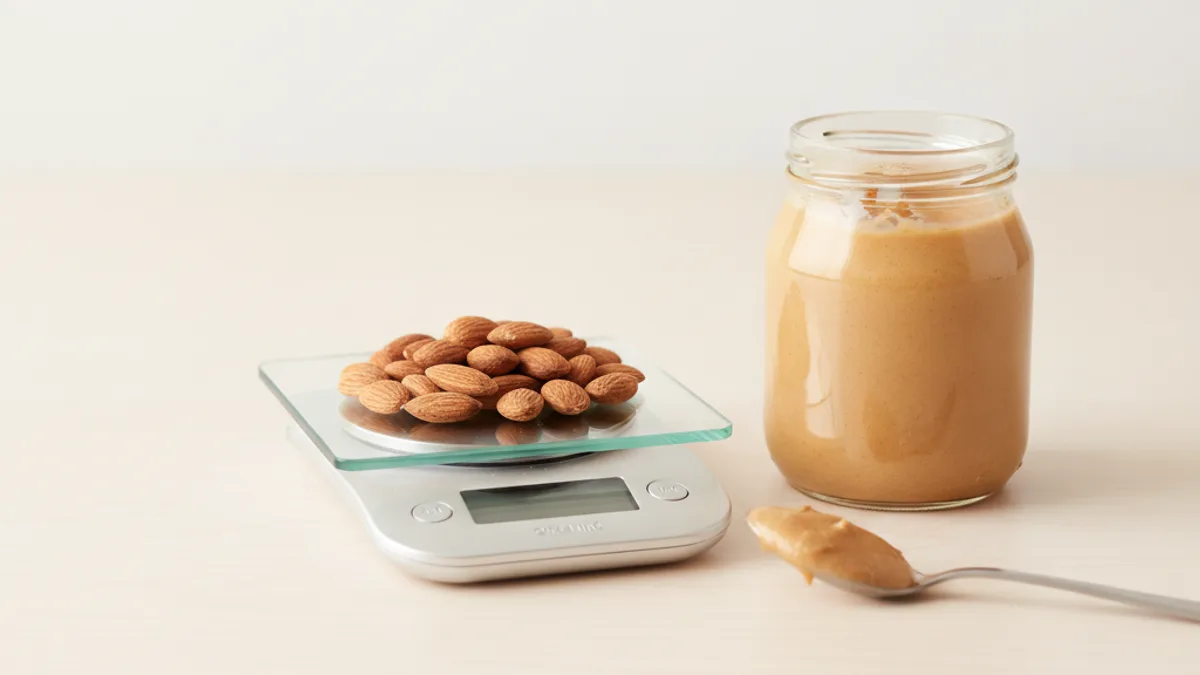
No one actually measured the number on the package: it was calculated by multiplying proteins, fats, and carbohydrates by factors over a century old. Usually, this is sufficient, but for some foods, the discrepancy with what is actually absorbed reaches up to a third.
Where the number on the package comes from
Caloric content is calculated, not measured. Conversion factors are set by regulation — Annex 4 to TR CU 022/2011:
| Substance | Factor |
|---|---|
| Proteins | 4 kcal/g |
| Carbohydrates, excluding sugar alcohols | 4 kcal/g |
| Fats | 9 kcal/g |
| Dietary fiber | 2 kcal/g |
| Sugar alcohols, excluding erythritol | 2.4 kcal/g |
| Ethanol | 7 kcal/g |
This is the Atwater system—averaged values obtained over a century ago: how much energy a gram of each macronutrient provides, taking into account that part of it is not absorbed and part is lost in urine.
The keyword is "averaged." The factor does not know which food the fat came from or what was done to that food before it reached your mouth.
Where the discrepancy was measured
The most famous case is nuts. In a study of almonds in the human diet, the measured energy value was 4.6 kcal/g — 129 kcal per 28 g serving, whereas the Atwater calculation yielded 6.0–6.1 kcal/g, or 168–170 kcal. An overestimation of 32%.
With walnuts, the picture is the same: 146 kcal per 28 g serving versus the calculated 185 — 21% less. Pistachios also showed a discrepancy in the same direction.
The reason for all of them is the same: the cell walls of nuts are not fully broken down during chewing, and the fat inside the intact cells passes through the digestive tract without being absorbed.
What else absorption depends on
- Degree of grinding. Nut butter is absorbed more completely than a whole nut: the cell walls are already destroyed.
- Thermal processing. Cooked food is easier to absorb than raw food — starch gelatinizes, and protein denatures.
- Fiber. It is accounted for with a reduced factor and changes the availability of other nutrients.
- Product form. Whole grain and flour made from it have different availability despite the same composition.
The generalization is simple: the more processed a product is, the closer the actual digestibility is to the calculated one. For more on the scale of processing, see our article on ultra-processed food.
What to do in practice
Nothing radical — and that is the main takeaway. It is important to be aware of the discrepancy to avoid drawing incorrect conclusions in either direction:
- Do not recalculate nuts as "minus 30%." Measurements were made on specific nuts and consumption methods; your portion may differ, and the error in estimating portion weight is usually larger than the correction itself.
- Do not assume that "calories don't work." The discrepancy is a systematic shift for specific foods, not a cancellation of the energy balance.
- Keep your tracking method consistent. If you always count nuts by the label, your deficit is simply slightly larger than calculated, which will be reflected in your weight trends.
- Remember the tolerances. In addition to the system's error, there is the allowable discrepancy of the labeling itself — see our article on nutritional labeling on packaging.
How all errors add up and which one is larger is analyzed in our article on calorie counting errors.
Frequently asked questions
- What is the Atwater system?
- A method for calculating caloric content using averaged factors: 4 kcal/g for proteins and carbohydrates, 9 kcal/g for fats. In the EAEU, these factors are established by Annex 4 to TR CU 022/2011, along with values for fiber, sugar alcohols, and ethanol.
- Is it true that nuts have fewer calories than stated?
- For almonds, the measured energy value was 129 kcal per 28 g compared to the calculated 168–170 kcal — 32% less. For walnuts, it was 146 versus 185 kcal, which is 21% less.
- Why are nuts not fully absorbed?
- Part of the cell walls is not broken down during chewing, and the fat inside the intact cells passes through the intestine unabsorbed. This effect is less pronounced with nut butter.
- Do I need to recalculate the calorie content of nuts myself?
- Usually no: the measurements apply to specific nuts and methods of consumption, and the error in estimating portion weight is often greater than the adjustment itself.
- Does this mean that calorie counting is meaningless?
- No. The discrepancy is a systematic shift for individual products, not a negation of the energy balance. If the tracking method is consistent, weight dynamics will still show whether the deficit is working or not.
Read next
- Calories and macros on the label: why the numbers don't match reality — The same buckwheat in three different apps gives three different calorie counts, and the package shows a fourth.
- Why the tracker shows a deficit but weight remains the same — The app has shown a deficit for four weeks, but the scale hasn't moved.
- kcal, cal, and kJ: how to convert and why there are two numbers on the package — One kilocalorie equals 4.
- Nuts: why they have fewer calories than stated — The calorie content of nuts in reference books is calculated, not measured, and for nuts, the calculation is systematically overstated.
This article is for general information. It is not medical advice, a diagnosis, or a prescription for treatment or a diet, and it does not replace a consultation with your doctor. If you have a health condition, are pregnant, take medication, or follow a diet prescribed to you, decisions about food belong with your doctor.
Figures from regulations, guidelines and studies are given as they stood when this article was prepared and may since have changed; check them against the primary sources. This article is not advertising, an offer, or individual advice, and neither the author nor the site owner is responsible for decisions taken on the basis of it.