Vegetarian and vegan diets: what to prioritize in your tracking
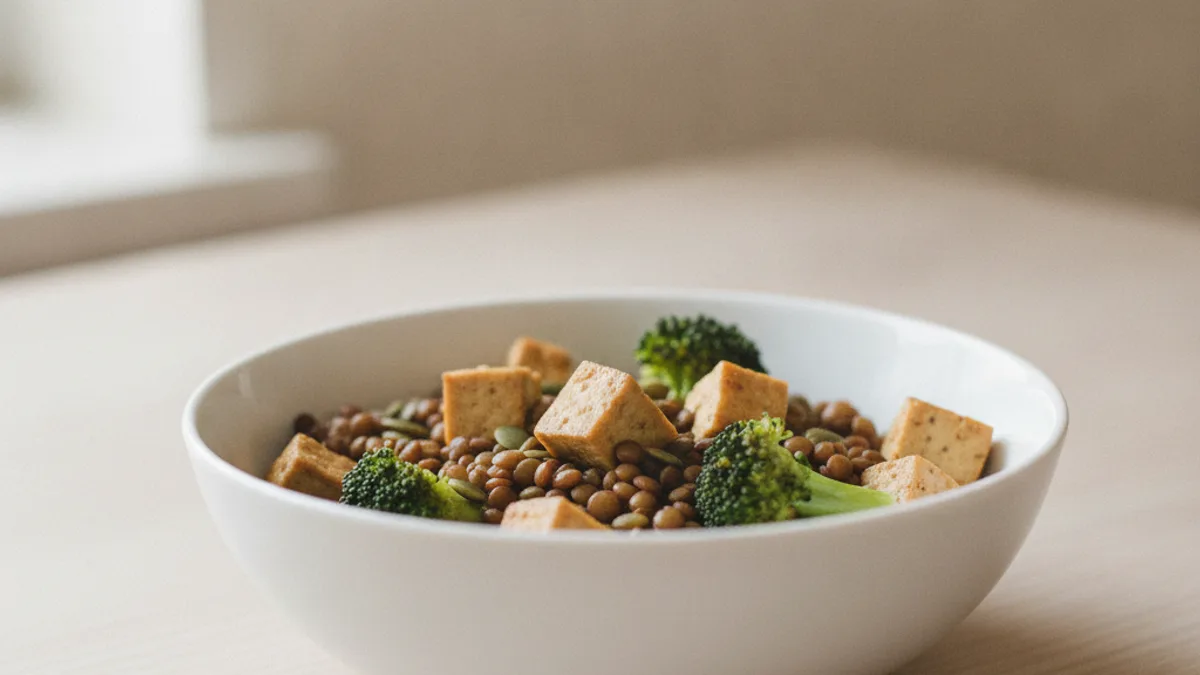
Calories in a plant-based diet are calculated exactly the same way as in any other. The list of what else to keep in view is different—and it is short.
Calories have nothing to do with it
Plant-based food is not calculated using any special rules: a gram of protein provides 4 kcal regardless of whether it comes from lentils or chicken. Deficit and surplus work the same way, and the recommended intake is calculated using the same formula.
The difference lies elsewhere. A plant-based diet has its own structure of risks, and it is not about caloric content, but about the fact that with the same number in your food diary, the nutrient profile turns out differently. Hence the short list of things you will have to monitor separately.
B12 is the only item that cannot be solved by food
Vitamin B12 is not found in plant-based foods in a form suitable for absorption. It is not present in seaweed, spirulina, sauerkraut, or mushrooms in quantities you can rely on: seaweed contains analogs that the body does not use and which interfere with blood tests showing the real picture.
For a vegan diet, this means a supplement or B12-fortified foods—not as an insurance policy, but as a mandatory component. Deficiency develops slowly, over years, due to liver stores, and the first symptoms are neurological, not just "weakness and pallor."
For vegetarians who eat eggs and dairy products, it is easier: B12 comes from those sources. However, it is worth verifying the amount rather than assuming it is sufficient.
Protein: it is not about how much, but what kind
Meeting the quantity is not difficult—legumes, soy, nuts, and grains provide enough. The composition is more complex: most plant sources lack one essential amino acid. For legumes, it is methionine; for grains, it is lysine.
This is solved not by "combining in one meal," as was written in the past, but by variety throughout the day. More details can be found in the analysis of why plant protein is inferior to animal protein.
The second difference is digestibility. Protein from legumes and grains is absorbed less efficiently than from milk and meat, so it is reasonable to increase the quantity target by 10–20% relative to the standard norm.
Iron, calcium, iodine, zinc
Here, the issue is not the amount on the plate, but how much of it actually reaches the system.
| Nutrient | The challenge | What helps |
|---|---|---|
| Iron | Non-heme iron from plants is absorbed less efficiently than heme iron | Vitamin C in the same meal; tea and coffee consumed separately from food |
| Calcium | Hardly absorbed from spinach and sorrel due to oxalates | Fortified plant-based milk, tofu made with calcium coagulants, cabbage |
| Iodine | In plants, it depends on the soil, meaning it is unpredictable | Iodized salt in a known quantity |
| Zinc | Phytates in grains and legumes bind it | Soaking, sprouting, fermentation |
There is a separate analysis on iron—what ferritin levels show and why people get tired. Information on iodine and salt can be found here.
Omega-3: ALA is present, EPA and DHA are not
Flax seeds, walnuts, and rapeseed oil provide alpha-linolenic acid. The body makes long-chain EPA and DHA from it itself, but with low efficiency—only a few percent. For someone who does not eat fish, this means either a supplement made from algae oil or a conscious decision to go without.
What to actually keep in your diary
Counting a dozen and a half micronutrients daily is pointless: the accuracy of the sources cannot support it, and discipline usually lasts only a week. A working minimum:
- Calories and protein — as in any diet.
- B12 — not in the diary, but as a supplement you take. This is a matter of habit, not tracking.
- Variety of protein sources — not a number, but a check: did the diet include legumes, soy, nuts, and grains during the week, rather than just pasta?
- Once a year — blood tests: B12, ferritin, vitamin D. This is the only place where you can see if the diet is working, not just the plan.
A trap that is mentioned less often
Plant-based food is on average less energy-dense: the same feeling of satiety is achieved with fewer calories. When losing weight, this is a plus; with a normal diet, it is a risk of unintentionally under-eating, especially for people with high activity levels. The mechanism is analyzed in the article on energy density.
A sign that this is happening: weight is slowly dropping without the intention to lose it, and there is no energy for workouts. This is treated by adding dense energy sources—nuts, oils, avocado—rather than increasing the volume of salad.
Frequently asked questions
- Can you get B12 from plant-based food?
- In the amounts you can rely on, no. Seaweed and spirulina contain analogs that the body does not use. A vegan diet requires a supplement or B12-fortified foods.
- Do you need to eat more protein on a plant-based diet?
- It is reasonable to increase your intake by 10–20% compared to a standard diet: protein from legumes and grains is less digestible than animal protein, and most plant sources are incomplete in their amino acid profile.
- Is it true that plant proteins must be combined in a single meal?
- No, this is not required. It is enough to have a variety of sources throughout the day: the body collects amino acids not from a single plate, but from the total daily intake.
Read next
- Plant protein: how it compares to animal protein and how to bridge the gap — The difference between plant and animal protein is not that one is "complete" and the other is "incomplete"—it comes down to two specific factors: amino acid profile and digestibility.
- How much protein do you need per day — There are two opposing figures regarding protein: the official recommendation of about 0.
- Iron and ferritin: what the test shows and why you feel tired — Ferritin is tested more often than any other iron metabolism marker and is most frequently misinterpreted.
This article is for general information. It is not medical advice, a diagnosis, or a prescription for treatment or a diet, and it does not replace a consultation with your doctor. If you have a health condition, are pregnant, take medication, or follow a diet prescribed to you, decisions about food belong with your doctor.
Figures from regulations, guidelines and studies are given as they stood when this article was prepared and may since have changed; check them against the primary sources. This article is not advertising, an offer, or individual advice, and neither the author nor the site owner is responsible for decisions taken on the basis of it.