
Health
Waist-to-height, waist circumference and waist-to-hip: how the three measures differ
The waist and hip calculator gives three numbers: waist-to-height ratio, waist circumference and, if you enter hips, waist-to-hip ratio.
Every article takes a claim you have already heard about food and follows the mechanism behind it — what actually happens in the body, what the research supports, and where the claim stops being true.
The waist and hip calculator gives three numbers: waist-to-height ratio, waist circumference and, if you enter hips, waist-to-hip ratio.

The body fat calculator uses the Hodgdon and Beckett formula (US Navy, 1984): height plus neck and waist measurements and, for women, hips.

There is no such thing as an ideal weight: the name is given to the output of formulas derived from insurance height and weight tables, and the Devine formula was published to calculate drug doses.

The BMI calculator divides weight in kilograms by height in meters squared and names a category from the WHO scale.

TDEE (total daily energy expenditure) is everything the body burns in a day: basal metabolism, digesting food and all movement.

The calorie calculator works out basal metabolism with the Mifflin–St Jeor equation, multiplies it by an activity factor from 1.
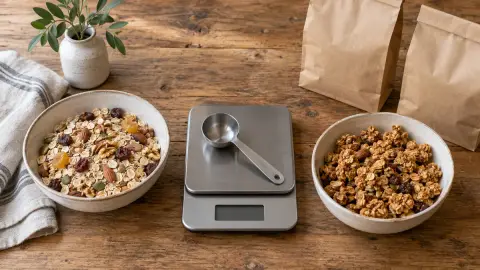
A pack of muesli or granola will not tell you exactly how much added sugar it holds: the "sugars" line adds up everything, syrup and the sugar of dried fruit alike.

On a pack of ground meat (mince), some words are defined by a standard and tied to limits for protein and fat, and some are just wording.

A host needs three things: find out from the guest what the allergy is and how they handle it, read the full ingredient list on every pack, and keep allergen from travelling on hands, boards and pans.
This article is for general information. It is not medical advice, a diagnosis, or a prescription for treatment or a diet, and it does not replace a consultation with your doctor. If you have a health condition, are pregnant, take medication, or follow a diet prescribed to you, decisions about food belong with your doctor.
Figures from regulations, guidelines and studies are given as they stood when this article was prepared and may since have changed; check them against the primary sources. This article is not advertising, an offer, or individual advice, and neither the author nor the site owner is responsible for decisions taken on the basis of it.