Clean eating: what it is and what lies behind it
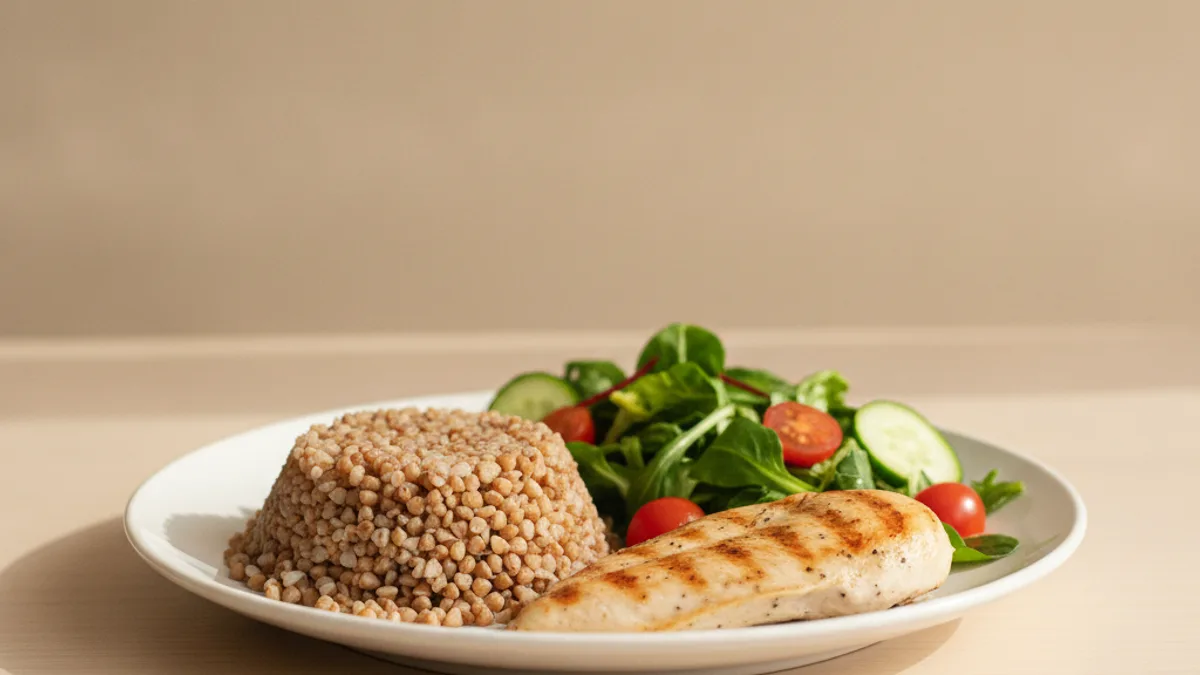
PP is a Russian abbreviation for "proper nutrition" (clean eating). This concept does not exist in any official documents: neither in regulations nor in clinical guidelines. It is a colloquial term, and its meaning varies from one blogger to another.
What is commonly called healthy eating
There is no single definition, but the set of rules is repetitive. Usually, healthy eating is understood as:
- avoiding sugar, white bread, fried foods, and "empty calories";
- five meals a day instead of three;
- not eating dinner after six o'clock;
- dividing food into "clean" and "harmful";
- a separate category of "healthy products" and "healthy recipes" in stores and social media feeds.
Of these five points, only part of the first one has an evidence base. Let's analyze them in order.
What is supported by evidence
Less free sugars. The WHO recommendation to limit them to ten percent of daily energy — about 50 g for 2000 kcal — is based on data regarding weight and tooth decay. Where sugar hides is analyzed in the article about hidden sugar.
More vegetables and fiber. Here the data is consistent, and the mechanism is clear.
Enough protein. Not "as much as possible," but enough: guidelines are in the analysis of how much protein is needed per day.
Less salt. And the main part of it does not come from the salt shaker — analysis.
What is not supported
| Healthy eating rule | What is known |
|---|---|
| Eat five times a day | Comparisons of different meal frequencies showed no difference in weight — analysis |
| Do not eat after six | Digestion works the same way in the evening; what matters is the total daily intake, not the hour — analysis |
| Give up fried food | The oil and temperature matter, not the method itself — analysis |
| White bread is forbidden | Rye bread is a quarter lighter, but a ban adds nothing to this arithmetic |
| Eat "clean" and "dirty" foods | There is no such classification in dietetics |
"Healthy products" on the shelf
A separate issue. The "healthy" label on packaging means nothing: it is not defined by technical regulations or advertising laws, and the manufacturer uses it at their own discretion. Unlike, say, the claim "reduced sugar content," which has a numerical threshold.
In practice, "healthy bars" and "healthy cookies" are often higher in calories than regular ones: sugar is replaced by syrups and polyols, and the fat content is increased for the sake of taste. What other labels on the front side mean — a separate article, about polyol sweeteners — here.
How healthy eating differs from dietary guidelines
The difference is not in strictness, but in structure. Guidelines talk about the structure of the diet and quantities: so many vegetables, so much protein, limit this and that. There is no list of allowed foods in them because a diet is built from what is available to a person and what they are willing to eat.
Healthy eating is structured the opposite way — as a list. A list is easier to remember but impossible to follow for a long time: any deviation from it is read as a failure, not as a normal Tuesday.
Where healthy eating starts to do harm
Dividing food into clean and dirty is not harmless rhetoric. It is associated with restrictive eating behavior: the stricter the list of prohibitions, the higher the chance of breaking down and the worse a person handles the fact of a slip-up.
A separate sign that you should stop: if you refuse to eat with people or postpone meetings because of "wrong" food. There is a separate analysis on the boundary between a tool and an obsession.
What works instead of a list
Five principles backed by data, not habit:
- Protein in every meal. It keeps you full longer than anything else for the same caloric value.
- Vegetables in two out of three meals. Volume and fiber with low caloric density — the mechanism is in the analysis of energy density.
- Sweet drinks — water or tea. The only product restriction that pays off.
- Regularity is more important than composition. A skipped lunch returns in the evening with interest.
- No forbidden foods. There is frequency and quantity, and they decide everything.
How to assemble a week out of this without reinventing your diet — in the article about a weekly menu. How to develop the habits themselves — here.
Frequently asked questions
- What does healthy eating mean?
- An abbreviation for "proper nutrition." There is no official definition for it in regulations or clinical guidelines: it is a colloquial term, and its meaning varies from source to source.
- Is it true that you cannot eat after six o'clock on a healthy diet?
- No. Digestion works the same way in the evening, and food does not turn into fat based on the time on the clock. The total daily intake matters, not the time of the last meal.
- Are products labeled as "healthy" better for you?
- The label is not defined by technical regulations or law and is applied by the manufacturer at their own discretion. Such products are often higher in calories than regular ones due to the addition of fats and syrups instead of sugar.
Read next
- Eating habits: what works and what doesn't — Almost all nutrition plans fail not because of a lack of knowledge, but because of execution.
- Weekly menu: how to build your own instead of looking for a ready-made one — People look for a ready-made weekly menu to avoid thinking.
- "Sugar-free," "fitness," "eco": what these labels actually mean — The front of a package speaks in short words: "light," "fitness," "sugar-free," "eco.
This article is for general information. It is not medical advice, a diagnosis, or a prescription for treatment or a diet, and it does not replace a consultation with your doctor. If you have a health condition, are pregnant, take medication, or follow a diet prescribed to you, decisions about food belong with your doctor.
Figures from regulations, guidelines and studies are given as they stood when this article was prepared and may since have changed; check them against the primary sources. This article is not advertising, an offer, or individual advice, and neither the author nor the site owner is responsible for decisions taken on the basis of it.