How many calories are in coffee with milk and sugar
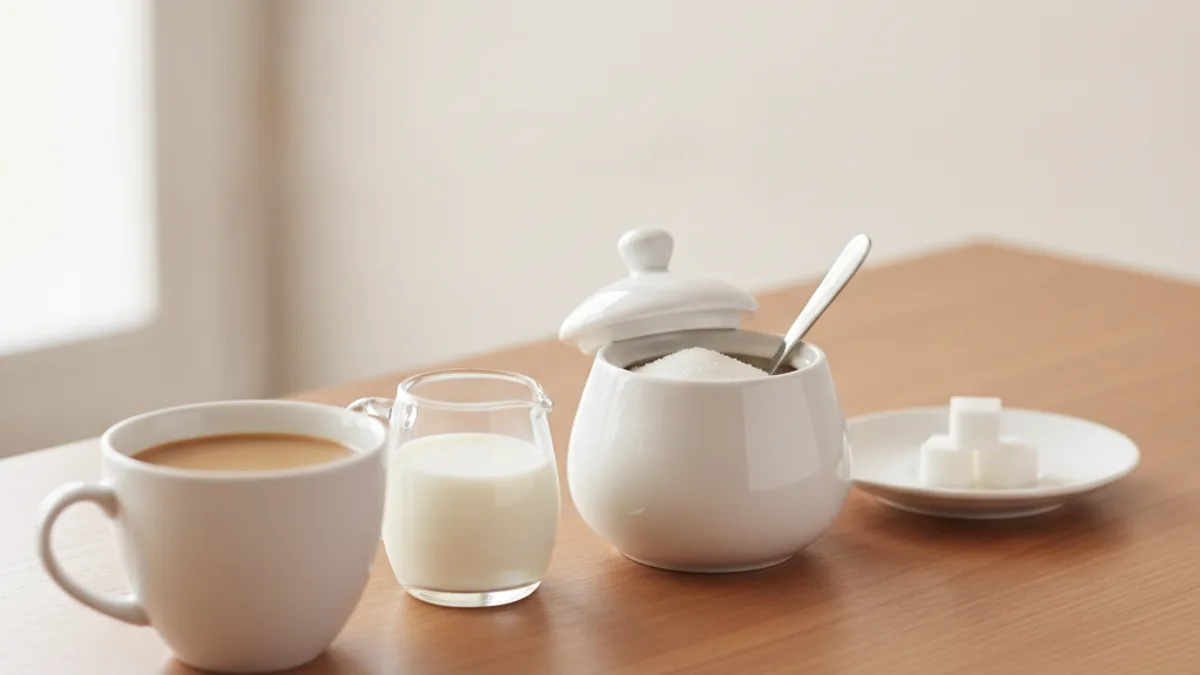
A 250 ml mug with 50 ml of 2.5% milk is about 29 kcal without sugar. Each level teaspoon of sugar adds 20 kcal, a heaped one 28. The coffee itself gives 2–3 kcal, so the total depends on the amount of milk, its fat content and the sugar, not on the size of the mug.
Calories in the coffee itself
Black coffee adds almost no calories. For NESCAFÉ instant coffee, the manufacturer gives 1.8 g per mug with 200 ml of water and 2 kcal per mug for its decaf. Brewed coffee in USDA FoodData Central is about 1 kcal per 100 g (entry 171890), and espresso 3 kcal per 30 g serving (entry 171891).
Instant, stovetop or machine-made, a mug of coffee comes to 2–3 kcal. The tables below count coffee as 1 kcal per 100 ml. How to turn a spoonful of instant coffee into calories is covered in a separate article. Count a 3-in-1 mix by the label for the whole sachet.
Calories from milk
The calculations use three kinds of milk from one Russian brand and an oat drink. As of October 12, 2026, the manufacturers give these values:
- Domik v Derevne 1.5% milk: 44 kcal per 100 g;
- 2.5%: 53 kcal per 100 g;
- 3.2%: 60 kcal per 100 g;
- Nemoloko Classic Light 1.5% oat drink: 45 kcal per 100 ml.
Milk is poured in millilitres, while the pack gives calories per 100 g. According to the FAO/INFOODS food density database, a millilitre of milk weighs about 1.03 g, so 50 ml is about 51.5 g. The oat drink above is already labelled per 100 ml and needs no conversion. More on grams and millilitres in the article on milk, kefir and yogurt.
| Milk in the mug | 1.5% | 2.5% | 3.2% | Oat 1.5% |
|---|---|---|---|---|
| 30 ml | 14 kcal | 16 kcal | 19 kcal | 14 kcal |
| 50 ml | 23 kcal | 27 kcal | 31 kcal | 23 kcal |
| 100 ml | 45 kcal | 55 kcal | 62 kcal | 45 kcal |
| 150 ml | 68 kcal | 82 kcal | 93 kcal | 68 kcal |
| 200 ml | 91 kcal | 109 kcal | 124 kcal | 90 kcal |
Other oat drinks can have noticeably more calories: the VkusVill classic oat drink is 58.8 kcal per 100 g, close to 3.2% milk. So count an oat drink by its own label. How plant drinks differ in composition is covered in a separate article.
Coffee with milk, no sugar: 200, 250 and 350 ml mugs
The table shows the whole mug: the milk plus the coffee that fills it up. No sugar.
| Mug and milk | 1.5% | 2.5% | 3.2% | Oat 1.5% |
|---|---|---|---|---|
| 200 ml, of which 50 ml milk | 24 kcal | 29 kcal | 32 kcal | 24 kcal |
| 250 ml, of which 50 ml milk | 25 kcal | 29 kcal | 33 kcal | 25 kcal |
| 250 ml, of which 100 ml milk | 47 kcal | 56 kcal | 63 kcal | 47 kcal |
| 350 ml, of which 100 ml milk | 48 kcal | 57 kcal | 64 kcal | 48 kcal |
| 350 ml, of which 150 ml milk | 70 kcal | 84 kcal | 95 kcal | 70 kcal |
The 250 and 350 ml mugs with 100 ml of milk differ by one calorie: the extra 100 ml of coffee adds 1 kcal. A bigger mug has more calories only if more milk goes into it.
Calories from sugar
Chaikofsky lists its sugar at 400 kcal per 100 g, or 4 kcal per gram. One of its sugar cubes weighs 5 g, and the pack equates it to a teaspoon. A level teaspoon of sugar is about 5 g, a heaped one about 7 g.
| Sugar | Level, 5 g | Heaped, 7 g |
|---|---|---|
| 1 teaspoon | 20 kcal | 28 kcal |
| 2 teaspoons | 40 kcal | 56 kcal |
| 3 teaspoons | 60 kcal | 84 kcal |
Add this to the previous table. A 250 ml mug with 50 ml of 2.5% milk comes to about 49 kcal with one level teaspoon of sugar, about 69 with two and about 89 with three. With two heaped teaspoons it is about 85 kcal. If your spoon is different, weigh several equal spoonfuls of sugar once and divide by their number.
Cream and syrup
Domik v Derevne 10% cream is 118 kcal per 100 g, more than twice as much as 2.5% milk. 10 g of this cream adds 12 kcal to the mug, 20 g adds 24 kcal.
The VkusVill product card for Monin Caramel syrup gives 323 kcal per 100 g. 10 g of syrup adds 32 kcal, 20 g adds 65 kcal. Count syrup by its own label and in grams: a spoonful of syrup and a spoonful of sugar weigh different amounts. How syrups compare with sugar and honey is covered in the article on sugar, honey and syrups. Coffee-shop drinks with their recipes are counted in the articles on raf coffee and coffee-shop drinks.
A formula for your own mug
kcal = ml of milk × kcal per 100 g × 1.03 ÷ 100 + grams of sugar × 4 + 2. The last term is the coffee itself. If the milk pack gives calories per 100 ml, drop the 1.03.
Example: 70 ml of 3.2% milk and one heaped teaspoon of sugar. Milk: 70 × 60 × 1.03 ÷ 100 = 43 kcal. Sugar: 7 × 4 = 28 kcal. With the coffee, about 73 kcal.
The easiest way to learn how much milk you pour by eye is to pour your usual amount into a measuring cup once. The same method works for the dish itself, as described in the article on calories in a bowl.
Frequently asked questions
- How many calories are in 250 ml of coffee with milk and no sugar?
- With 50 ml of 2.5% milk in the mug, about 29 kcal; with 100 ml, about 56 kcal. With 3.2% milk it is 33 and 63 kcal, with 1.5% milk 25 and 47 kcal.
- How many calories are in coffee with milk and 1 teaspoon of sugar?
- A 250 ml mug with 50 ml of 2.5% milk and one level teaspoon of sugar, 5 g, is about 49 kcal. With a heaped teaspoon, 7 g, about 57 kcal.
- How many calories are in coffee with milk and 2 teaspoons of sugar?
- In the same 250 ml mug with 50 ml of 2.5% milk, about 69 kcal with two level teaspoons and about 85 kcal with two heaped ones.
- How many calories are in a teaspoon of sugar?
- A level teaspoon is about 5 g, which is 20 kcal at 400 kcal per 100 g. A heaped one is about 7 g and 28 kcal.
- Does instant coffee with milk have more calories than brewed?
- No, the difference is a couple of calories at most. A mug of instant coffee without additions is about 2 kcal according to NESCAFÉ, and brewed coffee about 1 kcal per 100 g. The calories in the mug come from milk and sugar. Count a 3-in-1 mix by its label.
- How many calories are in coffee with oat milk?
- It depends on the drink. Nemoloko Classic Light 1.5% is 45 kcal per 100 ml, so 50 ml gives about 23 kcal. The VkusVill classic oat drink is 58.8 kcal per 100 g, close to 3.2% milk.
Read next
- Calorie content of coffee shop drinks: where the difference hides — In a coffee shop, calories are often hidden in the cup rather than in the food next to it.
- Raf coffee calories in 200, 300 and 400 ml cups — A 300 ml raf has no single calorie value: the café recipe determines it.
- How much does a spoonful of instant coffee weigh? — NESCAFÉ lists 1.
This article is for general information. It is not medical advice, a diagnosis, or a prescription for treatment or a diet, and it does not replace a consultation with your doctor. If you have a health condition, are pregnant, take medication, or follow a diet prescribed to you, decisions about food belong with your doctor.
Figures from regulations, guidelines and studies are given as they stood when this article was prepared and may since have changed; check them against the primary sources. This article is not advertising, an offer, or individual advice, and neither the author nor the site owner is responsible for decisions taken on the basis of it.