Nutrition while on weight loss medication: how to maintain muscle mass
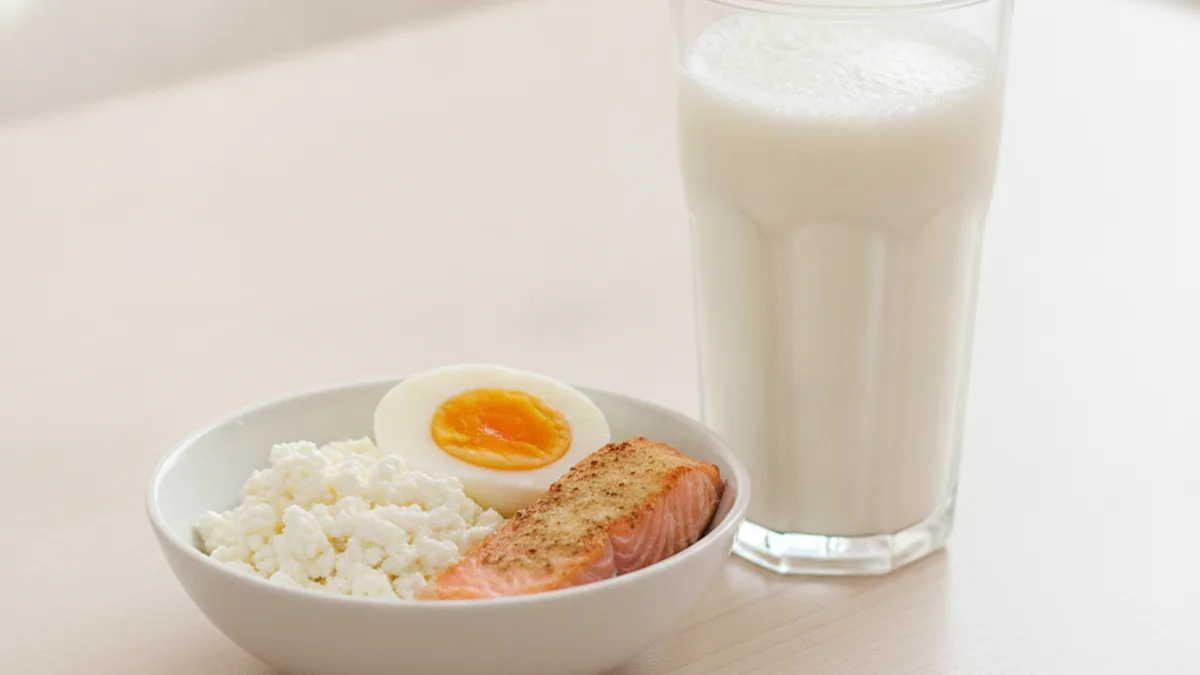
In published observations, lean tissue accounted for between one-quarter and forty percent of total weight lost. This is the primary nutritional challenge of such therapy: appetite is suppressed, eating is difficult, yet the need for protein is not lower than usual, but higher. Below is information about food, not medication: the choice, dosage, and the appropriateness of the prescription are determined by a physician.
Who this material is for
For those who have already been prescribed the medication by a doctor and are facing a practical question: how to eat when you don't feel like it. There is no comparison of medications here, nor will there be, and no recommendations on selection or dosages — this is the domain of a doctor, not a nutrition article.
Why it is not just fat that is lost
With any significant energy deficit, a portion of the loss comes from lean mass — this is not a property of the medications, but a property of the deficit, which is analyzed in the article on calorie deficit. The specific feature of this therapy is different: weight loss occurs faster than usual, and protein intake drops due to suppressed appetite.
The magnitude is noted in publications: in the described case series, lean soft tissue accounted for about 26–40% of the lost mass. The topic of lean mass loss during such therapy is discussed separately.
It is also described there that in people who combined therapy with regular exercise and sufficient protein, body composition changed more favorably: strength training 3–5 days a week and protein intake of about 1.6–2.3 g per kilogram of lean mass.
The challenge: getting enough protein when you don't want to eat
The guidelines for quantity are the same as for regular weight loss — about 1.4–1.6 g per kilogram of body weight, analyzed in the article on protein per day. It is not the number that changes, but the difficulty of reaching it.
What works with reduced appetite:
- Eat protein first. While there is at least some appetite, it is spent on the most important thing, and the side dish is finished if possible.
- Density instead of volume. Cottage cheese, Greek yogurt, eggs, and fish provide a lot of protein in a small volume; soups and salads take up space without providing it.
- Liquid form. When solid food doesn't go down, dairy drinks and protein shakes work — see the article on protein and gainers.
- More often and less. This is the rare case where a frequent meal schedule is justified not by theory, but by tolerability; an analysis of the general question is in the article on frequent meals.
- Do not drink while eating. Liquid takes up stomach volume, which is already limited.
What else drops
| What | Why | What to do |
|---|---|---|
| Fiber | Vegetables are bulky, people eat less of them | Dense sources: legumes, berries, bran |
| Liquid | People drink less after meals | Track volume consciously |
| Micronutrients | Diet has narrowed in volume | Discuss with a doctor whether monitoring is needed |
The first row is practically important: constipation is a common complaint with such therapy, and fiber along with liquid works directly here. The mechanism is in the article on fiber, and about drinking — on water.
Exercise
Strength training is the second condition without which protein works worse. This is the same principle as in regular weight loss: exercise gives the muscle a signal to be preserved, as analyzed in the article on body recomposition.
The practical minimum is two to three strength sessions per week for major muscle groups. With reduced energy, short but regular work is suitable: fifteen minutes three times a week is better than an hour-long workout once every two weeks.
After finishing therapy
The moment people think about the least, yet it determines the result. Appetite returns, and if eating habits have not changed during this time, energy intake returns to its previous level.
Practical conclusion: therapy time should be used not only for weight loss, but also for what you usually lack the willpower for — restructuring your usual diet. About the mechanics of habit formation — the article on eating habits, and about what happens during a relapse — on plateaus.
And what makes this restructuring possible: understanding how much and what you are actually eating. About ways to see this — the article why count calories.
Frequently asked questions
- How much muscle is lost on weight loss medications?
- In published observations, lean soft tissue accounted for about 26–40% of the total lost mass. This is a property of a rapid deficit combined with reduced protein intake, not the medication itself.
- How much protein is needed during such therapy?
- The guidelines are the same as for standard weight loss: about 1.4–1.6 g per kilogram of body weight. In the described observation series, intake was around 1.6–2.3 g per kilogram of lean body mass with regular strength training.
- How should I eat if I have no appetite at all?
- Start your meal with protein, choose calorie-dense sources instead of high-volume ones, use liquid forms when solid food is difficult to manage, eat more frequently in smaller portions, and avoid drinking while eating — liquids take up stomach volume.
- Are workouts necessary?
- Strength training is the second requirement for muscle preservation; without it, protein is less effective. The practical minimum is two to three short workouts per week targeting major muscle groups.
- What happens after therapy ends?
- Appetite returns, and if your usual diet has not changed during this time, energy intake returns to previous levels. Therefore, it makes sense to use the therapy period to rebuild habits, not just for weight loss.
Read next
- How much protein do you need per day — There are two opposing figures regarding protein: the official recommendation of about 0.
- Calorie deficit: how to calculate it and how to hold it — A calorie deficit is the one thing without which weight does not come down.
- Eating habits: what works and what doesn't — Almost all nutrition plans fail not because of a lack of knowledge, but because of execution.
This article is for general information. It is not medical advice, a diagnosis, or a prescription for treatment or a diet, and it does not replace a consultation with your doctor. If you have a health condition, are pregnant, take medication, or follow a diet prescribed to you, decisions about food belong with your doctor.
Figures from regulations, guidelines and studies are given as they stood when this article was prepared and may since have changed; check them against the primary sources. This article is not advertising, an offer, or individual advice, and neither the author nor the site owner is responsible for decisions taken on the basis of it.