The Dukan diet: four phases, allowed foods and how much protein an Attack day has
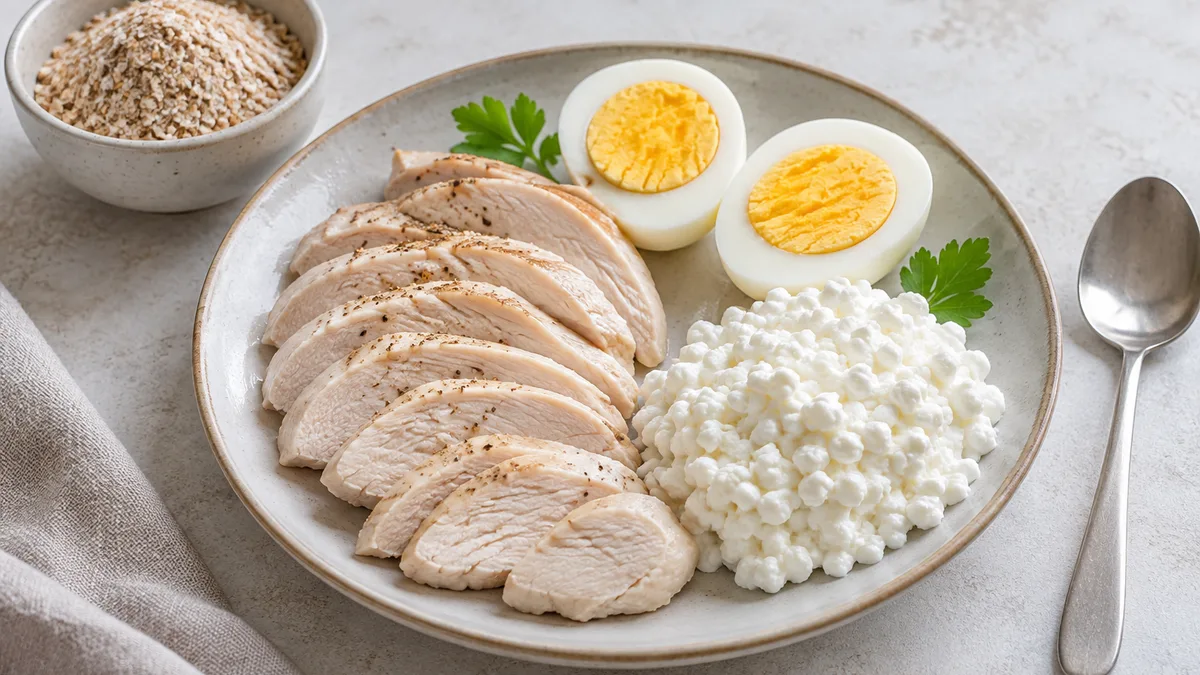
The Dukan diet has four phases: a few days of almost pure protein, then alternating protein days with protein-and-vegetable days until the target weight, then consolidation lasting five days for every pound lost, and lifelong stabilization. Nobody counts calories, but protein ends up two and a half to four times the EFSA reference: the French agency ANSES calculated more than 3.5 g per kilogram of body weight a day for women in the Attack phase.
The four phases according to the company
The rules below are as described in the Dukan Diet press kit. A few details it does not cover come from the review by the French food safety agency ANSES (2010), which describes the diet from Pierre Dukan's book.
| Phase | How long | What you eat |
|---|---|---|
| Attack | 2–7 days | 68 protein foods in unlimited amounts plus oat bran every day |
| Cruise | until the target weight; the company assumes an average of one pound (0.45 kg) every three days | 32 vegetables are added to the protein foods, 100 foods in total; pure protein days alternate with protein-and-vegetable days |
| Consolidation | 5 days for every pound lost, about 11 days per kilogram | fruit, cheese and bread return gradually; two servings of starchy food and two "celebration" meals a week |
| Stabilization | for life | normal food, but three tablespoons of oat bran a day, stairs instead of lifts and one pure protein day a week — on Thursdays |
The length of consolidation is easy to work out in advance. Losing 10 kg in the Cruise phase means 22 pounds and 110 days of Consolidation, almost four months.
What is allowed in the Attack phase
According to the Attack phase shopping list, that means lean meat and skinless poultry, fish and seafood, eggs, and fat-free cottage cheese, yoghurt and milk. Oil, cheese, grains, bread, fruit and vegetables are off the menu in this phase. Oat bran is compulsory in every phase: one and a half tablespoons a day is usually quoted for Attack, and the company names three for Stabilization.
A cup of oat bran weighs 94 g by the USDA measure, so a tablespoon is about 6 g. One and a half spoons provide about 22 kcal and 1.4 g of fibre, three spoons about 44 kcal and 2.8 g of fibre. Data from the USDA entry "Oat bran, raw" (168872) in FoodData Central: 246 kcal, 17.3 g protein, 7 g fat and 15.4 g fibre per 100 g.
Calories and protein in an Attack day
Below is one version of a day. Meat and fish are by raw weight; the figures come from the FoodGPT food table, compiled from USDA and the Skurikhin tables.
| Food | kcal | Protein |
|---|---|---|
| Chicken breast, 300 g | 339 | 70.8 g |
| Eggs, 3 (165 g) | 259 | 21 g |
| Fat-free cottage cheese, 2 packs (360 g) | 256 | 59.4 g |
| Cod, 200 g | 164 | 35.6 g |
| Oat bran, 1.5 spoons (9 g) | 22 | 1.6 g |
| Total | 1,040 | 188 g |
For a 70 kg person that is 2.7 g of protein per kilogram. EFSA considers 0.83 g per kilogram adequate for an adult (EFSA summary of dietary reference values), which is 58 g at the same weight. More on requirements in the article on daily protein intake.
The amount of food in the Attack phase is unlimited, so the calorie total depends on appetite. When ANSES analysed typical days from the book, it placed all three first phases among diets above 1,500 kcal a day.
What ANSES found
In its 2010 report the agency analysed popular diets using typical days from their authors' books. On Dukan it reached three conclusions:
- protein in the first three phases exceeds 2.2 g per kilogram of body weight a day, and for women in Attack and Consolidation it exceeds 3.5 g; the agency treats 2.2 g as the upper limit of satisfactory intake;
- in Attack, protein provides more than half of the diet's calories;
- vitamin C in the first three phases is below the average adult requirement.
The Attack day in the table above has about 1.4 g of fibre against the EFSA reference of 25 g a day. Hence frequent constipation in the early phases; how to deal with it is covered in the article on constipation on a diet.
The quick drop in the Attack phase is mostly water: as glycogen stores are used, the water stored with them leaves too. How this works and why the water returns is covered in the article on the buckwheat and kefir diets.
Who should see a doctor first
- Chronic kidney disease. NIDDK notes that people with it often need less protein, not more.
- Gout: meat and fish are the main sources of purines. More in the article on gout and purines.
- Gallstone disease: according to NIDDK, rapid weight loss raises the risk of gallstones.
- Diabetes treated with insulin or sulfonylureas: there is almost no carbohydrate in Attack, and doses are a doctor's call.
- Pregnancy and breastfeeding.
- Under 18.
- A current or past eating disorder; the warning signs are in the article on calorie counting risks.
If you want to take just one thing from Dukan
A high-protein breakfast or dinner fits into any diet without phases or bans. Which foods give the most protein per calorie is covered in the article on high-protein foods. FoodGPT shows protein on its own line from a photo of the plate, so you can see how much there is in an ordinary lunch without any Attack phase.
How different diets were compared in trials is covered in the article on types of diets.
Frequently asked questions
- How many phases does the Dukan diet have?
- Four: Attack for 2–7 days, Cruise until the target weight, Consolidation for 5 days per pound lost (about 11 days per kilogram) and Stabilization for life.
- What can you eat in the Attack phase?
- Only protein foods from a list of 68 — lean meat and poultry, fish and seafood, eggs, fat-free dairy — plus oat bran every day. Vegetables, fruit, grains, bread, oil and cheese are not eaten in this phase.
- How long is the Consolidation phase on the Dukan diet?
- Five days for every pound lost, about 11 days per kilogram. Losing 10 kg means roughly 110 days of Consolidation.
- How much protein is on the Dukan diet?
- Far more than the reference. The French agency ANSES calculated more than 2.2 g of protein per kilogram of body weight a day in the first three phases, and more than 3.5 g for women in Attack and Consolidation. EFSA considers 0.83 g per kilogram adequate for an adult.
- How many spoons of oat bran a day on the Dukan diet?
- One and a half tablespoons is usually quoted for Attack, and the company names three for Stabilization. A tablespoon of oat bran weighs about 6 g and provides about 15 kcal.
- Who should not follow the Dukan diet without a doctor?
- People with kidney disease, gout, gallstone disease, diabetes treated with insulin or sulfonylureas, pregnant or breastfeeding women, under-18s and people with eating disorders.
Read next
- Types of diets — When comparing diets in studies, an inconvenient result emerges: the difference between them is smaller than the difference between the people who follow them and those who do not.
- How much protein do you need per day — There are two opposing figures regarding protein: the official recommendation of about 0.
- The Kremlin diet: points table and how many calories a 40-point day really has — A point on the Kremlin diet is one gram of digestible carbohydrate per 100 g of food.
This article is for general information. It is not medical advice, a diagnosis, or a prescription for treatment or a diet, and it does not replace a consultation with your doctor. If you have a health condition, are pregnant, take medication, or follow a diet prescribed to you, decisions about food belong with your doctor.
Figures from regulations, guidelines and studies are given as they stood when this article was prepared and may since have changed; check them against the primary sources. This article is not advertising, an offer, or individual advice, and neither the author nor the site owner is responsible for decisions taken on the basis of it.