Constipation on a diet: fibre, water, keto and GLP-1 medicines
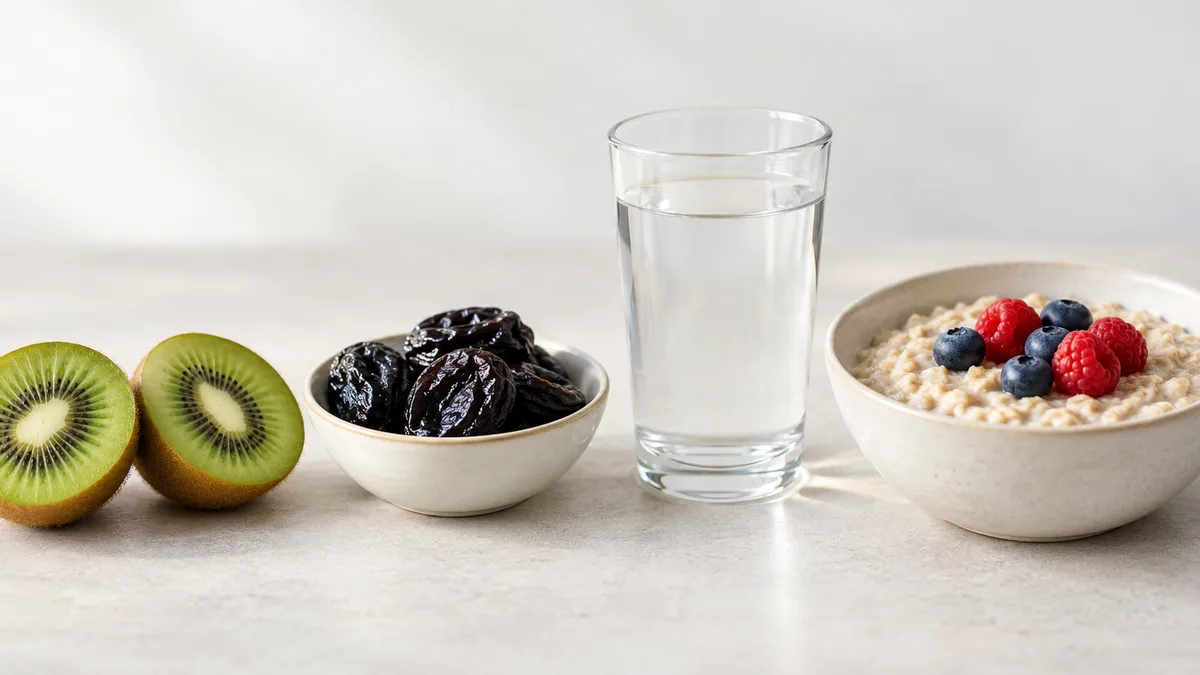
Constipation on a diet is common, and the causes are usually clear: you are eating less and differently, there is less fibre and fluid in your diet, or you have started a medicine for which constipation is a known side effect. Below is what food can fix, what studies say about water, prunes and kiwifruit, and which symptoms need a doctor.
What counts as constipation
The US National Institute of Diabetes and Digestive and Kidney Diseases (NIDDK) describes constipation as follows: fewer than three bowel movements a week; stools that are hard, dry or lumpy; stools that are difficult or painful to pass; a feeling that not all stool has passed. One of these is enough.
Why a diet can cause constipation
Among the causes of constipation, NIDDK lists not eating enough fibre, not drinking enough liquid, too little physical activity, and changes in how much and what a person eats. A diet often touches several of these at once:
- portions are smaller, and so is the amount of fibre;
- bread, grains, legumes or fruit — the main sources of fibre — have left the menu;
- you drink as much as before, but eat less food that contains water — soups, fruit, vegetables;
- supplements have appeared: NIDDK specifically names iron supplements and antacids containing aluminium and calcium.
Low-carb and keto diets remove exactly the foods richest in fibre: wholegrain bread, grains, legumes and most fruit. How the keto diet works and what is left on it is covered in the article on the keto diet.
Semaglutide and tirzepatide
With weight-loss medicines, constipation is one of the most common side effects. In the prescribing information for Wegovy (semaglutide 2.4 mg), constipation in adult trials occurred in 24% of people on the medicine against 11% on placebo. In the prescribing information for Zepbound (tirzepatide) it was 11–17% depending on the dose against 5% on placebo.
Both labels list severe constipation, including faecal impaction, and intestinal obstruction among post-marketing reports. If you take such a medicine and constipation does not go away or comes with abdominal pain and vomiting, tell the doctor who prescribed it. How to eat on these medicines is covered in the articles on eating on GLP-1 medicines and eating with nausea.
Fibre: how much and how to add it
In its section on treating constipation, NIDDK advises eating more high-fibre foods: adults need 22 to 34 g a day depending on age and sex. Add it gradually so your body can adjust, and drink more water along with the extra fibre.
On a calorie deficit, what matters is how much fibre comes per calorie. Vegetables, berries, legumes and wholegrains give plenty of it at moderate calories. A table of foods is in the article on high-fibre foods, and what fibre does in the gut is explained in the article on fibre.
Prunes, kiwifruit and psyllium
These three were compared directly. In the study by Chey and colleagues (American Journal of Gastroenterology, 2021), 79 adults with chronic constipation took two green kiwifruit a day, 100 g of prunes or 12 g of psyllium for four weeks. Bowel movements became more frequent in all three groups. Kiwifruit and prunes made stools softer, and all three reduced straining. Side effects were least common with kiwifruit and most common with psyllium.
For someone counting calories the difference is noticeable. According to USDA FoodData Central:
| Portion from the study | kcal | Fibre, g |
|---|---|---|
| Two kiwifruit of 69 g (SR Legacy 168153) | 84 | 4.1 |
| 100 g of prunes (168162) | 240 | 7.1 |
100 g of prunes is 240 kcal and 38 g of sugars, a noticeable share of a deficit. Two kiwifruit give a third of the calories.
Does water help
Water helps together with fibre. In the study by Anti and colleagues (1998), 117 adults with chronic constipation ate about 25 g of fibre a day for two months. One group drank as much as they wanted, 1.1 litres on average; the other drank 2 litres of mineral water a day. Bowel movements became more frequent in both groups, but more so in the second, which also needed laxatives less often.
How much fluid you need in general is covered in the article on how much water to drink.
Movement and routine
NIDDK advises regular physical activity. Another tip from the same section is to try having a bowel movement at the same time each day, for example 15 to 45 minutes after breakfast, because eating helps the colon move stool. Do not hold back when you feel the urge: NIDDK names ignoring it as one of the causes of constipation.
Laxatives — with a doctor
There are different types of laxatives, and they work differently. NIDDK advises using them for a short time and choosing the type with a doctor. Stimulant laxatives are only for severe constipation or when other treatments have not worked. The American gastroenterology societies AGA and ACG review which options suit chronic constipation in their 2023 guideline. Choosing them yourself for long-term use is not a good idea.
If constipation is linked to a medicine or supplement, do not stop it on your own — discuss a different dose or alternative with your doctor.
When to see a doctor
NIDDK advises seeing a doctor if constipation does not go away after changes in diet and routine, or if there is a family history of colon or rectal cancer. See a doctor right away if, together with constipation, you have:
- bleeding from the rectum or blood in your stool;
- constant abdominal pain;
- inability to pass gas;
- vomiting;
- fever;
- lower back pain;
- weight loss you are not trying for.
Frequently asked questions
- Why did I get constipated on a diet?
- Most often because there is less food and fibre, bread, grains or fruit have gone, and you drink the same as before. Some medicines cause constipation too, including semaglutide and tirzepatide, as do iron supplements.
- How much fibre do I need a day?
- NIDDK gives 22 to 34 g a day for adults depending on age and sex. Fibre should be added gradually, with more water.
- Which is better for constipation: prunes or kiwifruit?
- In a 2021 study two kiwifruit a day, 100 g of prunes and 12 g of psyllium helped about equally. Kiwifruit had the fewest side effects, and two kiwifruit have a third of the calories of 100 g of prunes.
- Can semaglutide cause constipation?
- Yes, in Wegovy trials constipation occurred in 24% of people on the medicine against 11% on placebo. If it does not go away or comes with abdominal pain and vomiting, tell your doctor.
- When should I see a doctor about constipation?
- If constipation does not go away after changes in diet, and right away if there is blood in your stool, constant abdominal pain, vomiting, fever, inability to pass gas or weight loss without trying.
Read next
- Fiber: what it does in the gut and how much you need — We know that we "need more" fiber, but that is usually where the conversation ends: it is unclear what it physically does, why it causes bloating, and where the 25–30 grams per day recommendation comes from.
- High-fiber foods: a list and simple ways to add them to meals — You do not need bran or a specialty bar to get more fiber.
- Nutrition while on weight loss medication: how to maintain muscle mass — In published observations, lean tissue accounted for between one-quarter and forty percent of total weight lost.
This article is for general information. It is not medical advice, a diagnosis, or a prescription for treatment or a diet, and it does not replace a consultation with your doctor. If you have a health condition, are pregnant, take medication, or follow a diet prescribed to you, decisions about food belong with your doctor.
Figures from regulations, guidelines and studies are given as they stood when this article was prepared and may since have changed; check them against the primary sources. This article is not advertising, an offer, or individual advice, and neither the author nor the site owner is responsible for decisions taken on the basis of it.