Snack instead of a bar: what to bring so you don't have to buy
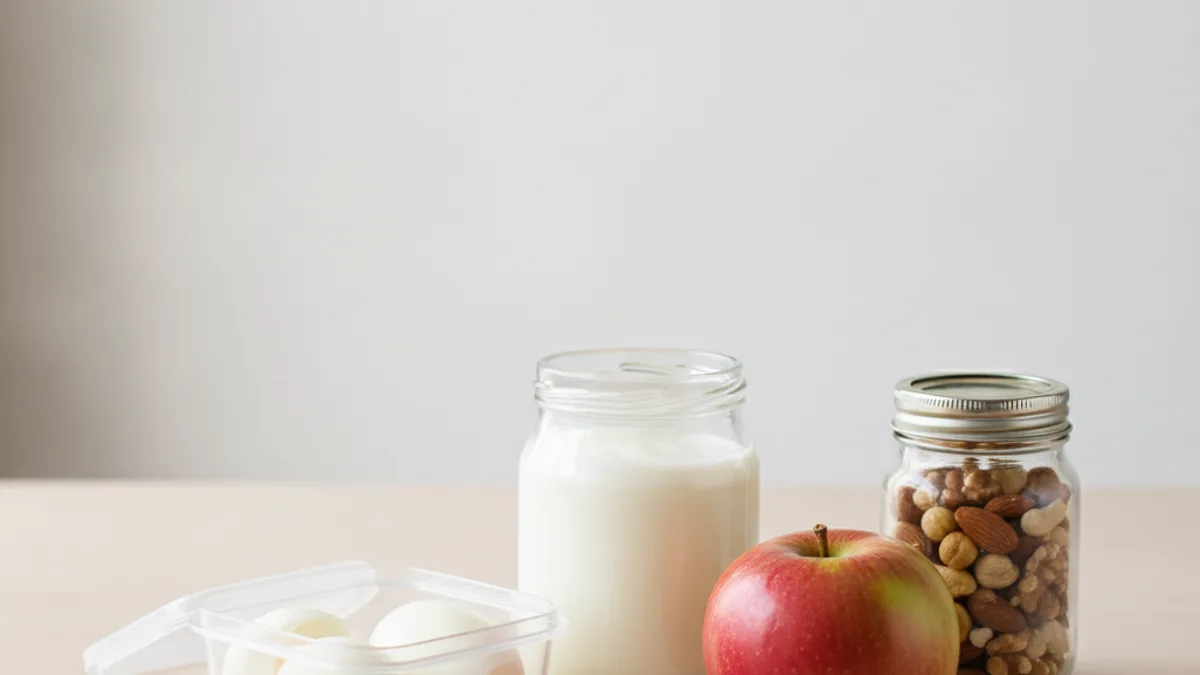
People buy a bar not because it's delicious, but because it's at the checkout and there's nothing in their bag. The solution, therefore, is not willpower, but preparation: any of the options below can be packed in two minutes in the evening and solves the problem for the whole day.
What is wrong with bars
Not with the bars themselves, but with what people expect from them. A typical 40 g cereal bar is about 180 kcal, a significant part of which comes from sugar in several forms: glucose syrup, molasses, juice concentrate. The intake is broken down by the ingredient list — the mechanics are in the article about how additives are hidden.
A protein bar is more honest regarding protein — usually 15–20 g — but in terms of calories, it often does not differ from a chocolate bar because the protein is accompanied by fat and sugar alcohols. The latter, by the way, in amounts of more than 20–30 g at a time, cause bloating and loose stools in some people.
The conclusion is not that bars are forbidden, but that a bar is a dessert, not a snack. If it fits into your daily balance, there are no questions; the problem starts when it is bought instead of a meal and is not accounted for.
Six options from regular food
| Snack | Approximate | Protein |
|---|---|---|
| Two boiled eggs | about 140 kcal | about 13 g |
| Greek yogurt 150 g | about 130 kcal | about 15 g |
| Cottage cheese 100 g with berries | about 130 kcal | about 17 g |
| A handful of nuts, 30 g | about 180 kcal | about 5 g |
| Apple with a spoonful of peanut butter | about 180 kcal | about 5 g |
| Whole grain crispbread with cheese | about 150 kcal | about 8 g |
The first three are more satiating than the others due to protein — guidelines for it are in the article about daily protein intake. Nuts are less satiating despite higher calorie content, but they do not require a fridge.
When there is no fridge
- Nuts and seeds. Portion them out in advance: you end up eating three times more from a large bag.
- Dried fruits without sugar. Read the label: some dried fruits are additionally sweetened, and sulfites can also be found there — read about them in the article about mandatory allergens.
- Crispbread. Almost no protein on its own, works well in combination with something else.
- Hard cheese. Can handle being out of the fridge for a few hours just fine.
- Banana, apple, tangerines. Require nothing at all.
Two meal prep ideas for the week
Eggs. Boil 6–8 pieces on Sunday. They keep for several days and cover both snacks and breakfast — assembly ideas are in the article about protein breakfasts.
Nut portions. Divide into 30 g servings in small bags or jars. This is the only reliable way not to eat half a large bag: it is difficult to estimate weight by eye, and there is an article about portion weight for this.
What makes a snack unnecessary
Sometimes the right answer is not to look for a snack, but to adjust your main meals. Hunger an hour and a half after eating usually means there was not enough protein and fiber in the meal: see the analysis in the articles about breakfast and fiber.
The second common case is thirst, which is mistaken for hunger. A glass of water before a snack resolves some episodes; for more on drinking, see the article about water.
Frequently asked questions
- What to take for a snack instead of a bar?
- Two boiled eggs, Greek yogurt, cottage cheese with berries, a handful of nuts, an apple with a spoonful of peanut butter, or crispbread with cheese. The first three are more satiating than the others due to protein.
- Are protein bars healthy?
- They are more honest regarding protein than cereal bars — usually 15–20 g — but in terms of calories, they often do not differ from chocolate ones because the protein is accompanied by fat and sugar alcohols. The latter, in amounts of more than 20–30 g at a time, cause bloating in some people.
- What to take if there is no fridge?
- Nuts and seeds in pre-measured portions, dried fruits without added sugar, crispbreads paired with something, hard cheese, a banana, or an apple. Hard cheese can handle being outside the refrigerator for a few hours just fine.
- How many nuts should I have at once?
- A good guideline is 30 g, which is about 180 kcal. It is worth measuring the portion in advance: people tend to eat three times as much from a large bag because it is difficult to estimate the weight of nuts by eye.
- Why do I feel hungry an hour and a half after eating?
- Most often, the meal lacked protein and fiber—these provide the longest satiety. The second common case is thirst, which is mistaken for hunger; a glass of water before a snack resolves some of these episodes.
Read next
- Three protein-rich breakfasts that take ten minutes to prepare — The usual breakfast has one problem, and it's not the calories: porridge made with water, toast with jam, and coffee contain almost no protein.
- How much protein do you need per day — There are two opposing figures regarding protein: the official recommendation of about 0.
- How to determine portion size without a scale — Portion weight is the most inaccurate variable in any calculation, including analysis by photo.
- School lunchbox: what to pack — A lunchbox is tested not at home, but during the break: the child has ten to fifteen minutes, there is no refrigerator, no knife or fork, and the backpack has already fallen twice.
This article is for general information. It is not medical advice, a diagnosis, or a prescription for treatment or a diet, and it does not replace a consultation with your doctor. If you have a health condition, are pregnant, take medication, or follow a diet prescribed to you, decisions about food belong with your doctor.
Figures from regulations, guidelines and studies are given as they stood when this article was prepared and may since have changed; check them against the primary sources. This article is not advertising, an offer, or individual advice, and neither the author nor the site owner is responsible for decisions taken on the basis of it.