Three protein-rich breakfasts that take ten minutes to prepare
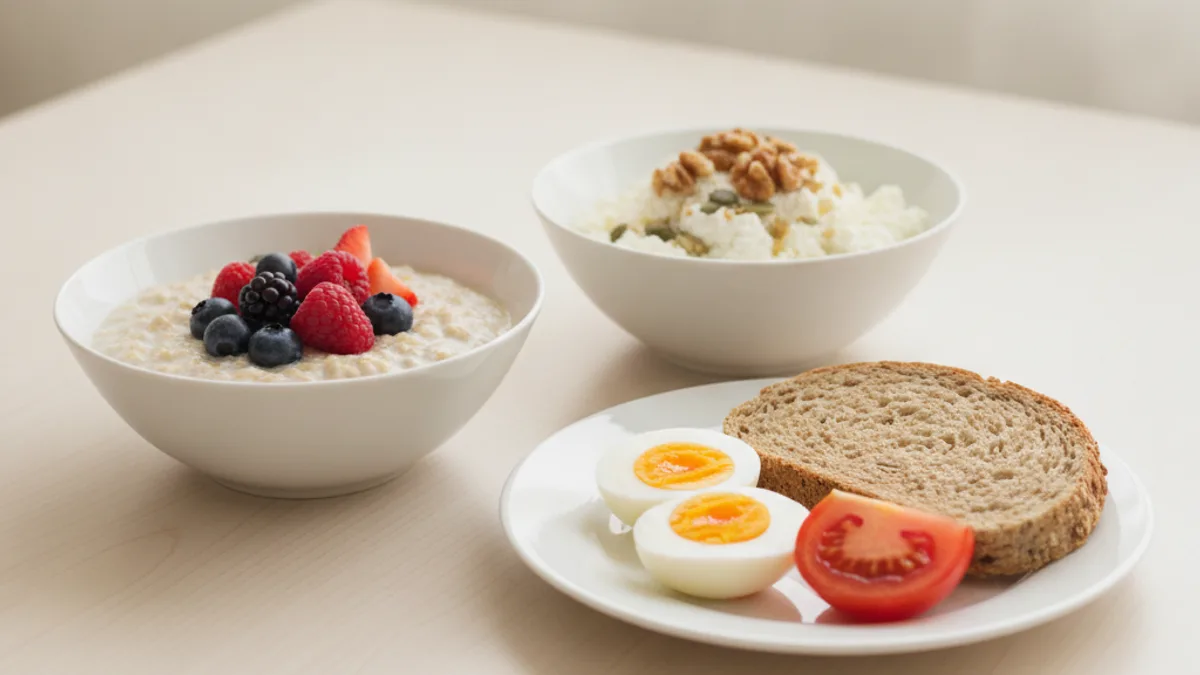
The usual breakfast has one problem, and it's not the calories: porridge made with water, toast with jam, and coffee contain almost no protein. Satiety lasts for a couple of hours, and the daily protein intake shifts to the evening, when it is harder to meet the goal. Below are three combinations that address this and require neither advance preparation nor special products.
Oatmeal, upgraded
Ingredients: 50 g rolled oats, 200 ml milk, 1 egg, a handful of berries, a teaspoon of honey (optional).
How to: cook the oats in milk for 5–7 minutes. While they are cooking, boil a soft-boiled egg or make a fried egg in a dry non-stick pan with a lid. Add the berries to the finished porridge.
Approximate values: about 450 kcal, around 22 g of protein.
The point of this combination is that the porridge remains porridge, while the protein is added as a separate item. This is easier and cheaper than looking for "protein porridge."
Cottage cheese that never gets boring
Ingredients: 180 g 5% cottage cheese, a tablespoon of nuts, half a banana or a handful of berries, a pinch of cinnamon.
How to: mash with a fork, add the rest. If the cottage cheese is dry, add a couple of tablespoons of kefir or milk — this noticeably changes the texture.
Approximate values: about 380 kcal, around 32 g of protein.
A savory option: cottage cheese, cucumber, herbs, a pinch of salt, black pepper, a tablespoon of olive oil. Same protein, different taste, and it works better for those who don't want something sweet in the morning.
Eggs with bread and vegetables
Ingredients: 2 eggs, a slice of whole-grain bread, a tomato or cucumber, some herbs, a teaspoon of oil.
How to: boil the eggs for 7 minutes from the moment the water boils — the yolk remains soft but not runny — or fry them in a minimum amount of oil. Toast the bread, slice the vegetable.
Approximate values: about 350 kcal, around 18 g of protein.
The combination is easy to expand: add a slice of cheese or leftover chicken from yesterday, and you'll get about 30 g of protein without extra cooking.
A template for building any of these
| Role | Options |
|---|---|
| Protein, 20–30 g | eggs, cottage cheese, Greek yogurt, cheese, leftover meat or fish |
| Carbohydrates with fiber | oatmeal, buckwheat, whole-grain bread, fruit, vegetable |
| Fat, one tablespoon | nuts, oil, avocado, yolk |
From here, you can substitute whatever you have at home. Guidelines on daily protein intake and where to get it can be found in the article on daily protein, and an analysis of the breakfast habit itself is in the article on breakfast.
What saves time in the morning
- Boil 5–6 eggs at once. They keep in the fridge for several days and turn breakfast into an assembly task rather than cooking.
- Chop vegetables the night before. Five minutes that you don't have in the morning.
- Keep frozen berries on hand. They don't spoil and don't require a season.
- Don't look for a new recipe every day. Three options on rotation work better than twenty that you can't choose from.
All three combinations are made from products sold in any grocery store and require neither scales nor counting — the calorie counts are provided for comparison, not for measuring.
Frequently asked questions
- How much protein should be in breakfast?
- The target is 20–30 g, which is about a quarter to a third of the daily requirement. For most people, breakfast is almost devoid of protein, which forces them to make up for it in the evening, when it is more difficult.
- What can I replace cottage cheese with if I don't like it?
- Greek yogurt, eggs, cheese, or leftover meat and fish from last night's dinner. The role in the combination is the same — a source of protein — and you can substitute any product.
- Is it necessary to add an egg to porridge?
- It is not necessary, but porridge by itself contains almost no protein. It is easier to add a separate item — an egg, cottage cheese, or yogurt — than to look for a special "protein" porridge.
- How long should I boil an egg to keep the yolk soft?
- About 7 minutes from boiling. The yolk is firm on the outside and soft on the inside, but does not run. Soft-boiled takes 4–5 minutes, hard-boiled takes 9–10.
- How to speed up the morning?
- Boil 5–6 eggs at once for a few days, chop vegetables the night before, and keep berries in the freezer. Then breakfast becomes an assembly of ready-made items rather than cooking from scratch.
Read next
- What to eat for breakfast and is it necessary at all — Breakfast is called the most important meal of the day, and the justification is usually linked to weight: those who skip breakfast overeat in the evening.
- How much protein do you need per day — There are two opposing figures regarding protein: the official recommendation of about 0.
- Snack instead of a bar: what to bring so you don't have to buy — People buy a bar not because it's delicious, but because it's at the checkout and there's nothing in their bag.
This article is for general information. It is not medical advice, a diagnosis, or a prescription for treatment or a diet, and it does not replace a consultation with your doctor. If you have a health condition, are pregnant, take medication, or follow a diet prescribed to you, decisions about food belong with your doctor.
Figures from regulations, guidelines and studies are given as they stood when this article was prepared and may since have changed; check them against the primary sources. This article is not advertising, an offer, or individual advice, and neither the author nor the site owner is responsible for decisions taken on the basis of it.