Chocolate and confectionery bars: what changes when cocoa butter is replaced
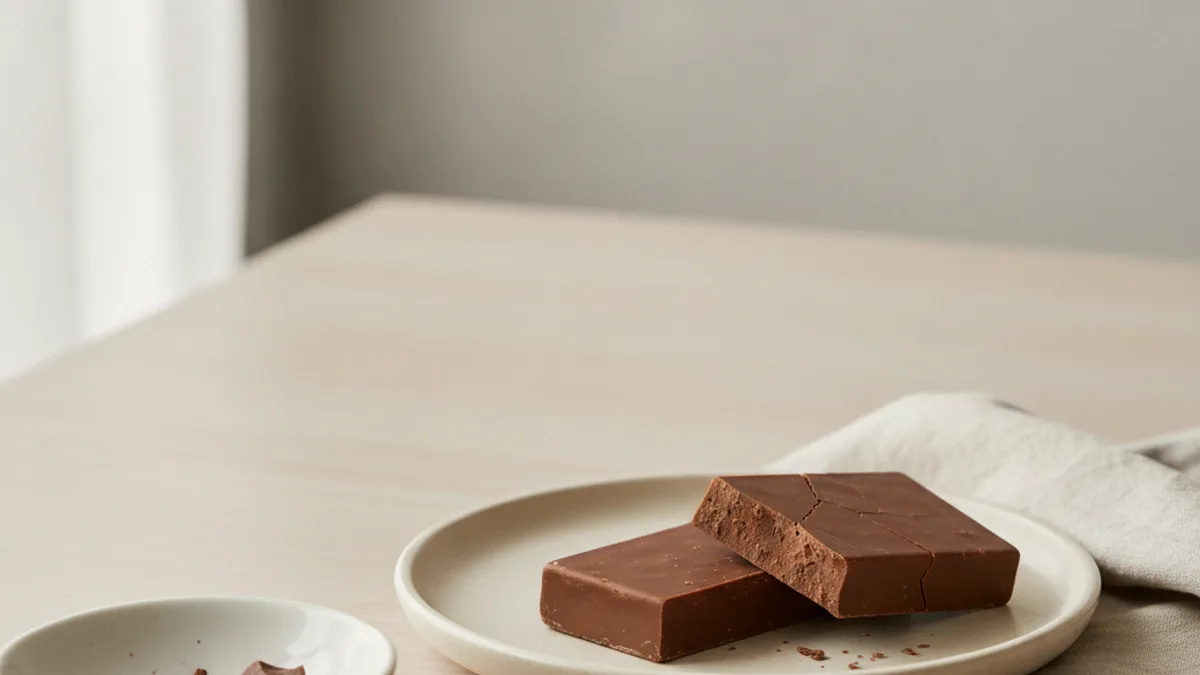
Cocoa butter is the most expensive part of chocolate, and an entire category of products that look indistinguishable from it has been built around its replacement. The regulations are carefully structured: a product with a full replacement cannot be called chocolate, but the buyer should learn about this from the fine print, not from the large text.
What chocolate is made of
Three components: cocoa mass, cocoa butter, and sugar. In milk chocolate, a dairy component is added. The ratio determines the type: bitter, dark, milk, or white—the latter contains no cocoa mass at all, only cocoa butter.
Cocoa butter gives chocolate its physics: it is solid at room temperature and melts just below body temperature. This results in the characteristic snap when broken and melting in the mouth rather than in the hand.
It is also the most expensive ingredient, and therefore the primary target for substitution.
What it is replaced with
| What | What it is |
|---|---|
| Cocoa butter equivalents | Vegetable fats with similar properties; permitted in limited proportions |
| Cocoa butter substitutes | Fats based on other sources, usually palm oil; the product ceases to be chocolate |
| Improvers | Mixtures that change the behavior of the mass during molding |
The basis of substitutes is most often palm oil fractions; an analysis of the raw material itself can be found in the article about palm oil.
How this is reflected on the packaging
A product with a significant substitution of cocoa butter cannot be called chocolate: it is sold as a confectionery bar, confectionery glaze, "sweet bar," or under a similar name. The requirement for an accurate name is set by the TR CU 022/2011 regulation.
A practical difficulty lies in the font size: the brand and a word like "milk" are displayed in large print on the front, while the product name is smaller and off to the side. The same technique is analyzed in the article about butter and spreads.
Signs in the ingredients
- What comes first. In chocolate, it is cocoa products or sugar; in a bar, sugar is often listed first, and cocoa powder is far down the list.
- Cocoa powder instead of cocoa mass. Powder is the defatted residue; it is cheaper and provides a different taste.
- Vegetable fats in the ingredients. A direct indication: in real chocolate, their share is limited; in a bar, they are the base.
- Share of cocoa products. Indicated as a percentage, which allows two bars to be compared directly.
The general order of reading is covered in the article about checking ingredients in ten seconds.
Signs in the bar itself
- Breaking. Chocolate breaks with a dry snap and a clean edge; a bar made with substitutes bends and crumbles.
- Melting. Chocolate melts in the hand; substitutes are more heat-resistant and remain solid longer—this is a plus for the manufacturer, but a sign for the buyer.
- Mouthfeel. A waxy film and slow melting are characteristic features of substitutes.
Regarding the white film: it is not a sign of a substitute or spoilage. It is cocoa butter or sugar that has surfaced after temperature fluctuations, and the product remains edible.
Is a bar with substitutes bad?
As a product—not necessarily: it has its own niche, it is cheaper, and it holds its shape better in the heat. The problem arises where it is sold as chocolate, and the buyer pays for one thing while receiving another.
In terms of calories and sugar, the difference between them is small: both contain about 530–560 kcal per 100 g, and sugar is in the top positions in both cases. That is, the choice between them is about taste and labeling honesty, not about dietary benefits. Regarding sugar in the ingredients—see the article about hidden sugar.
Frequently asked questions
- How does chocolate differ from a confectionery bar?
- By its fat base. In chocolate, it is cocoa butter, and the share of its substitutes is limited. In a confectionery bar, cocoa butter is significantly replaced by other vegetable fats, most often palm oil fractions, and such a product cannot be called chocolate.
- How to distinguish them in the store?
- By the product name, which is printed in smaller font than the brand, and by the ingredients: vegetable fats in the list, cocoa powder instead of cocoa mass, sugar in the first position, and a low percentage of cocoa products.
- Can you identify a substitute by the bar itself?
- Chocolate breaks with a dry snap and a clean edge, and it melts in your hand. A bar made with substitutes bends, crumbles, remains firm longer in the heat, and leaves a waxy feeling in the mouth.
- Is a white bloom on chocolate a sign of a substitute?
- No. This is cocoa butter or sugar that has surfaced due to temperature changes. The product remains edible, although its taste and appearance are affected.
- Are bars made with substitutes more harmful than chocolate?
- In terms of calories and sugar, there is little difference: both contain about 530–560 kcal per 100 g, and sugar is in the first positions in both cases. The issue is more about the honesty of the labeling and the taste than about dietary benefits.
Read next
- Palm oil: is it actually harmful? — Palm oil has become the universal explanation for everything bad in food.
- Butter and spread: how to distinguish them and why they are different products — Butter and spread sit side by side, look the same, and cost different amounts.
- What to look for in an ingredient list in ten seconds — Reading an entire ingredient list at the shelf is impossible: the print is small, and there is no time.
This article is for general information. It is not medical advice, a diagnosis, or a prescription for treatment or a diet, and it does not replace a consultation with your doctor. If you have a health condition, are pregnant, take medication, or follow a diet prescribed to you, decisions about food belong with your doctor.
Figures from regulations, guidelines and studies are given as they stood when this article was prepared and may since have changed; check them against the primary sources. This article is not advertising, an offer, or individual advice, and neither the author nor the site owner is responsible for decisions taken on the basis of it.