Palm oil: is it actually harmful?
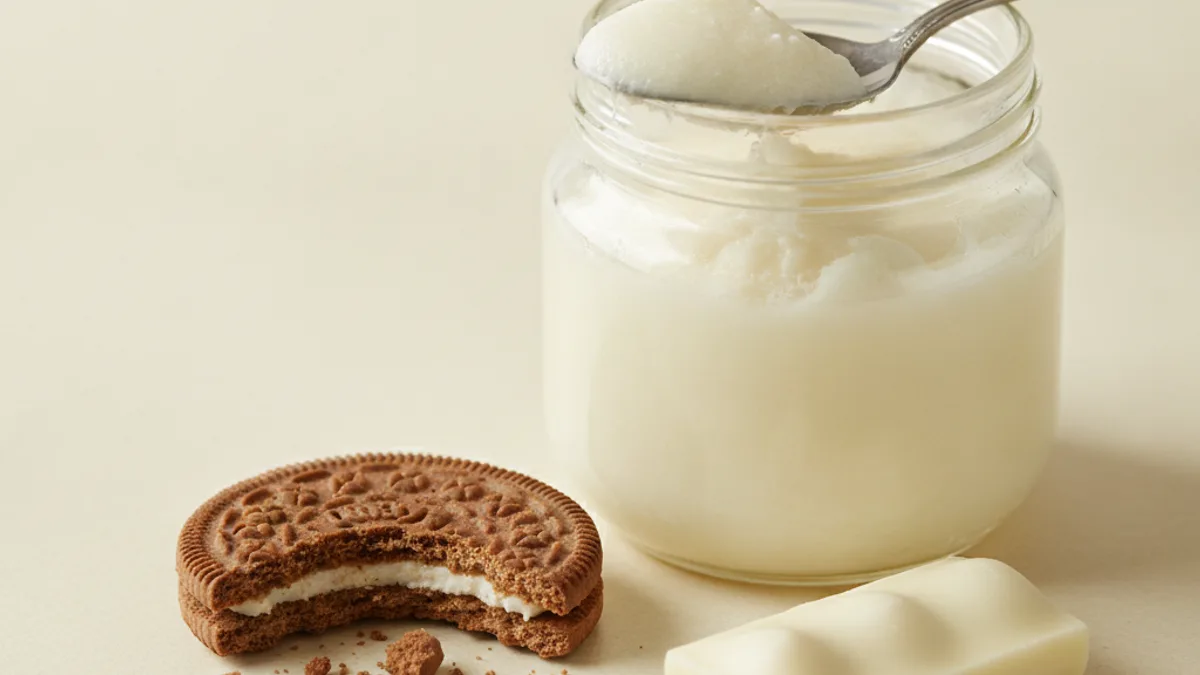
Palm oil has become the universal explanation for everything bad in food. While there are concerns about it, they are not the ones usually cited.
What it is
Oil from the pulp of the oil palm fruit. At room temperature, it is semi-solid because about half of its fatty acids are saturated, primarily palmitic acid. It is this density that makes it convenient for the industry: fillings do not run, glazes hold their shape, and the shelf life of baked goods is measured in months.
Why it ended up in half of all products
The first reason is price and yield: more oil is obtained per hectare of oil palm than from any other oilseed crop.
The second reason is more interesting and is rarely mentioned in debates. Previously, a solid consistency was achieved by hydrogenating liquid oils, and a byproduct of this process is trans fats, the harm of which is demonstrated much more convincingly than that of any vegetable oil. Since 2018, technical regulations have limited their content in oil and fat products to two percent of the fat, and palm oil has largely replaced them. In other words, the product people fear has displaced something that was actually worth fearing more.
The myth about "industrial" oil
A persistent story goes like this: cheap non-food oil intended for soap and lubricants is added to food. There is no separate "industrial" grade that secretly goes into the food industry: oil is distinguished by its degree of purification and quality indicators, and what goes into food is subject to technical regulations for oil and fat products with mandatory confirmation of compliance.
The second part of the myth is that the oil is not digested because its melting point is higher than body temperature. Fat digestion is not melting: it is handled by bile and lipases in the small intestine, and the result does not depend on the melting point. Otherwise, butter from the refrigerator would not be absorbed either.
The real concern
It is technical and does not concern the palm itself. During the refining of vegetable oils at high temperatures, glycidyl esters and 3-MCPD are formed — substances that regulators have questions about. In palm oil, under previous refining conditions, more of these were produced than in others. European standards have established limit levels, with stricter ones for baby food products, and manufacturers have had to change their refining processes.
This is the difference between a real, regulated issue and a horror story: the former is solved by changing technology and monitoring, the latter only by repetition.
What about saturated fats?
Here the concern is well-founded, but it relates not to palm oil as such, but to the amount of saturated fats in the diet. Nutritional recommendations agree that it is reasonable to limit their share, and replacing some saturated fats with unsaturated ones is associated with more favorable blood lipid profiles. Palm oil is in the same company here as butter, lard, and coconut oil — not in a separate category of poison.
The practical conclusion is more boring than the slogan: the problem is not the oil itself, but where it is usually found. It marks cheap confectionery, glazed curd snacks, and cookies, which are products that are high in calories even without it. You should look at the first positions of the ingredient list and the calories per 100 g, not at a single line in the list.
Baby food
Palm oil is used in infant formula as a source of palmitic acid, which is also abundant in breast milk. The nuance being discussed is the position of this acid in the fat molecule: fat and calcium absorption depend on it, which is why some manufacturers use specially modified fat. This is a subject for substantive discussion among specialists, not evidence that formulas are dangerous.
The real debate about palm oil
It is environmental: plantations are expanding at the expense of the tropical forests of Southeast Asia, and this affects the climate and animal habitats. There are certification schemes for responsible production, which also have their own issues. This is the debate that is meaningful to have, and replacing it with fear for one's own stomach makes it harder to hear.
What to do at the shelf
Ingredients are listed in descending order of mass: the line "vegetable fats" at the end of the list and the same line in second place are different situations. The easiest way is not to strain your eyes reading the label, but to take a picture of the barcode: the ingredients, additives, and nutritional value per 100 g will appear immediately.
Frequently asked questions
- Is it true that industrial palm oil is added to food?
- No. There is no separate "industrial" grade that secretly goes into the food industry: oil differs by the degree of refining and quality indicators, and food-grade oil is subject to technical regulations for oil and fat products with mandatory conformity assessment.
- Is palm oil digested if its melting point is higher than body temperature?
- Fat digestion is the work of bile and enzymes in the small intestine, not melting. Absorption does not depend on the melting point; otherwise, butter taken straight from the refrigerator would not be absorbed either.
- Why is palm oil found almost everywhere?
- It is inexpensive, resistant to oxidation, and semi-solid without hydrogenation. The latter is important: previously, a solid consistency was obtained by hydrogenation, a byproduct of which was trans fats. After limiting trans fats to two percent of the fat in oil and fat products, palm oil largely took their place.
- Are there any well-founded concerns about palm oil?
- Two. The first is technical: during high-temperature refining, glycidyl esters and 3-MCPD are formed, for which limit levels have been established, with stricter ones for baby food. The second is general: about half of its fatty acids are saturated, and it is recommended to limit their share in the diet, just like butter and lard.
Read next
- Myths about food additives and GMOs — Two things on packaging cause the most fear: codes with the letter E and the acronym "GMO.
- Artificial sweeteners: are they harmful, and do they help you lose weight? — Arguments about sweeteners are conducted as though the choice were between them and plain water.
- Eating habits: what works and what doesn't — Almost all nutrition plans fail not because of a lack of knowledge, but because of execution.
This article is for general information. It is not medical advice, a diagnosis, or a prescription for treatment or a diet, and it does not replace a consultation with your doctor. If you have a health condition, are pregnant, take medication, or follow a diet prescribed to you, decisions about food belong with your doctor.
Figures from regulations, guidelines and studies are given as they stood when this article was prepared and may since have changed; check them against the primary sources. This article is not advertising, an offer, or individual advice, and neither the author nor the site owner is responsible for decisions taken on the basis of it.