Myths about food additives and GMOs
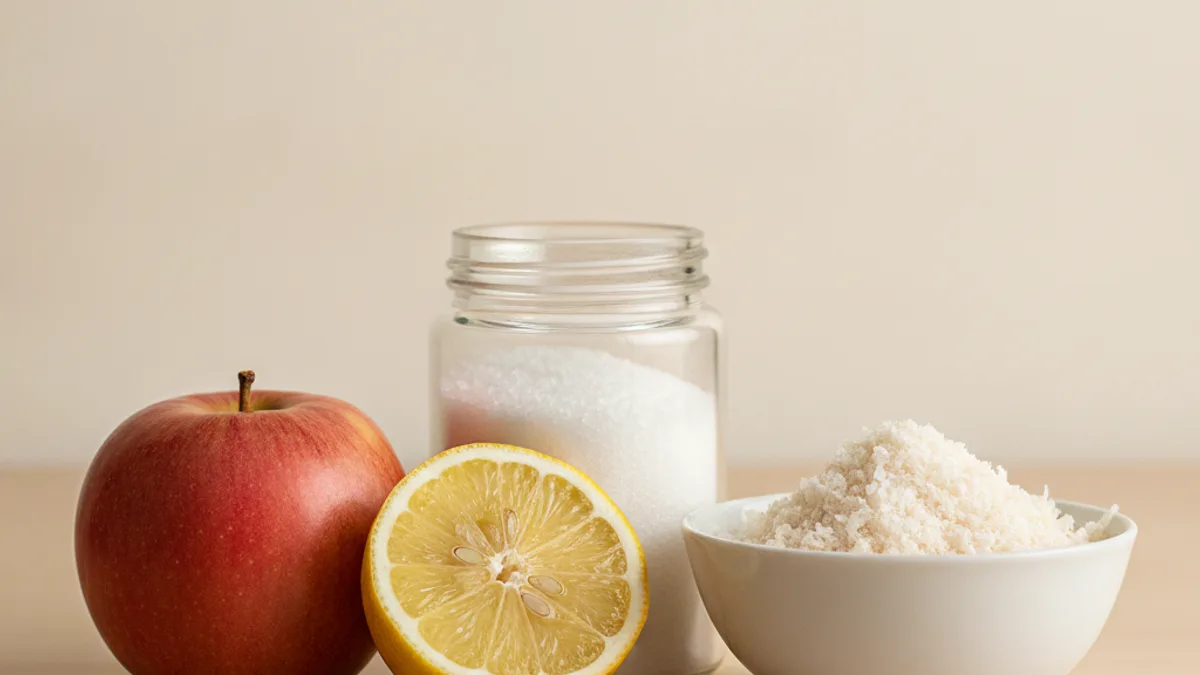
Two things on packaging cause the most fear: codes with the letter E and the acronym "GMO." Both topics have become surrounded by more myths than any others.
Myth one: the letter E means "chemical"
The E index is simply a registry number, not a verdict or an indication of artificial origin. It is assigned to a substance that has passed expert review and is approved for use. Familiar items appear under E codes: E300 is ascorbic acid, or vitamin C; E101 is riboflavin, or vitamin B2; E330 is citric acid; and E440 is apple pectin.
The reverse is also true: the absence of codes guarantees nothing. A manufacturer is entitled to write "citric acid" instead of "E330," and the composition remains the same—only its readability changes.
Myth two: all additives are equally harmless
This is the opposite extreme, and it is also incorrect. Lists of permitted substances are reviewed, and substances are removed from them. Some additives are permitted in Russia but banned in the European Union, and vice versa: the TR CU 029/2012 technical regulation and EU regulations rely on overlapping but different sets of studies.
A reasonable position lies in the middle: the question is always about the specific substance and its quantity, not the presence of a letter. That is why in our additive guide, each code is marked as safe, controversial, or prohibited, depending on the jurisdiction.
Myth three: "natural" means safe
The origin of a substance does not dictate its effect. The amatoxins in a death cap mushroom are natural, while ascorbic acid produced in a factory is chemically indistinguishable from that found in a lemon—the body cannot tell the difference.
Furthermore, the word "natural" on packaging has no strict definition and often relates more to marketing than to the actual composition.
Myth four: Russian products are full of GMOs
Since 2016, Russia has had a ban on the cultivation and breeding of genetically modified plants and animals, except for scientific research (Federal Law No. 358-FZ). In other words, domestic food-grade GMOs simply do not exist on store shelves.
The import of registered products is permitted, and they are subject to labeling: if the content of GMO components exceeds 0.9%, it must be indicated on the packaging according to the requirements of TR CU 022/2011. The "non-GMO" label on a Russian product, therefore, usually communicates not the properties of the product, but the fact that the manufacturer knows what the buyer is afraid of.
Myth five: GMOs are dangerous to health
Major scientific organizations—including the WHO and national academies of science—agree that GMO products approved for circulation are no more dangerous than conventional ones. Genetic modification itself does not make a product harmful: what matters is the specific trait that has been introduced.
Substantive debates around GMOs do exist, but they are not about toxicity on your plate—they are about agricultural techniques, herbicide use, seed patents, and environmental impact. These are real issues, and replacing them with fear for one's health prevents us from discussing them seriously.
What you should actually read on the label
Ingredients are listed in descending order of weight: the first three items describe the product better than the rest of the list. If the composition starts with sugar or vegetable fat, that is the most important thing to know about it, regardless of how many E codes are present.
Next, look at the calories and protein per 100 g, not per "serving," the size of which the manufacturer chooses themselves.
Analyzing this manually on every package is tedious, so it is easier to scan the barcode: the composition will be found, the additives will be decoded, and the nutritional value will be calculated per 100 grams.
Frequently asked questions
- Are all E additives harmful?
- No. The E index only means that the substance has passed expert review and received a registry number. Ascorbic acid (E300), riboflavin (E101), and citric acid (E330) all have E codes. The question is always about the specific substance and its quantity.
- Are GMOs grown in Russia?
- No. Since 2016, Federal Law No. 358-FZ has prohibited the cultivation and breeding of genetically modified plants and animals, except for scientific research. The import of registered products is permitted and subject to labeling if the content exceeds 0.9%.
- Are GMO products dangerous?
- Major scientific organizations, including the WHO, consider GMO products approved for circulation to be no more dangerous than conventional ones. Substantive debates surrounding GMOs concern agricultural practices, herbicides, and seed patents, rather than product toxicity.
- What does "GMO-free" on packaging mean?
- On a Russian product, it usually says nothing about its properties: food-grade GMOs are not grown in the country. It is a marketing label designed to play on consumer concerns.
Read next
- Palm oil: is it actually harmful? — Palm oil has become the universal explanation for everything bad in food.
- Artificial sweeteners: are they harmful, and do they help you lose weight? — Arguments about sweeteners are conducted as though the choice were between them and plain water.
- How dietary supplements differ from vitamins and medications — In a pharmacy, two packages of vitamin D sit on the same shelf.
This article is for general information. It is not medical advice, a diagnosis, or a prescription for treatment or a diet, and it does not replace a consultation with your doctor. If you have a health condition, are pregnant, take medication, or follow a diet prescribed to you, decisions about food belong with your doctor.
Figures from regulations, guidelines and studies are given as they stood when this article was prepared and may since have changed; check them against the primary sources. This article is not advertising, an offer, or individual advice, and neither the author nor the site owner is responsible for decisions taken on the basis of it.