Food without a kitchen: a kettle, a microwave, and nothing else
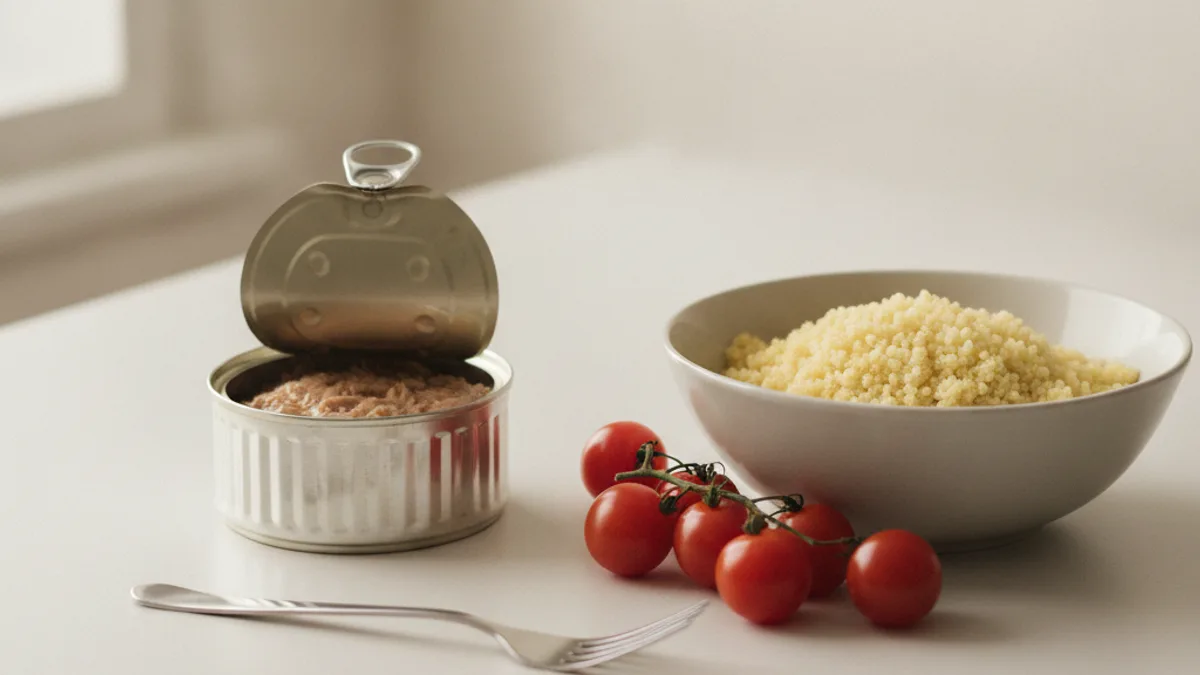
Dormitories, rented rooms, hotels, offices, or kitchen renovations—there are many situations where you don't have a stove but still need to eat. You can cook in these conditions, and not just with instant noodles; the question is where to get the protein.
What to keep in the pantry
The kit from which everything else is assembled. Nothing requires a refrigerator, except where noted.
- Long-shelf-life protein: canned tuna and sardines, canned beans and chickpeas, powdered milk, protein powder, nuts.
- Protein from the refrigerator, if available: cottage cheese, Greek yogurt, eggs, hard cheese.
- Quick-cooking grains: rolled oats, couscous, fine-ground bulgur — all of these cook with boiling water.
- Vegetables that do not spoil: carrots, cabbage, onions, cherry tomatoes, frozen peas.
- Seasonings: salt, pepper, paprika, olive oil, lemon juice or vinegar.
The key idea of the entire list is canned legumes and fish. This is the only way to have ready-to-eat protein at home without a stove or a refrigerator, and most of the menu relies on them.
1. Couscous with tuna
Ingredients: 60 g couscous, a can of tuna in its own juice (about 170 g), a handful of cherry tomatoes, some herbs, a teaspoon of olive oil, lemon juice.
How to: pour boiling water over the couscous until it is about a finger's width above the grains, cover with a plate, and let sit for five minutes. Fluff with a fork, add the drained tuna, sliced tomatoes, oil, and lemon.
Approximate: about 480 kcal, about 40 g of protein.
Couscous is the most convenient grain without a stove: it cooks completely with boiling water, not just "almost."
2. Overnight oats with cottage cheese
Ingredients: 50 g rolled oats, 150 g cottage cheese, 150 ml milk or kefir, a handful of berries or half a banana, nuts.
How to: mix everything in a jar with a lid in the evening and put it in the refrigerator. It is ready in the morning.
Approximate: about 500 kcal, about 33 g of protein.
No heating is required at all: the flakes soften in the liquid over several hours. If there is no refrigerator, the same ingredients can be prepared in the morning with boiling water and without cottage cheese — in that case, protein is supplemented with nuts and powdered milk.
3. Beans with vegetables
Ingredients: a can of red beans (about 400 g), half an onion, a tomato, a tablespoon of oil, paprika, salt.
How to: drain and rinse the beans, finely chop the onion and tomato, and mix everything together. Heat in the microwave for 2 minutes covered or eat cold as a salad.
Approximate for the whole can: about 420 kcal, about 25 g of protein and 20 g of fiber.
Rinsing is mandatory — this removes some of the salt from the brine and also reduces bloating.
4. Microwave scrambled eggs
Ingredients: 2–3 eggs, a spoonful of milk, salt, any vegetables, a piece of cheese.
How to: whisk the eggs with milk in a deep mug or bowl, add the rest. Heat for 45 seconds, stir, and heat for another 30–45 seconds until done.
Approximate: about 300 kcal, about 22 g of protein.
Two safety rules, and both are not just formalities. Do not put an egg in its shell in the microwave — it will explode. If you are cooking a whole egg without the shell, the yolk must be pierced: steam builds up under the membrane, and it ruptures, usually after you have already opened the door.
5. Buckwheat in a thermos
Ingredients: 80 g buckwheat, boiling water, a can of sardines or pre-cooked chicken.
How to: pour the buckwheat into a thermos, add boiling water in a ratio of approximately 1 to 2, and close it. After an hour or an hour and a half, the grain is ready. Add the protein to the plate, not the thermos.
Approximate: about 550 kcal, about 35 g of protein.
This method is convenient because it does not require your presence: prepare it in the morning and have a hot lunch at work.
What this diet lacks
If you live like this for a week, nothing will happen. If for months, it is worth keeping an eye on three things.
| What | How to cover without a stove |
|---|---|
| Vegetables and fiber | Fresh carrots, cabbage, tomatoes, frozen peas from the microwave |
| Omega-3 | Canned sardines and mackerel — their advantage over tuna is precisely this |
| Calcium | Cottage cheese, cheese, sardines with bones, fortified plant-based milk |
Salt is a separate issue. There is significantly more salt in canned goods and convenience foods than in home-cooked meals, and this is a case where the salt shaker is not the culprit. Analysis — salt in ready-to-eat food.
How to calculate this
Good news: a diet of canned goods and grains is calculated more accurately than home-cooked meals. There is labeling on the can, grains are measured by weight before cooking, and oil is measured by the spoonful. The only thing you will have to estimate is vegetables, and they have little effect on the final result.
Practical tip: calculate your five usual combinations once and then choose from the ready-made list. There is a separate article on how to count grains — by dry or cooked weight.
Frequently asked questions
- What can I prepare without a stove that is high in protein?
- The foundation is canned fish and legumes: these are ready-to-eat protein sources that require neither a stove nor a refrigerator. You can add grains that cook with boiling water, such as couscous, rolled oats, or fine bulgur.
- Can you cook eggs in the microwave?
- Scrambled eggs, yes, in a deep bowl using two 30–45 second intervals. Do not put an egg in its shell in the microwave: it will explode. If you are cooking a whole egg without the shell, you must pierce the yolk; otherwise, steam will build up under the membrane.
- Which grains can be prepared without a stove?
- Couscous is ready after five minutes in boiling water under a lid, rolled oats soften in liquid overnight, and buckwheat or bulgur can be prepared in a thermos in an hour to an hour and a half.
Read next
- Snack instead of a bar: what to bring so you don't have to buy — People buy a bar not because it's delicious, but because it's at the checkout and there's nothing in their bag.
- Three protein-rich breakfasts that take ten minutes to prepare — The usual breakfast has one problem, and it's not the calories: porridge made with water, toast with jam, and coffee contain almost no protein.
- Raw or cooked weight: how to count grains, pasta, and meat — "100 g of buckwheat" can mean 346 kcal or 92, depending on the state of the grain.
This article is for general information. It is not medical advice, a diagnosis, or a prescription for treatment or a diet, and it does not replace a consultation with your doctor. If you have a health condition, are pregnant, take medication, or follow a diet prescribed to you, decisions about food belong with your doctor.
Figures from regulations, guidelines and studies are given as they stood when this article was prepared and may since have changed; check them against the primary sources. This article is not advertising, an offer, or individual advice, and neither the author nor the site owner is responsible for decisions taken on the basis of it.